Why the Sticker Price Tells You Nothing
Search for “3d laserscanner preis” and you’ll find everything from €500 hobby units to €50,000+ industrial systems. The trap? Treating these as comparable options.
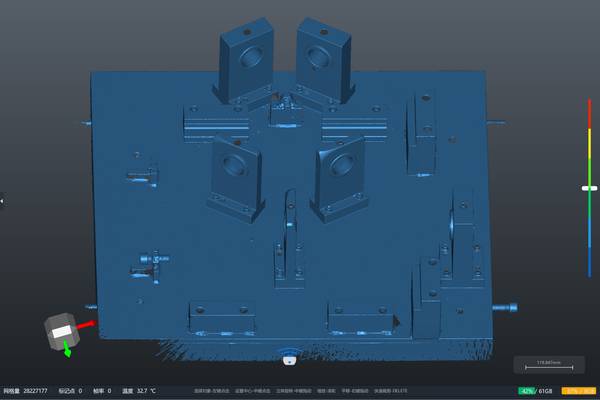
Consumer-grade scanners built for education or entertainment collapse under industrial conditions. We’ve seen manufacturers learn this the hard way: a German automotive supplier switched to budget scanners for inline inspection, only to face 14 hours of unplanned downtime in the first quarter—costing roughly €8,500 per hour in lost production. Calibration drift, temperature sensitivity, and vibration-induced data gaps turned the “savings” into a six-figure liability.
INSVISION designs for the floor, not the showroom. Our AlphaScan units operate continuously in robotic cells across Scandinavian and German facilities where downtime isn’t measured in minutes, but in lost contracts. The difference isn’t feature lists—it’s mechanical stability, thermal compensation, and optical systems that maintain sub-millimeter accuracy when ambient temperatures swing 15°C between shifts.
Failure Modes of Budget Scanners vs. Industrial Systems
| Issue | Budget Scanners | Industrial Systems (e.g., AlphaScan) |
|---|---|---|
| Calibration Stability | Frequent drift requiring recalibration | Maintains calibration under thermal and vibrational stress |
| Operating Environment | Fails under industrial vibration and temperature swings | Operates continuously in robotic cells with 15°C ambient shifts |
| Downtime Impact | 14+ hours unplanned downtime in first quarter (German auto supplier) | Downtime measured in lost contracts, not minutes |
When Precision Becomes Non-Negotiable
Sub-millimeter accuracy isn’t premium—it’s baseline in aerospace, automotive, and medical device manufacturing. A leading Norwegian supplier of aircraft components discovered this during first article inspection: consumer-derived scanners produced point clouds with 0.3mm deviation on critical turbine housing geometries. The result? 12% rejection rate on a €240,000 production run.
The AlphaScan handles what breaks cheaper alternatives. Its structured light projection compensates for vibration frequencies up to 100Hz common in robotic environments. Complex geometries—deep pockets, reflective surfaces, fine edges—capture cleanly without the spray coatings or multiple orientations that slow production.
Yes, the 3D laser scanner price runs higher than entry-level alternatives. But calculate the cost of a single production stop, a batch rejection, or delayed customer approval. The math shifts quickly.
Critical Requirements for Industrial 3D Scanning
- □ Sub-millimeter accuracy as baseline requirement
- □ Vibration compensation up to 100Hz for robotic environments
- □ Ability to scan complex geometries without surface preparation
- □ Prevention of batch rejections due to measurement deviation
Speed as ROI: From Hours to Minutes
First article inspection traditionally consumes 4-8 hours for complex geometries. Reverse engineering legacy parts without CAD data? Days. The AlphaScan collapses these timelines.
A Danish wind turbine manufacturer reduced blade root inspection from 6 hours to 47 minutes—enabling same-day engineering decisions that previously waited for overnight data processing. For a facility producing 15 blade sets weekly, this translated to 2.3 additional production days monthly.
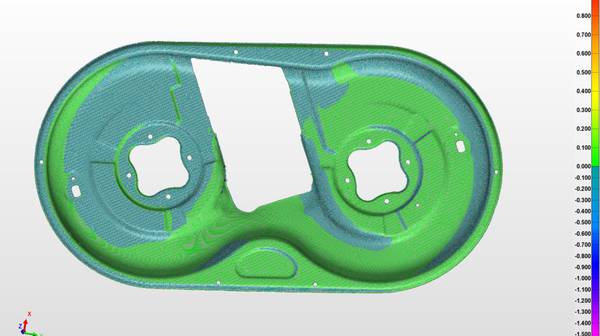
The integration into robotic guidance eliminates manual teaching points. One Swedish automotive supplier reported 34% reduction in robot programming time for complex welding paths, with first-pass yield improving from 91% to 98%. At 400 units daily, that 7% improvement eliminated rework costs exceeding €180,000 annually.
Your 3D laser scanner price amortizes through velocity, not just accuracy.
Time Savings Achieved with AlphaScan
| Application | Traditional Time | AlphaScan Time | Business Impact |
|---|---|---|---|
| Blade root inspection | 6 hours | 47 minutes | 2.3 additional production days monthly |
| Robot programming for welding | Baseline | 34% reduction | €180,000+ annual rework savings |
| First article inspection | 4–8 hours | Collapsed timeline | Same-day engineering decisions |
Steps to Realize ROI from Industrial 3D Scanning
- Replace manual or consumer-grade scanning with vibration-resistant industrial systems
- Integrate directly with robotic guidance to eliminate manual teaching points
- Leverage native compatibility with metrology software to avoid middleware development
- Amortize scanner cost through accelerated inspection and reduced rework
The Hidden Cost of Incompatibility
The cheapest unit on paper becomes expensive fast when it won’t talk to your systems. We’ve encountered facilities where “budget” scanners required 40+ hours of custom middleware development to connect with Siemens NX—then broke with every software update.
The AlphaScan ships with native PolyWorks, Geomagic, and Siemens NX compatibility. Ethernet/IP and PROFINET integration means direct communication with your MES and robotic controllers. For collaborative robot deployments, this translates to hours, not weeks, of cell commissioning.
In Western European manufacturing environments—where agility and rapid reconfiguration separate competitive suppliers from commodity producers—this plug-and-play architecture protects operational margins. Your engineering team configures, not codes.
Total Cost, Not First Cost
Industrial technology investments demand 5-10 year horizons. Consumer hardware? Often obsolete in 18 months with no upgrade path.
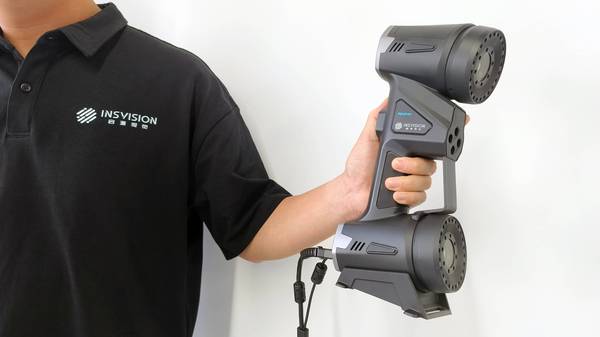
INSVISION’s Norwegian engineering base provides direct European support with 4-hour response commitments for critical failures. Firmware updates extend capability without hardware replacement. Modular optical components allow field upgrades as resolution or speed requirements evolve.
A Finnish heavy equipment manufacturer has operated AlphaScan units since 2019 across three facility expansions—same hardware, updated software, expanded applications. Their 3D laser scanner price spread across 6+ years of operation, versus three replacement cycles for consumer alternatives.
The Real Calculation
The question isn’t “what does it cost?” but “what does it return?” Industrial 3D scanning pays for itself through prevented stoppages, eliminated rework, accelerated inspection, and retained customers who can’t tolerate your quality failures. When evaluating 3d laserscanner preis, factor in total cost of ownership, not just purchase price.
INSVISION builds systems where the price reflects value delivered, not corners cut. For production environments where measurement confidence underpins commercial relationships, that’s the only calculation that matters.