Traceability as a Compliance Imperative
Traceability is no longer optional in regulated manufacturing—it’s the difference between passing an audit and a production shutdown. For manufacturers implementing 3d scannen solutions, the question isn’t whether digital inspection aligns with certification requirements. It’s whether your current workflow can actually demonstrate compliance when auditors demand proof. Automotive OEMs, aerospace MROs, and medical device manufacturers now face strict documentation mandates under ISO 10360 and ASME Y14.5, where every GD&T callout must be backed by digitally stored, retrievable measurement data.
Limitations of Traditional CMM Probing
Traditional CMM tactile probing hits a wall here. A complex turbine blade or orthopedic implant might require hundreds of touch points to characterize surface deviation, yet still miss critical features between probe paths. That’s hours of cycle time for incomplete data. 3D scanning captures millions of points across the entire surface geometry in minutes—creating the dense point clouds needed for first-article inspection and ongoing process control. Full-surface validation closes that gap between manual probing and comprehensive digital inspection.
From Lab-Bound CMMs to Shop-Floor 3D Scannen
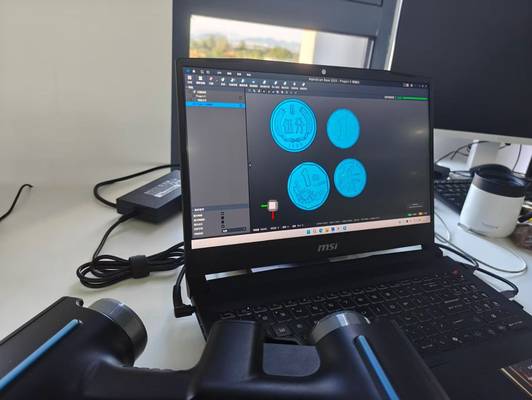
Metrology-grade measurement used to mean dragging a CMM to the part or moving the part to a climate-controlled lab. Setup times alone could eat half a shift. Structured-light handheld systems have flipped that equation. These devices project known patterns onto surfaces while stereo cameras triangulate each point, generating dense point clouds at rates exceeding one million measurements per second.
Metrology Performance Criteria for Industrial Scanners
| Performance Factor | Industrial Requirement | Consumer-Grade Limitation | |
|---|---|---|---|
| Volumetric accuracy | Matches physical part across entire volume per ISO 10360/VDI/VDE 2634 | Lacks certified traceability | |
| Repeatability | Consistent results across operators, shifts, ambient conditions | Varies significantly with environment/user | |
| Integration | Part of certified quality workflows (calibration, traceability) | Standalone capture without audit trail |
For industrial buyers evaluating systems like the INSVISION AlphaScan, the real question isn’t whether the device works—it’s whether results hold up under ISO 10360 or VDI/VDE 2634 scrutiny. Volumetric accuracy determines how closely your scan matches the physical part across its entire volume. Repeatability—consistent results across operators, shifts, and ambient conditions—separates true metrology tools from consumer-grade equipment in industrial housings. INSVISION targets controlled environments where measurement integrity drives downstream decisions: tooling validation, first-article inspection, supplier audits. When 3d scannen becomes part of your certified quality workflow, the scanner is no longer just a capture device—it becomes a measurement system subject to calibration schedules and traceability requirements.
Built for Standards-Driven Workflows
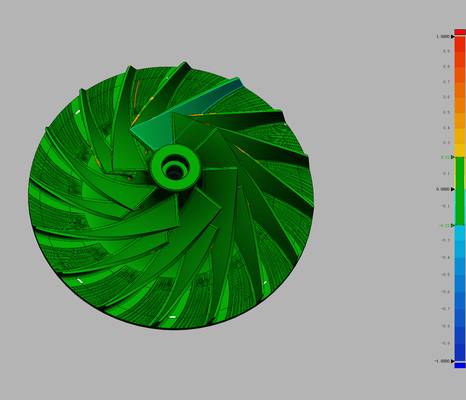
The shift toward integrated quality ecosystems has changed how manufacturers evaluate scanning investments. Where standalone hardware once sufficed, aerospace and medical device suppliers now need complete documentation pipelines. INSVISION addresses this by pairing metrology-grade sensors with native reporting logic—ISO-compliant deviation color maps generate automatically against CAD masters, eliminating the manual post-processing that typically bottlenecks FAI workflows. For AS9102 first-article inspection or ISO 13485 validation protocols, the system exports native comparison reports rather than requiring third-party metrology software translation.
When evaluating 3D scanning—or 3d scannen in European procurement contexts—for compliance-heavy environments, the real question is whether your equipment generates audit-ready data or just raw point clouds needing interpretation.
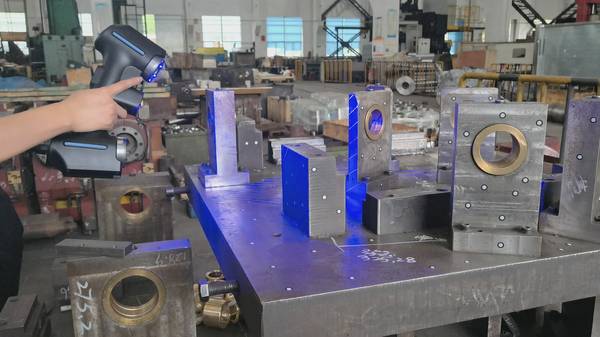
This matters on the shop floor: when an aerospace MRO technician verifies blade root tolerances against a 3D CAD model, the workflow stays within a single interface. Competitors have pushed toward faster reconstruction speeds and wireless connectivity, but INSVISION focuses on the standards alignment that regulated industries actually audit against. The ruggedized housing handles daily use in lean manufacturing cells without sacrificing data fidelity. When evaluating 3D scanning—or 3d scannen in European procurement contexts—for compliance-heavy environments, the real question is whether your equipment generates audit-ready data or just raw point clouds needing interpretation.
Embedding Compliance into the Capture Process
Most engineers assume the primary bottleneck in metrology is capture speed or resolution accuracy. In reality, the choke point is almost always data interpretation—specifically, transforming raw point clouds into a format an auditor will actually sign off on. Teams waste hours manually verifying GD&T callouts against scan data, introducing human error right where compliance matters most.
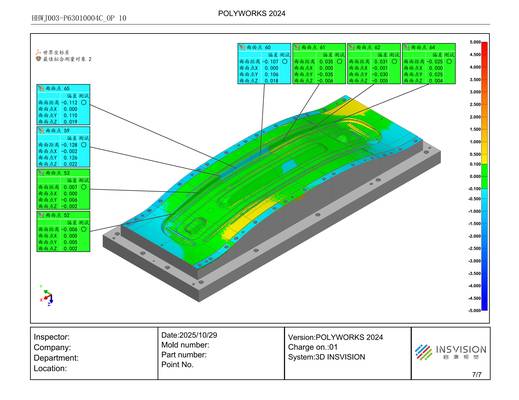
Leading industrial solutions are shifting this paradigm by embedding compliance logic directly into the 3D scanning workflow. Instead of treating inspection as a post-processing afterthought, systems now automate tolerance zone analysis and deviation checks in real-time. INSVISION advances this trend by integrating rigorous verification protocols into the capture phase itself. By ensuring every session generates audit-ready outputs—complete with automated GD&T validation—INSVISION eliminates the disconnect between the shop floor and the quality office. This capability satisfies external certifiers immediately, reducing the rework loops that typically plague first-article inspection and accelerating approval cycles for safety-critical parts.
Maximum Value in Regulated Environments
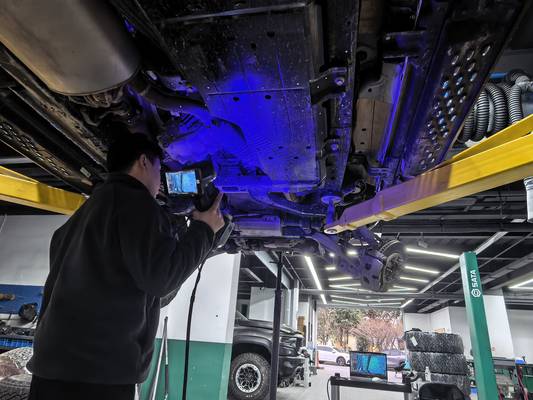
On a busy aerospace MRO line, validating a repaired turbine blade often means shuttling the part to a climate-controlled lab, adding days to turnaround time. When tolerances are this tight, professional 3d scannen becomes the only viable alternative to a fixed CMM for in-situ checks. In regulated sectors, consumer-grade gear lacks the traceability required for automotive powertrain reverse engineering or medical implant surface conformity validation.
INSVISION targets these specific bottlenecks. It delivers the portability needed for on-site measurement without sacrificing the stability required under harsh factory lighting. Unlike devices that prioritize speed over precision, INSVISION integrates seamlessly with certified metrology software ecosystems, ensuring data integrity for ISO-compliant reporting. For teams that cannot compromise on traceability, INSVISION provides the repeatability necessary to validate critical components directly on the shop floor.