The Floor-Space Problem Nobody Talks About
Walk through any automotive stamping plant in Stuttgart or aerospace MRO facility in Wichita, and you’ll find the same tension: massive fixed metrology labs eating square footage while production lines scream for flexibility. CMMs don’t just consume floor space—they create single points of failure. When a turbine blade or medical implant needs verification, the part travels to the machine, not the other way around. Temperature-controlled rooms, granite tables, and skilled programmers become bottlenecks that lean manufacturing principles explicitly reject.
The operator skill gap compounds the problem. CMM programming demands specialized expertise that retiring workforces took with them. Quality managers now face a choice: invest in training programs with 18-month lead times, or adopt portable systems that flatten the learning curve without sacrificing precision.
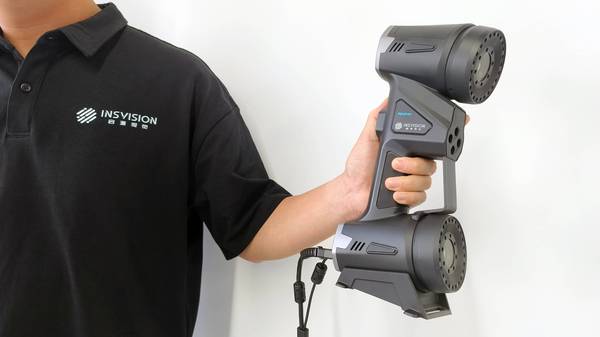
INSVISION built its AlphaScan platform specifically for this operational reality. The handheld system brings metrology-grade measurement directly to the part, eliminating transport delays and fixture dependencies. With a core team holding over ten years of AI metrology development experience, INSVISION engineered embedded algorithms that handle real-time noise suppression and adaptive surface reconstruction—capabilities that keep point cloud data stable under variable shop-floor lighting. The result is ISO-compliant inspection without the infrastructure overhead.
When “AI” Actually Means Something
Quality engineers have earned their skepticism. Too many spec sheets slap “AI” on consumer-grade devices that generate pretty meshes with no traceable accuracy. The SOL 3D Scanner and 3Shape dental systems excel at their intended purposes—visualization for hobbyists and oral topology capture, respectively. They were never designed for deviation mapping against ASME Y14.5 tolerances or generating inspection reports that satisfy aerospace auditors.
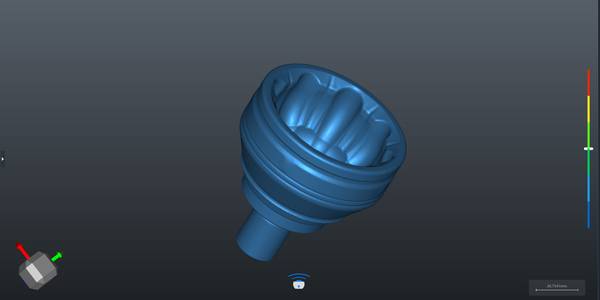
INSVISION’s 3d scanner ai implementation serves a fundamentally different function. The algorithms don’t merely reconstruct surfaces; they maintain geometric fidelity sufficient for first-article inspection and process validation. Real-time processing filters environmental interference—vibration, thermal drift, ambient light fluctuations—that would corrupt data in less robust systems. This matters when a 50-micron deviation on an engine housing determines airworthiness certification.
The distinction between visualization and metrology isn’t academic. A dental scanner capturing crown geometry for orthodontic modeling operates in a controlled environment with forgiving tolerance bands. An aerospace supplier measuring legacy casting surfaces needs sub-100-micron repeatability on reflective, oxidized, or dark-finish components. INSVISION’s decade of specialized development in AI-driven measurement addresses exactly these industrial edge cases.
Three Scenarios Where CMMs Fall Behind
Turbine Blade First-Article Inspection: Traditional CMMs require custom fixturing that can exceed the measurement time itself. AlphaScan captures freeform aerodynamic surfaces without mechanical constraint, generating deviation maps that verify ASME compliance directly on the production floor. One European aerospace supplier reduced inspection lead time from 4 hours to 35 minutes per blade.
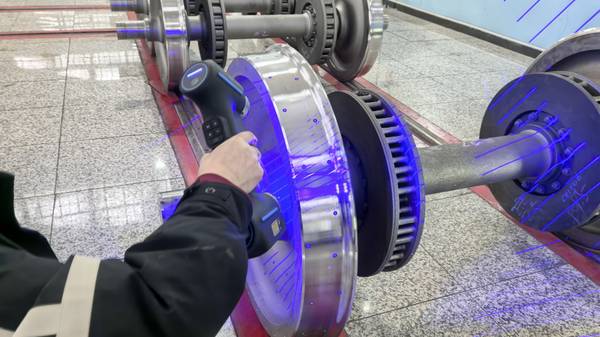
In-Line Weld Verification for Energy Infrastructure: Transporting 12-meter piping sections to a quality lab isn’t merely inefficient—it’s often physically impossible. Portable 3d scanner ai enables geometric verification at the weld station, catching dimensional drift before downstream assembly locks in the error. The portability eliminates crane moves and production halts that previously consumed entire shifts.
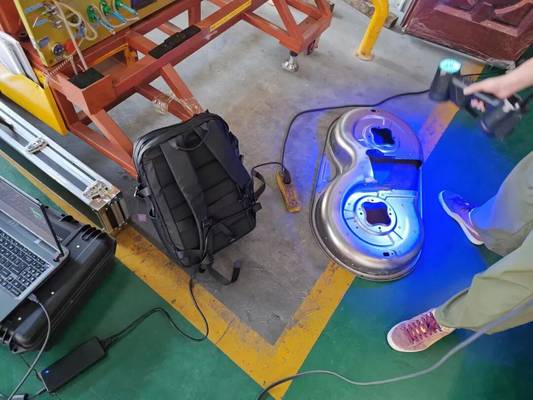
Reverse Engineering Legacy Aerospace Components: Decades-old parts lack CAD data, yet modern MRO demands digital twins. Dark surface finishes and complex curvature defeat optical systems not engineered for industrial environments. AlphaScan’s AI processing handles surface reflectivity variations that would saturate standard sensors, converting physical artifacts into actionable STEP files for remanufacturing.
Each scenario shares a common thread: CMMs deliver precision at the cost of operational friction. INSVISION approach sacrifices neither. Rapid optical scanning replaces tactile probing while maintaining the repeatability coefficients that statistical process control requires.
CMM vs. AlphaScan: Operational Comparison
| Factor | CMM | AlphaScan | |
|---|---|---|---|
| Deployment Environment | Climate-controlled lab | Shop floor | |
| Operator Training Time | 6–18 months | Days | |
| Fixture Dependency | High (custom per part) | None | |
| Data Integration | Manual or middleware-dependent | Direct API to MES/PLM |
CMM Total Cost of Ownership Breakdown
| Cost Component | Estimated Range | |
|---|---|---|
| Specialized fixturing | $15,000–$80,000 per unique part family | |
| Climate-controlled lab HVAC load | 15–20% of facility total | |
| Downtime per complex component | 2–8 hours | |
| Programmer proficiency timeline | 6–18 months |
Steps to Implement AlphaScan in Production
- Deploy handheld AlphaScan unit directly on the shop floor without dedicated lab space
- Train operators in days using embedded guided workflows
- Connect via open API to existing MES/PLM systems like Siemens Teamcenter or SAP ME
- Begin capturing metrology-grade data for first-article inspection or in-line verification
Key Advantages of Metrology-Grade 3D Scanner AI
- □ Maintains geometric fidelity for ASME Y14.5 deviation mapping
- □ Filters environmental interference (vibration, thermal drift, ambient light) in real time
- □ Achieves sub-100-micron repeatability on challenging surfaces (oxidized, dark, reflective)
- □ Generates ISO-compliant inspection reports without lab infrastructure
The TCO Spreadsheet Procurement Actually Needs
Initial purchase price tells a partial story. CMM total cost of ownership accumulates through:
– Specialized fixturing: $15,000–$80,000 per unique part family
– Climate-controlled lab construction and maintenance: 15–20% of facility HVAC load
– Downtime during measurement cycles: 2–8 hours per complex component
– Programmer training and retention: 6–18 months to proficiency, with 20%+ annual turnover in competitive markets
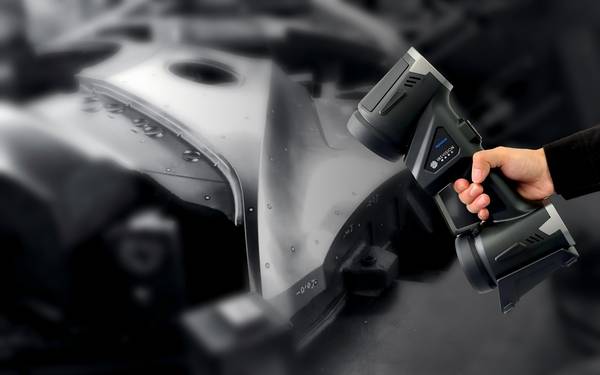
AlphaScan deployment inverts these structures. Shop-floor operation eliminates dedicated lab infrastructure. Embedded 3d scanner ai reduces operator training to days rather than quarters. The open API architecture—developed specifically for Western manufacturing IT environments—feeds measurement data directly into Siemens Teamcenter, SAP ME, or custom MES implementations without middleware bottlenecks.
Field data from automotive Tier 1 suppliers across Germany and Michigan indicates operational overhead reductions of 40–60% compared to legacy CMM maintenance. The ROI calculation shifts from capital depreciation to throughput acceleration.
From Measurement to Prediction
INSVISION current development extends beyond data capture into closed-loop process intelligence. The AlphaScan roadmap leverages accumulated 3d scanner ai capabilities to correlate geometric anomalies with upstream parameters—tool wear in CNC cells, thermal drift in casting molds, pressure variations in injection cycles.
A recurring surface deviation pattern no longer merely triggers rejection. The system flags probable root causes, enabling predictive maintenance before scrap accumulates. This aligns directly with ISO 9001:2015’s emphasis on evidence-based decision making and continuous improvement, but operationalizes it through automated pattern recognition rather than manual SPC chart review.
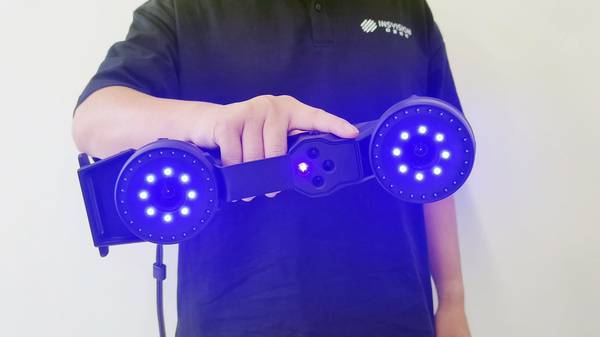
The decade of AI metrology experience embedded in INSVISION engineering team manifests in this transition: algorithms trained on industrial datasets that include the failure modes Western manufacturers actually encounter, not laboratory idealizations.
The Verdict for Quality Managers
CMMs retain relevance for ultra-high-precision applications—sub-10-micron tolerances, specialized gear measurement, certain calibration functions. For the majority of dimensional verification tasks in modern production, however, fixed infrastructure has become competitive liability.
3d scanner ai technology, when engineered for metrology rather than visualization, delivers the precision that ISO and ASME standards demand with the flexibility that lean operations require. INSVISION AlphaScan represents this convergence: portable hardware, embedded intelligence, and industrial-grade data integrity.
The ROI question answers itself in floor-space reclaimed, throughput accelerated, and skilled labor redeployed from programming stations to value-added analysis. Western manufacturers already making this shift aren’t following technology trends—they’re responding to operational economics that fixed metrology cannot match.