The Real Cost of Calipers: Why Manual Measurement Fails Modern Automotive Workflows
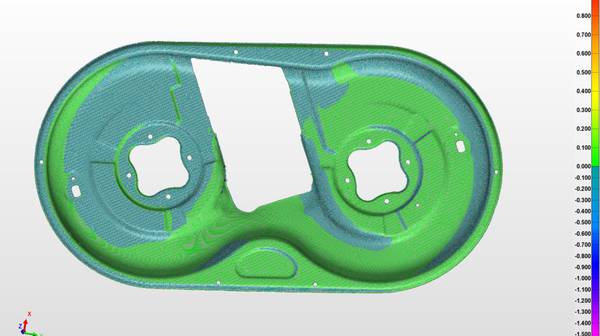
Walk onto any shop floor still using calipers and gauge blocks for reverse engineering, and you’ll find the same bottleneck: a technician spending hours on a single complex surface, only to discover the CAD model doesn’t match reality. For Western repair shops and Tier 2/3 suppliers working with legacy or custom components, this isn’t just inefficient—it’s expensive.
Manual methods struggle with the freeform geometries that define modern automotive design. Compound curves, undercuts, and reflective surfaces resist traditional measurement. The result? Iterative rework cycles, fitment failures, and scrap rates that eat directly into already-thin margins. One European aftermarket supplier reported 23% of their prototype runs required rework due to measurement errors—translating to roughly €40,000 in lost productivity annually for a mid-sized operation.
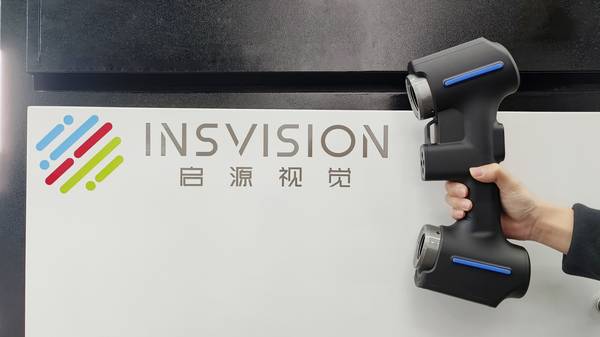
An industrial-grade 3D scanner for car parts changes the equation entirely. INSVISION‘s AlphaScan captures complete surface geometry as dense point cloud data—millions of measurements in minutes rather than hours. Unlike consumer alternatives, metrology-grade systems deliver the traceable accuracy required for direct manufacturing integration. Shops transitioning from analog workflows typically see scrap rates drop 30-50% and reverse engineering timelines compress from weeks to days.
Case in Point: Digitizing a Damaged Classic Fender Without Disassembly
Restoration specialists face a unique challenge: reproducing components that may exist only as damaged, corroded originals. A recent deployment of INSVISION’s AlphaScan at a UK classic car specialist illustrates the practical advantage.
The project involved a rusted front fender from a 1960s sports car—structurally compromised, unavailable as reproduction, and impossible to remove without damaging adjacent trim. Traditional approaches would require destructive disassembly, foam molding, or estimated hand-fabrication with multiple fitting iterations.
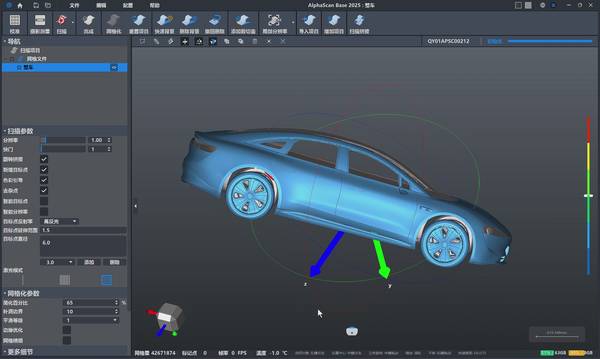
The AlphaScan’s handheld form factor allowed technicians to capture the fender in situ, working around mounting points and adjacent bodywork. Sub-20-micron accuracy preserved even pitted surface detail, generating a watertight mesh suitable for direct surfacing in SolidWorks. The resulting CAD model enabled CNC-formed repair panels that fit without modification—a process that previously required three to four physical prototypes.
For operations managing rare vehicle restorations, this capability transforms inventory strategy. Digital archives replace physical part hoarding. Lead times for “unobtainable” components collapse from months to days. The shop now maintains a library of 400+ digitized legacy components, eliminating warehousing costs for physical patterns.
Module title
| Challenge | Traditional Approach | AlphaScan Solution |
|---|---|---|
| Damaged, non-removable fender | Destructive disassembly, foam molding, hand-fabrication | In-situ scanning with sub-20-micron accuracy |
Why Consumer-Grade Hardware Creates False Economy
The market offers no shortage of entry-level scanning options. Devices like the SOL 3D scanner or dental-focused systems from 3Shape serve their intended applications adequately. For automotive manufacturing, they introduce more problems than they solve.
Consider the operational realities of 3D scanner car parts deployment in production environments:
Module title
- □ Scale and geometry: Dental scanners optimize for small, organic volumes—typically 100mm capture areas. Automotive components demand 500mm+ fields with rigid, often reflective surfaces.
- □ Environmental robustness: Consumer units rely on controlled lighting and vibration isolation. Shop floors present fluorescent interference, thermal drift, and ambient vibration.
- □ Metrology validation: Without traceable accuracy specifications, scan data cannot support supplier quality agreements or regulatory documentation.
INSVISION engineered the AlphaScan specifically for these conditions. Advanced reflective surface algorithms handle polished trim and machined castings without target spraying. Vibration-resistant tracking maintains accuracy during handheld operation on active production floors. The distinction matters: a Tier 3 supplier using consumer hardware for intake manifold quality control discovered 0.15mm systematic error in their scan data—error that propagated through three production batches before detection.
Industrial stability isn’t a luxury specification. It’s insurance against supply chain liability.
Calculating the Full ROI: Beyond Scan Speed
Speed metrics dominate marketing materials, but procurement decisions require deeper analysis. INSVISION customers consistently report returns across three less visible cost centers:
Module title
- Prototype elimination: First-time-right tooling, enabled by accurate reverse engineering data, reduces physical prototype iterations. A German aftermarket brake manufacturer eliminated 60% of their aluminum prototype castings after AlphaScan implementation—saving approximately €12,000 per development program.
- Digital inventory substitution: Physical warehousing of legacy tooling and backup components carries carrying costs typically estimated at 15-25% of inventory value annually. Digital archives eliminate this overhead while improving accessibility.
- Quality assurance integration: Scan-to-CAD comparison identifies deviations before they become production defects. One transmission component supplier reduced their customer rejection rate from 1.2% to 0.3% within two quarters, recovering approximately $180,000 in warranty exposure and rework costs.
These figures exclude the less quantifiable benefits: accelerated quoting on custom work, expanded service offerings (digitization as a billable service), and reduced dependency on diminishing specialist fabricators.
Integration Architecture: From Point Cloud to Production System
Scanning hardware represents only one node in modern manufacturing workflows. The AlphaScan’s value extends through downstream compatibility:
Module title
| Feature | Benefit |
|---|---|
| Native format support | Direct export to STL, STEP, and IGES eliminates conversion delays and data fidelity loss |
| Software stack integration | Certified plug-ins for Siemens NX, SolidWorks, and Geomagic Design X maintain associative workflows |
| Digital twin enablement | High-fidelity surface data supports simulation-driven design validation and predictive maintenance modeling |
| Compliance documentation | Automated inspection reporting meets IATF 16949 traceability requirements |
For operations evaluating industrial 3D scanner car parts technology, this interoperability determines implementation success. Hardware that requires proprietary workflows or extensive data translation creates hidden integration costs that erode projected returns. the series’s open-architecture approach ensures scan data flows directly into existing engineering investments—no parallel software ecosystems, no retraining overhead.
Bottom Line
The transition from manual measurement to industrial 3D scanning isn’t merely technological upgrade—it’s operational restructuring. Shops and suppliers that complete this transition gain capabilities their competitors cannot replicate through incremental efficiency improvements: the ability to digitize any physical component, archive it indefinitely, and reproduce it on demand with manufacturing-grade certainty.
For procurement teams evaluating capital equipment, the relevant question isn’t whether 3D scanning improves reverse engineering workflows. The data confirms it does. The question is whether the chosen system delivers metrology-grade accuracy with the environmental robustness and integration flexibility that production environments demand.
the series’s AlphaScan was engineered specifically for this intersection of requirements. The specifications aren’t marketing differentiation—they’re prerequisites for reliable ROI in automotive manufacturing when using professional 3D scanner car parts solutions.