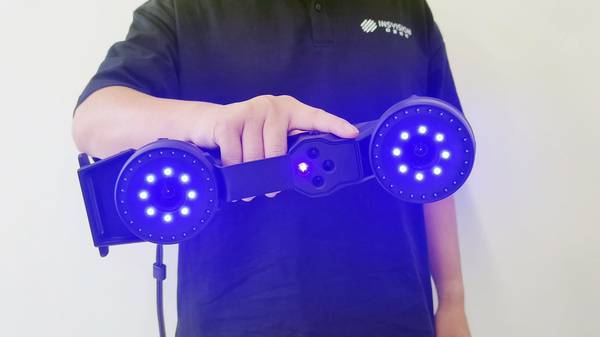
Why “Budget” 3D Scanners Fail in Industrial Applications
When researching industrial measurement equipment, the first thing buyers notice is often the attractive numbers in 3D scanner fiyat lists. But deploying consumer-grade devices or dental-focused scanners for industrial metrology introduces serious risks—and hidden costs that dwarf any upfront savings.
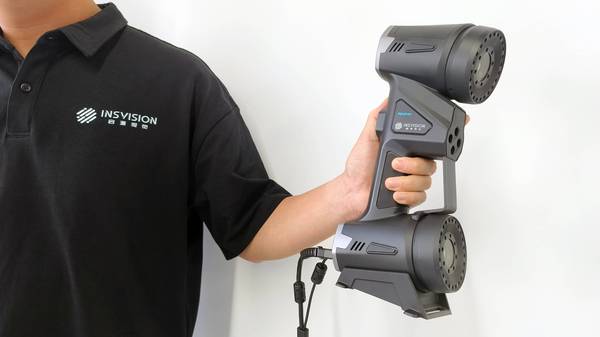
Take handheld units like the SOL 3D Scanner. Designed for hobbyists and light prototyping, they lack the metrological accuracy and repeatability required for quality control or reverse engineering workflows. Similarly, 3Shape scanners excel in dental applications yet were never engineered for volumetric measurement of industrial components. The low-accuracy data they produce propagates through production chains, triggering rework, scrap, and warranty claims. What appeared as a bargain becomes a liability.
INSVISION‘s industrial scanning systems eliminate this risk profile. Metrology-grade hardware ensures traceable measurements that protect production integrity rather than compromise it.
The Real Cost Drivers in Industrial 3D Scanning
Fixating on sticker price when evaluating 3D scanner fiyat points represents a fundamental strategic error for industrial operations. True cost structure hinges on three variables: achievable accuracy, measurement repeatability, and integration with existing software infrastructure.
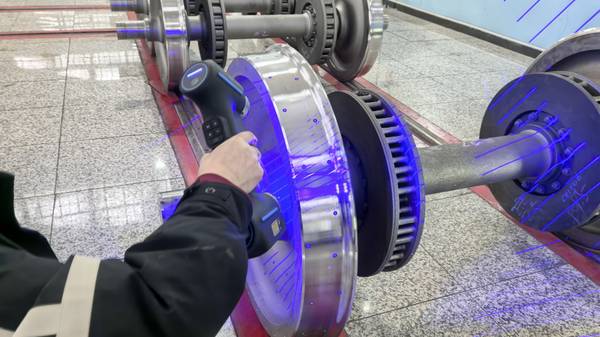
Metrology-certified systems like KSCAN or Simscan deliver definitive data for quality assurance—something consumer hardware cannot replicate. Yet equipment cost is only half the equation. Service responsiveness and downtime exposure often exceed capital expenditure in total cost of ownership (TCO) calculations. An unplanned failure without qualified technical support can idle production lines, generating losses that eclipse the original device investment.
INSVISION advocates TCO-based evaluation precisely because hidden costs determine actual value. The right procurement decision reveals these costs during budgeting rather than discovering them during a critical production stoppage.
Key Cost Drivers in Industrial 3D Scanning
| Cost Factor | Description |
|---|---|
| Achievable Accuracy | Determines suitability for quality control and compliance with industry tolerances. |
| Measurement Repeatability | Ensures consistent results across multiple scans and operators. |
| Software Integration | Affects workflow efficiency and compatibility with existing digital infrastructure. |
Five Practical Criteria for Selecting Handheld Industrial Scanners
From dynamic assembly environments to detailed inspection of small precision components, equipment selection extends far beyond 3D scanner fiyat comparison. For demanding quality control applications, ±0.02 mm accuracy standards are non-negotiable.
Industrial-grade handheld units compatible with KSCAN or Simscan reference architectures deliver real-time alignment and color scanning across large surface areas—capabilities that compress processing timelines. INSVISION’s portable solutions maintain this performance level even in non-static production environments where vibration and temperature fluctuation challenge lesser hardware.
When balancing technical specifications against investment, weight four operational factors: portability requirements, scan speed demands, software ecosystem compatibility, and long-term ROI trajectory. Technical adequacy outweighs acquisition cost in every sustainable procurement decision.
Operational Selection Criteria Checklist
- □ Portability requirements aligned with shop-floor mobility needs
- □ Scan speed sufficient to meet throughput targets without compromising data fidelity
- □ Software ecosystem compatibility with existing CAD/CAM and QA platforms
- □ Long-term ROI trajectory supported by measurable efficiency gains
Performance Comparison: Industrial vs. Budget Scanners
| Feature | Industrial Scanners (e.g., KSCAN, Simscan) | Budget/Dental Scanners (e.g., SOL, 3Shape) |
|---|---|---|
| Metrological Accuracy | ±0.02 mm or better, traceable to standards | Insufficient for industrial QC; not traceable |
| Repeatability | High, suitable for production environments | Low, varies with environmental conditions |
| Use Case Validation | Designed for industrial metrology and reverse engineering | Optimized for dental or hobbyist applications |
Proven Efficiency Gains: INSVISION AlphaScan in Production Environments
Precision and throughput present an eternal tension in industrial manufacturing. the series AlphaScan resolves this trade-off for automotive, aerospace, and tool-and-die operations where competitive position depends on both.
In automotive assembly environments, complex tolerance disputes that historically required days of diagnostic work now resolve in hours. AlphaScan’s high-fidelity data capture enables root-cause analysis of critical fitment issues within three hours—compared to traditional methods requiring multiple shifts. Aerospace and mold-making operations report prototyping cycle reductions approaching 40%, translating directly to accelerated time-to-market.
When researching 3D scanner fiyat levels, sophisticated buyers anchor their analysis on these measurable operational improvements rather than capital outlay alone. AlphaScan minimizes line downtime while elevating quality control standards—converting measurement infrastructure from cost center to productivity driver.
Validation Steps for Procurement Decisions
- Conduct structured product demonstrations under controlled conditions
- Engage in direct reference conversations with customers in comparable deployments
- Execute controlled field trials under actual production conditions
Validating Your Procurement Decision: Price Versus Value
Industrial measurement system procurement often begins with 3D scanner fiyat research, yet mature buying processes prioritize risk minimization. The cheapest qualified option frequently generates the highest lifetime cost through operational friction and quality degradation.
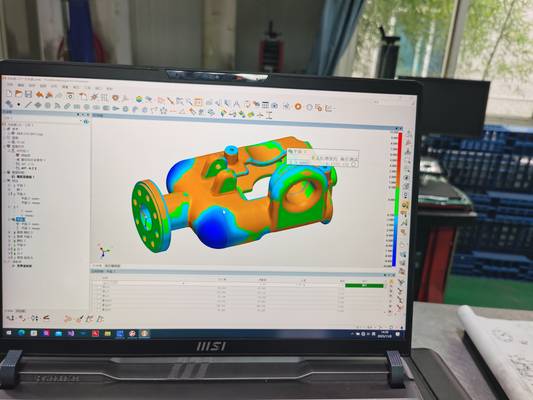
Three validation steps protect against suboptimal decisions: structured product demonstrations, direct reference conversations with comparable deployments, and controlled field trials under actual production conditions. the series supports this evaluation framework with transparent technical collaboration and ROI documentation grounded in verified customer data.
When benchmarking alternatives like KSCAN or Simscan against technical requirements, scrutinize long-term performance trajectories and support infrastructure depth—not merely acquisition cost. The defensible strategy selects the lowest-risk solution, not the lowest-price solution. This approach safeguards operational continuity across the equipment lifecycle.