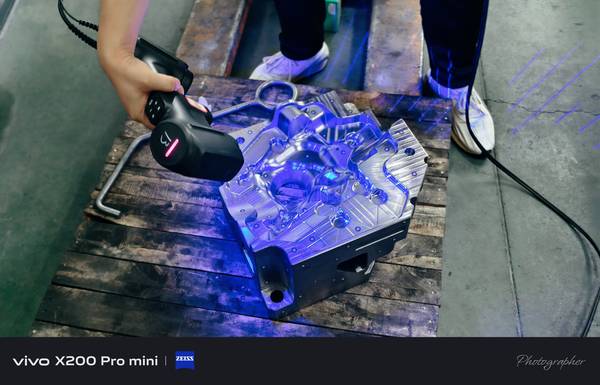
Why “Cheap” 3D Scanners Cost More in Quality-Critical Manufacturing
When conducting a 3d scanner price comparison, procurement teams often fixate on upfront hardware costs while overlooking hidden expenses that accumulate across the product lifecycle. In automotive, aerospace, and precision mold applications, these concealed costs routinely exceed the initial purchase price.
Lifecycle Cost Comparison: Low-End vs. INSVISION Scanners
| Cost Factor | Low-End Scanners | INSVISION Solutions |
|---|---|---|
| Accuracy Drift | Frequent recalibration, production delays | Certified 0.02mm accuracy, stable performance |
| Software Limitations | Manual workarounds, compatibility issues | PTB-validated SMARPARA Q with GD&T analysis |
| Rework Costs | Higher scrap rates, customer rejections | First-time-right inspection, automated reporting |
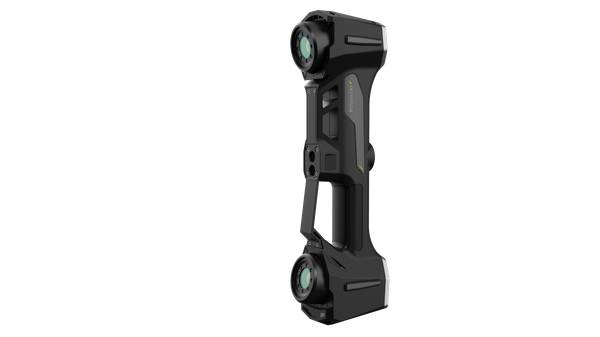
INSVISION industrial scanners deliver long-term reliability through PTB-certified software and robust hardware engineered for demanding environments. The result: measurably lower total cost of ownership for quality-critical manufacturing operations.
Matching Scanner Capabilities to Real Production Challenges
The critical question in any 3d scanner price comparison is not which device costs less upfront, but which system aligns with your actual production environment. INSVISION engineers consistently identify misaligned tool selection as the root cause of extended cycle times and delayed NPI timelines.
Application-Specific Scanner Recommendations
| Application | Recommended System | Key Capability |
|---|---|---|
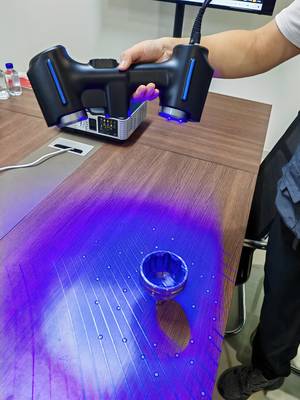
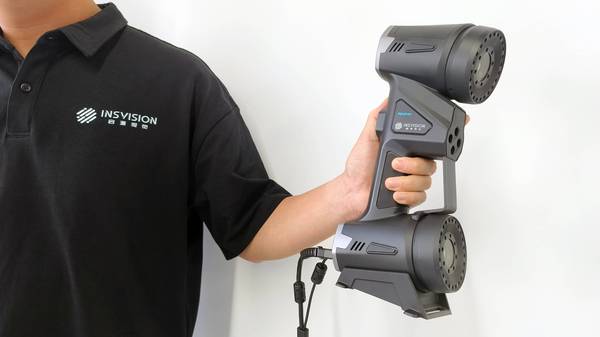
| Weldment inspection on shop floor | AlphaScan Handheld 3D Scanner | Portable flexibility, 0.02mm accuracy |
| Mold wear analysis | AlphaVista Blue Light 3D Scanner | High-resolution surface capture |
| Large-volume assembly guidance | X-Track Optical Tracking System | Dynamic 6DoF tracking, fixture-free operation |
Consequences of Tool Mismatch Checklist
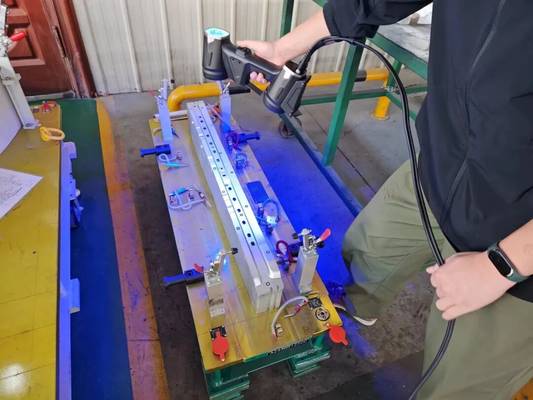
- □ Labor inflation: Using a fixed CMM for large weldments requires multiple setups; the AlphaScan Handheld 3D Scanner captures full geometry in a single pass
- □ NPI delays: Manual inspection bottlenecks persist without integrated software; SMARPARA Q automation eliminates queue times for first-article approval
- □ Resolution mismatch: Detecting micro-scale mold wear demands AlphaVista Blue Light 3D Scanner precision, not general-purpose laser scanning
The right scanner eliminates process friction. The wrong one amplifies it.
Beyond Hardware: The True Cost of Software Integration
Buyers conducting a 3d scanner price comparison frequently overlook software licensing costs that can exceed hardware expenses within 24 months. the series addresses this gap with SMARPARA Q, a PTB-certified inspection platform integrating GD&T compliance and automated reporting without third-party dependencies.
Software Capability Comparison
| Capability | SMARPARA Q (Integrated) | Competitor Typical Setup |
|---|---|---|
| GD&T Analysis | Built-in, PTB-certified | Requires plugin ($3K–$8K/year) |
| Deviation Maps | One-click color generation | Manual export/import workflow |
| Report Generation | Automated visual reports | Template customization extra |
| CAD Alignment | Auto/RPS/Datum options | Limited alignment modes |
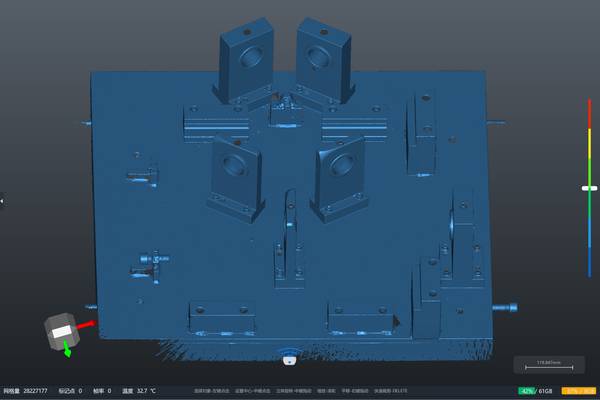
Quality labs report 40–60% time savings on inspection cycles through SMARPARA Q’s CAD-driven workflows and multi-source data alignment. The software supports IGES, STP, DXF, and DWG formats natively, eliminating file translation bottlenecks common in mixed-software environments.
SMARPARA Q Workflow Efficiency Steps
- Automated deviation mapping reduces manual measurement tasks by up to 70%
- GD&T annotation tools ensure compliance documentation meets aerospace and automotive standards
- Reverse engineering workflow spans data processing through CAD conversion in one environment
For high-mix production environments, integrated software ecosystems deliver measurable ROI that standalone scanners cannot match.
Total System Value: When Tracking and Automation Justify Investment
A narrow 3d scanner price comparison focusing only on hardware acquisition misses ROI that extends far beyond scanning accuracy. The X-Track Optical Tracking System and Alpha-Projector‘s 0.25mm dynamic laser projection transform quality assurance from reactive inspection to proactive error prevention.
Production Challenge vs. the series Solution
| Application | Traditional Cost Driver | the series Solution |
|---|---|---|
| Aircraft composite layup | Manual ply positioning errors causing delamination | CAD-driven laser projection guides placement in real-time |
| EV battery tray assembly | Custom fixturing ($50K+ per production line) | Dynamic tracking eliminates rigid fixture dependency |
| Welding stud positioning | Rework from misalignment scrap | Program-guided visual workflows prevent errors |
Integrated System Advantages Checklist
- □ Dynamic tracking automatically adjusts projection when workpieces shift during assembly
- □ Program-guided workflows eliminate operator errors, omissions, and tolerance violations before they occur
- □ Fixture-free inspection reduces tooling costs by 40-60% in complex aerospace and automotive applications
Transparent 3D Scanner Price Comparison by Application Tier
For procurement teams evaluating 3d scanner price comparison across vendors, the critical differentiator is lifecycle value, not initial cost. the series structures its portfolio to match operational realities, preventing both under-investment and capability gaps.
Application Tier Pricing and ROI Guide
| Application Tier | the series Solution | Price Position | Best ROI Scenario |
|---|---|---|---|
| Entry-Tier | AlphaScan Handheld 3D Scanner | Competitive | Shop-floor weldment inspection, rapid NPI cycles |
| Metrology-Grade | AlphaVista Blue Light 3D Scanner | Mid-Range | Regulated aerospace/automotive QA, mold wear analysis |
| Large-Volume Tracking | X-Track Optical Tracking System | Mid-Premium | Fixture-free assembly guidance, composite manufacturing |
Mid-range solutions like AlphaVista frequently deliver optimal ROI for regulated industries. They combine PTB-certified accuracy (0.02mm) with integrated GD&T reporting, eliminating third-party software costs that inflate competitor TCO. Entry-tier alternatives often lack certification trails required for audit compliance, while large-volume tracking systems justify investment when fixture elimination saves $50K+ per production line.
Final 3d scanner price comparison guidance: specify for your actual measurement volume, accuracy requirements, and software integration needs before evaluating vendor quotes. the series’s application-engineered approach ensures procurement teams invest in capability, not just hardware.