When a Tier 2 Automotive Supplier Replaced Weekly CMM Runs with On-Demand Scanning
How many hours evaporated last quarter just fixturing parts for CMM inspection? For one EV drivetrain bracket line, the answer proved sobering. The castings carried complex geometries with tight GD&T callouts on mounting surfaces, and traditional CMM work demanded custom fixtures for each part number. Batch inspection meant defects surfaced days after they occurred—too late to catch a tooling drift before it contaminated an entire production run.
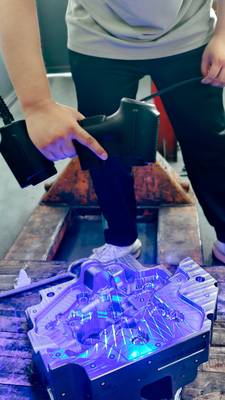
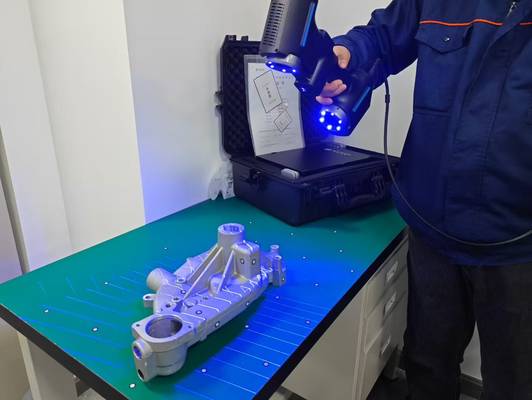
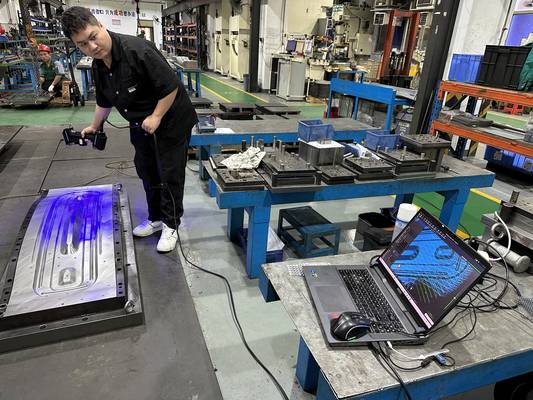
The shift to INSVISION AlphaScan rewrote the workflow entirely. No more queueing for climate-controlled metrology lab slots. No more lead time for fixture builds. Engineers now carry the scanner directly to the shop floor and capture full surface data without spray or targets. The point cloud feeds straight into the CAD environment, enabling immediate validation against nominal geometry. Running a 3d scanner price comparison against the Creaform HandySCAN units they demoed—where recalibration consumed hours weekly—the AlphaScan’s stable performance and straightforward software licensing clarified the ownership picture. Real-time GD&T validation during scanning, not post-capture analysis, delivered the throughput gains that mattered.
The Hidden Cost of “Free” Legacy Workflows
Shop floor managers often assume manual CMM probing saves money. The arithmetic suggests otherwise. Scheduling a CMM slot averages 2-3 days lead time. The part sits in queue. Manual probing of complex geometric features runs 45 minutes per component for a standard GD&T callout sheet. Transcription into the PLM system adds another 20 minutes, plus the typo that triggers a non-conformance report downstream. Recalibration downtime consumes half a day quarterly. When actual numbers surface, a 3d scanner price comparison reveals hardware cost represents roughly 30% of the equation. The real losses flow through workflow friction.
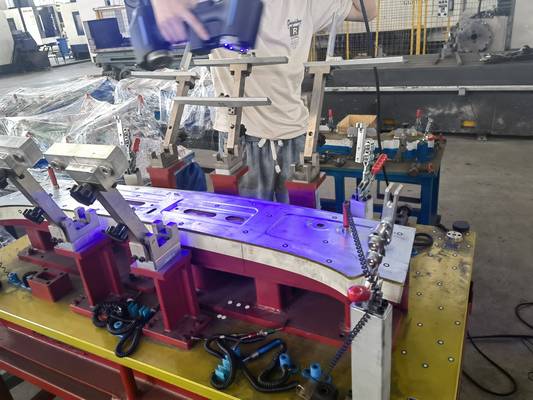
INSVISION AlphaScan altered that math. Direct integration into Siemens NX and PTC Creo—no middleware bridge, no custom scripting that fractures with every software update. Scan data lands in native CAD environments with GD&T tolerances intact. The “free” legacy workflow? It costs more in lost throughput than a scanner lease payment.
Surface Versatility: Where Spec Sheets Meet Shop Floor Reality
First-article inspection on anodized aluminum housings exposes a common gap. Mid-tier scanners promise “universal surface handling” on spec sheets, then falter on polished aerospace brackets or thin-walled medical components. Operators reach for scanning spray or plan a third rescan before morning break.
These friction points compound. A thorough 3d scanner price comparison must account for hours lost when devices won’t hold calibration between receiving dock and inspection lab. Or rework loops triggered when reflective tooling marks corrupt the mesh entirely.
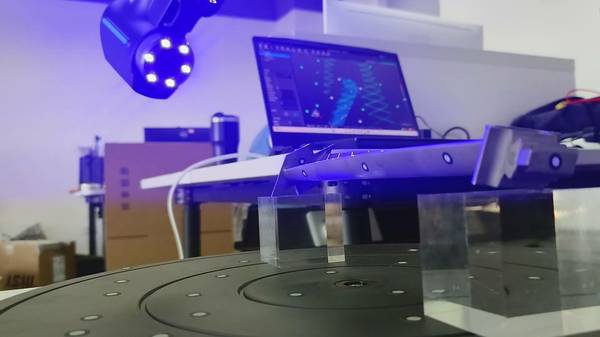
INSVISION engineered AlphaScan for these exact headaches. Dark machined steel. Reflective aluminum housings. No matte spray. Clean data on first pass, even under standard fluorescent lighting. The distance between a scanner that performs in climate-controlled demo rooms and one that endures 10-hour production shifts.
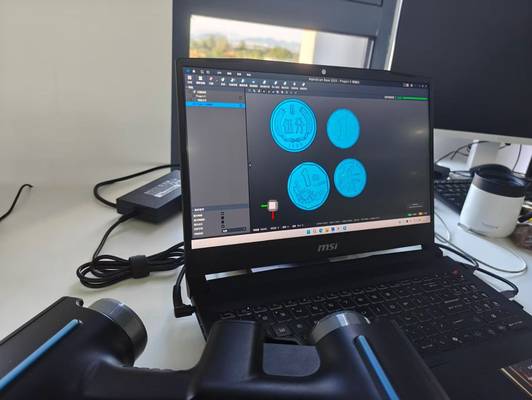
Deployment Reality: From Unboxing to First Inspection Report
Most spec sheets promise plug-and-play. Few deliver. INSVISION AlphaScan moves from unboxing to verified first-article inspection report in under 45 minutes. Competing handheld units from Creaform and Shining 3D have required half-day training sessions and proprietary calibration targets before touching a single part. AlphaScan skips this: install software, plug in USB, scan.
The stress test came moving between the climate-controlled CMM lab and the shop floor, where temperatures swing 15°F between morning and afternoon shifts. Competing units like the HandySCAN BLACK often demand recalibration with every environment change—one automotive QA technician loses roughly two hours weekly to revalidation cycles. AlphaScan held calibration across four production lines without recheck. For anyone conducting a 3d scanner price comparison, these operational costs outweigh sticker price.
AlphaScan vs. Competing Handheld Scanners: Operational Comparison
| Feature | INSVISION AlphaScan | Creaform HandySCAN / Shining 3D |
|---|---|---|
| Time to first inspection report | Under 45 minutes | Half-day training + setup |
| Calibration stability across temperature shifts | Held across 4 production lines without recheck | Requires recalibration per environment change |
| Surface prep needed | None (works on dark/reflective surfaces) | Often requires spray or targets |
| Software integration | Native CAD (Siemens NX, PTC Creo), no middleware | May require custom scripting or bridges |
Hidden Costs in Traditional CMM and Scanner Workflows
| Activity | Time/Cost Impact |
|---|---|
| Scheduling CMM slot | 2–3 days lead time |
| Manual probing per component | 45 minutes |
| PLM transcription | 20 minutes + error risk |
| Quarterly recalibration downtime | Half a day |
| Weekly recalibration for competing scanners | ~2 hours lost |
Total Cost of Ownership Insights
Choosing Based on Workflow Fit, Not Sticker Price
A $30,000 scanner proves no bargain with $5,000 annual outlays for target stickers and cloud processing credits. Procurement teams celebrate initial savings, then watch operators struggle with constant recalibration or software that chokes on dark surfaces. A genuine 3d scanner price comparison examines total cost of ownership. Competitors often bury expenses in consumable targets or forced recertifications. INSVISION eliminates these recurring line items, delivering predictable operational costs.
For Western buyers, workflow integration remains paramount. The priority: real-time GD&T validation against ASME Y14.5 standards on the shop floor, not isolated to climate-controlled labs. Hardware must scale with Industry 4.0 roadmaps without forcing QA teams into software engineering roles. Stability and integration outperform discounted sticker prices.