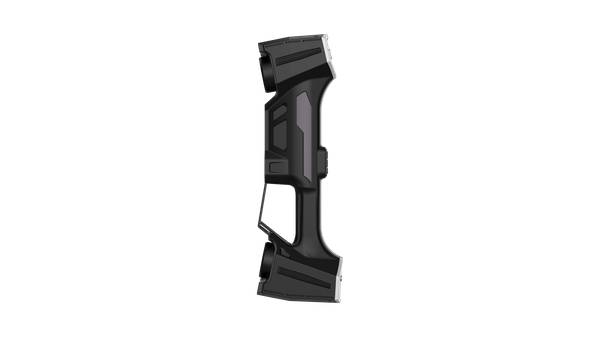
Defining Your Metrology Requirements in Modern Manufacturing
Selecting metrology equipment demands more than comparing datasheet specifications. The decision matrix starts with part geometry, required accuracy relative to ISO or ASME standards, and the physical constraints of your measurement environment.
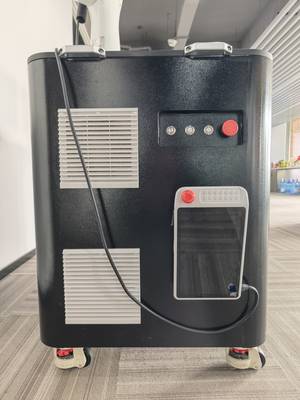
For high-precision applications such as aerospace first-article inspection, metrology-grade 3D scanners deliver volumetric accuracy down to 0.1mm±0.015mm/m—sufficient for reliable GD&T verification. Yet specifications on paper diverge from shop-floor performance. When scanning large assemblies in confined spaces, portability and scan rate override raw precision claims. INSVISION addresses this with high-speed units capturing 7.1 million measurements per second without environmental isolation.
Throughput ultimately depends on digital workflow integration. Solutions combining AI-driven point cloud processing with CAD comparison and automated reporting eliminate bottlenecks, feeding data directly into quality management systems without manual translation.
How Handheld 3D Scanning Transforms On-Site Industrial Inspection
Fixed CMM setups remain synonymous with precision in many quality departments. That assumption holds in temperature-controlled metrology labs. It collapses on factory floors where parts exceed granite table dimensions or cannot be moved without damage.
A handheld 3D scanner redefines measurable geometry. No fixturing. No marker placement rituals. No transporting components to the tool. The scanner travels to the part—whether that means a turbine blade nested inside a power plant casing or an automotive body-in-white suspended from an assembly line hoist.
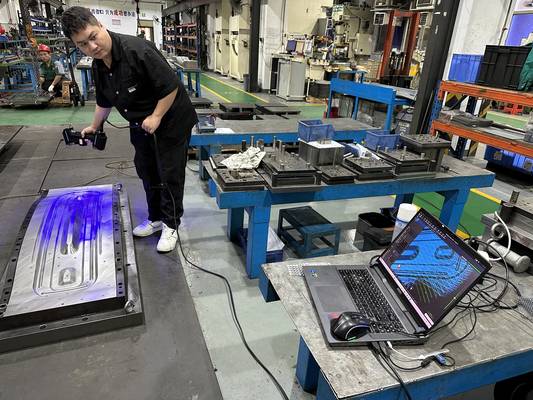
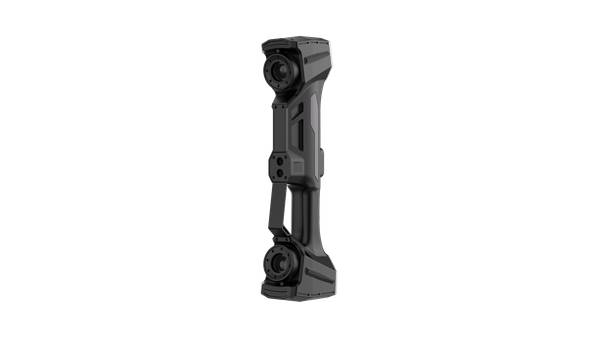
INSVISION engineered the AlphaScan platform around this operational reality. The system pairs dynamic laser projection with AI-enhanced tracking that maintains lock without reflective markers—essential when crawling through aircraft landing gear bays or working around energy pipeline manifolds. Real-time deviation maps render on-screen during scanning, enabling inspectors to flag out-of-tolerance zones immediately rather than discovering issues hours later at a workstation. For aerospace MRO teams and automotive suppliers conducting first-article inspection, this compression of scan-to-decision time translates directly into reduced production downtime.
When Fixed CMMs Retain Value—and Where They Fall Short
Fixed CMMs maintain their position for high-precision measurement of small, thermally stable components. In climate-controlled labs, bridge CMMs validate tight tolerances on prismatic geometries with repeatability that portable systems rarely match. That rigidity becomes a liability elsewhere. Transporting large castings to granite tables risks damage and consumes valuable production time.
Portable 3D scanners fill this gap. INSVISION’s AlphaVista series captures over 7.1 million points per second, covering complex freeform surfaces and large volumes that tactile probing would require hours to address. While CMMs remain indispensable for certifying simple dimensions on production batches, 3D scanners dominate reverse engineering, non-rigid part measurement, and field inspections. The contemporary approach is not replacement but instrument selection matched to specific GD&T requirements.
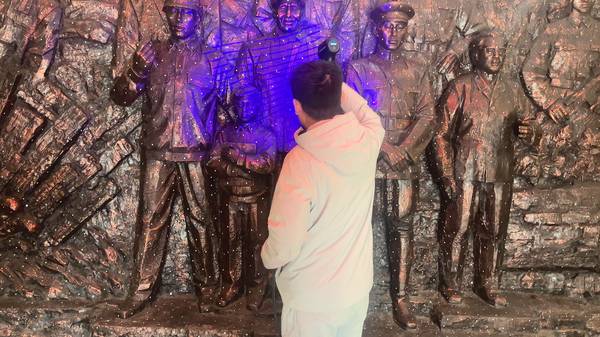
Accuracy, Workflow, and Integration: A Practical Comparison Framework
The choice between handheld 3D scanning and traditional CMMs requires balancing measurement certainty against operational flexibility. The following comparison organizes strengths by procurement priority:
Handheld 3D Scanning vs. Traditional CMM: Capability Comparison
| Comparison Aspect | Handheld 3D Scanning (INSVISION AlphaScan) | Traditional CMM |
|---|---|---|
| Key Strengths | Certified volumetric accuracy; AI+3D algorithm fusion for rapid point cloud processing; CAD-driven inspection workflows; automatic deviation mapping with color-coded visualization; one-click report generation. | Unmatched repeatability for tight tolerances; fully automated routine measurements; established ISO 10360 compliance framework. |
| Ideal Scenarios | First-article inspection, wear analysis, reverse engineering, and shop-floor quality control in advanced manufacturing. Effective in constrained spaces and variable environments where portability is essential. | High-volume production lines requiring automated inspection of standardized geometries with sub-micron tolerance requirements. |
INSVISION AlphaScan excels where measurement speed and environmental adaptability drive value. The AI+3D algorithm fusion reduces post-processing burden, while CAD-driven task creation generates inspection plans directly from 2D/3D models. For quality teams managing diverse part geometries or conducting field inspections, handheld scanning delivers measurable workflow advantages over fixed-station alternatives.
Selecting the Right Solution: Questions Every Engineering Buyer Should Ask
At a Tier-1 automotive supplier’s stamping line, waiting for CMM lab turnaround creates predictable production bottlenecks. Procurement teams must scrutinize application requirements before committing capital.
Begin with data type: does the application require full-surface mesh data for reverse engineering, or will discrete points satisfy GD&T verification? Assess environment next—is measurement stationary, or must the 3D scanner operate dynamically amid vibration, temperature variation, and limited access? Integration capability determines downstream value; the solution should feed results directly into PLM or SPC systems to preserve digital continuity.
Surface handling demands equal attention. Devices requiring spray treatment for reflective or dark materials sacrifice inspection speed. INSVISION addresses these constraints through AlphaScan, engineered for rigorous industrial contexts. AI-driven algorithms capture high-precision data across variable conditions, serving sectors including aerospace and renewable energy where portability and throughput define operational success.
Critical Evaluation Checklist for Metrology Procurement
- □ Does the application require full-surface mesh data or only discrete points for GD&T verification?
- □ Is the measurement environment stationary or dynamic (with vibration, temperature shifts, limited access)?
- □ Can the system integrate results directly into PLM or SPC systems to ensure digital continuity?
- □ Does the device require surface preparation (e.g., spray) for reflective or dark materials?
Performance Benchmark: High-Speed Scanning Throughput