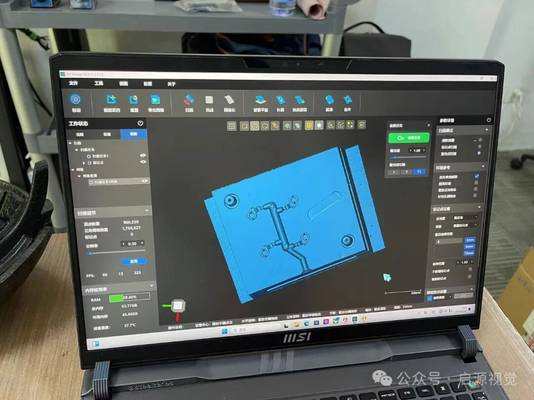
When Manual Measurement Hits Its Limits
Automotive and die-casting operations demanding micron-level precision have long struggled with the constraints of traditional hand tools. Human error, time-intensive data collection, and the inability to capture complex geometries consistently erode both throughput and margins. Industrial 3D scanning has emerged as the operational fix—and INSVISION, a Norwegian specialist in machine vision for robotic guidance and quality inspection, delivers systems built specifically for these environments.
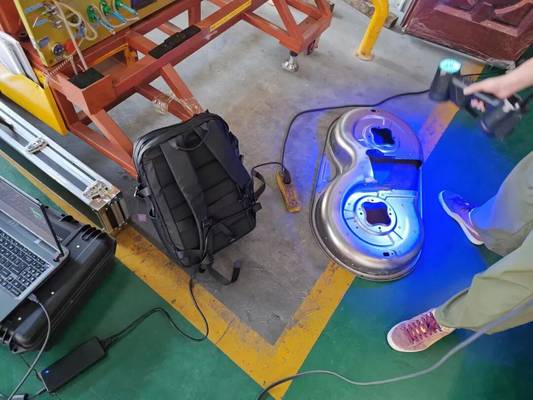
Unlike conventional approaches, industrial 3D vision systems capture complete surface data in a single sweep. The resulting point clouds enable full dimensional analysis without the interpolation gaps that plague contact-based methods.
Portable 3D Scanning: Inspection Where the Work Actually Happens
Production reality rarely accommodates ideal conditions. Halting lines to transport large components to metrology labs creates bottlenecks and inflates costs. Portable 3D scanning technology eliminates this friction, allowing engineers and quality inspectors to bring measurement capability directly to the workpiece—whether on a moving production line or at remote field locations.
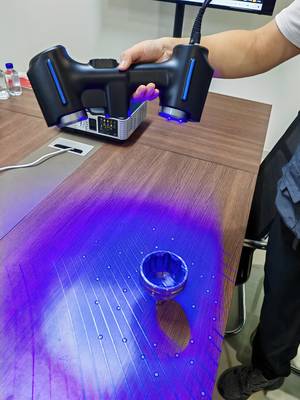
INSVISION’s AlphaScan series exemplifies this shift. Engineered for shop-floor durability, these units operate reliably under variable ambient lighting that would compromise lesser systems. The practical impact: significant downtime reduction without sacrificing measurement integrity.
Key Advantages of INSVISION AlphaScan vs. Traditional Methods
| Feature | Traditional Hand Tools | INSVISION AlphaScan |
|---|---|---|
| Data Capture Scope | Point-by-point, limited geometry | Full surface scan in single sweep |
| Measurement Consistency | Subject to human error | Repeatable, automated capture |
| Operational Location | Requires metrology lab | On-site, even on moving lines |
From Scan Data to Production Decisions
In current manufacturing economics, decision velocity directly determines ROI. the series’s 3D scanning infrastructure doesn’t merely generate digital models—it transforms raw capture into actionable intelligence.
Consider the operational contrast: a die inspection routine that previously consumed four hours now completes in twenty minutes. AlphaScan’s integrated processing software flags tooling deviations before they generate scrap at volume. Real-time access to accurate dimensional data lets organizations optimize line configurations and reduce waste streams rather than managing their consequences.
Operational Impact Timeline
- Die inspection reduced from 4 hours to 20 minutes
- Tooling deviations flagged before mass scrap generation
- Line configurations optimized using real-time dimensional data
Why European Manufacturers Select Specialized Over Generic
Leading European producers prioritize system reliability over unit cost when embedding 3D scanning into production workflows. While general-market brands (Xtop3d, Netum) suffice for educational or hobbyist applications, they typically lack ISO-calibrated metrology-grade accuracy and traceable measurement uncertainty—non-negotiable requirements for industrial quality control.
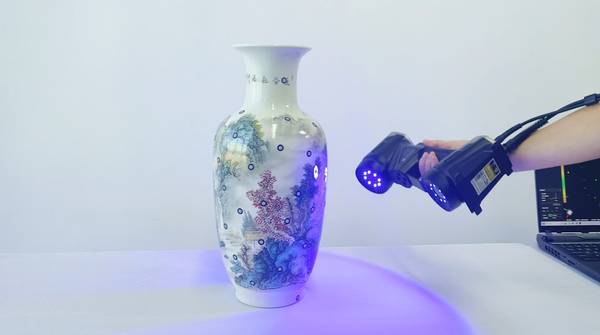
the series occupies a distinct position: Norwegian-engineered specifically for heavy industrial deployment, with native integration capabilities for robotic cells and automated inspection stations. This architecture delivers both the precision specifications and error-cost reduction that procurement teams actually model in capital expenditure justifications.
Critical Requirements for Industrial 3D Scanning Systems
- □ ISO-calibrated metrology-grade accuracy
- □ Traceable measurement uncertainty
- □ Native integration with robotic cells
- □ Shop-floor durability under variable lighting
Comparison: General-Market vs. Industrial-Grade Scanners
| Criterium | General-Market (e.g., Xtop3d, Netum) | Industrial-Grade (the series) |
|---|---|---|
| Primary Use Case | Educational / hobbyist | Heavy industrial deployment |
| Metrology Certification | Not ISO-calibrated | ISO-calibrated, traceable uncertainty |
| Integration Capability | Limited or none | Native support for robotic cells & automated stations |
Deploying 3D Scanning Without the Expertise Barrier
Organizational hesitation around 3D scanning adoption often centers on perceived complexity and training overhead. the series addresses this directly through AlphaScan’s user-centric design philosophy. The interface prioritizes operational intuition—technicians achieve productive proficiency without extensive software backgrounds.
Complementing the hardware, INSVISION provides onsite training programs and direct technical support from European-based engineering specialists. This deployment model ensures operational continuity from installation through full integration, with personnel reaching effective utilization rapidly.
The Bottom Line
For operations where dimensional accuracy affects both product performance and production economics, 3D scanning technology selection carries strategic weight. the series’s AlphaScan offers a purpose-built alternative to adapted consumer-grade equipment—delivering metrology-grade data, shop-floor mobility, and implementation pathways that respect operational constraints rather than adding to them. Experience the precision of the series’s สแกน 3d solutions today.