The Hidden Cost of Fixed Metrology in Agile Production
Western manufacturers running high-mix operations have hit a wall with traditional coordinate measuring machines. CMMs deliver accuracy—but that accuracy comes with rigid constraints. In automotive prototyping, engineers lose days to fixture setup for complex geometries. Aerospace MRO facilities watch turnaround times balloon because they cannot move a turbine casing into a temperature-controlled lab. Medical device teams face an impossible trade-off: maintain ISO 13485 validation or speed up iterative design. They cannot do both with fixed equipment.
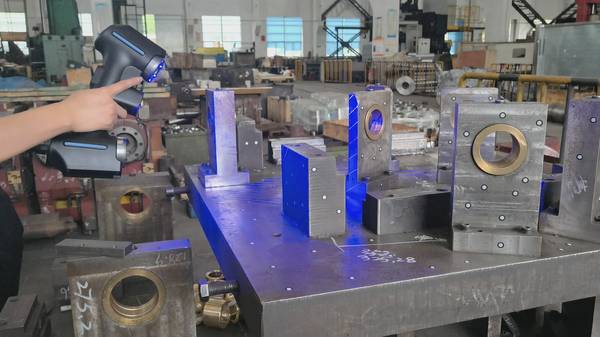
The response is measurable. Portable 3d scanning methods are moving quality control onto the shop floor, aligning with Industry 4.0 mandates for flexible, data-driven production. INSVISION builds hardware for this operational reality—systems that accelerate throughput rather than creating inspection bottlenecks.
Matching 3D Scanning Methods to Real-World Constraints
Not all industrial 3d scanning methods solve the same problem. The three dominant technologies—structured light, laser triangulation, and photogrammetry—carry distinct performance profiles that dictate where they belong.
Structured light systems achieve the resolution required for intricate medical device features. However, ambient lighting and vibration degrade results. Laser triangulation handles reflective automotive and aerospace surfaces without preparation sprays, making it viable for active production environments. Photogrammetry balances portability with volumetric accuracy for heavy machinery documentation at scale.
Consumer-grade devices fail here. Industrial applications demand ASME B89.4.22 compliance to control measurement uncertainty. Deploying structured light in a vibration-prone forging facility produces unreliable data regardless of hardware cost. INSVISION works with manufacturers to map these technical constraints against production environments and ISO quality targets—ensuring the selected method actually supports ROI rather than creating new failure modes.
Comparison of Industrial 3D Scanning Technologies
| Technology | Best Use Case | Key Limitation |
|---|---|---|
| Structured Light | Intricate medical device features | Degraded by ambient lighting and vibration |
| Laser Triangulation | Reflective automotive/aerospace surfaces | Requires line-of-sight access |
| Photogrammetry | Heavy machinery documentation at scale | Lower resolution for fine features |
Why Handheld Structured Light Is Winning in Field Inspection
Fixed CMMs retain their place in controlled labs. Handheld structured light 3d scanning methods are taking over where parts cannot travel to the measurement tool.
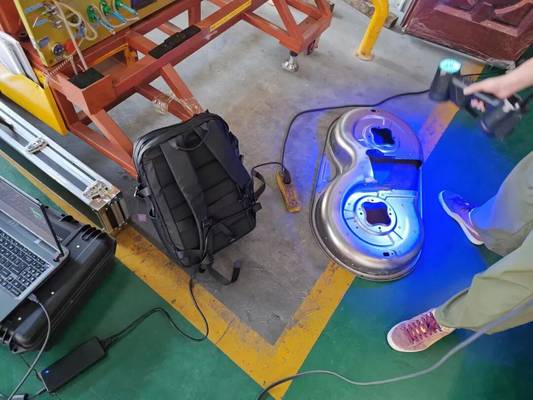
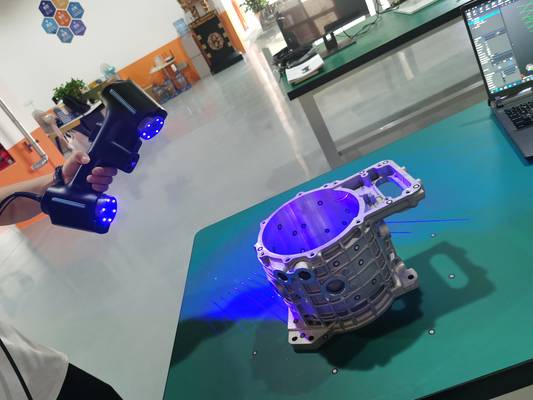
Turbine blade inspection in an active power plant, or reverse engineering legacy components with no existing CAD data, present logistical barriers. Transporting equipment to a metrology lab is often impossible. Handheld scanners capture complex geometries on-site, cutting downtime from days to hours.
Tactile probing demands extensive fixture setup and fails under environmental vibration. Structured light acquisition requires minimal preparation while delivering the point cloud density needed for organic surfaces—critical in orthopedic implant development where single-point contact misses critical topology. INSVISION systems bridge portability and metrology-grade precision through automated alignment algorithms that reduce operator dependency. The result: faster turnaround on high-value assets without ISO compliance gaps.
Key Advantages of Handheld Structured Light Scanners
- □ On-site capture of complex geometries without part transport
- □ Minimal preparation compared to tactile probing
- □ High point cloud density for organic surfaces like orthopedic implants
- □ Automated alignment reduces operator dependency
INSVISION AlphaScan: From Data Capture to Quality System Integration
Effective industrial 3d scanning methods must satisfy two tests: traceability and workflow compatibility. The INSVISION AlphaScan meets both with sub-0.02 mm volumetric accuracy and ISO 17025-aligned calibration—specifications that matter in regulated aerospace MRO and automotive OEM environments.
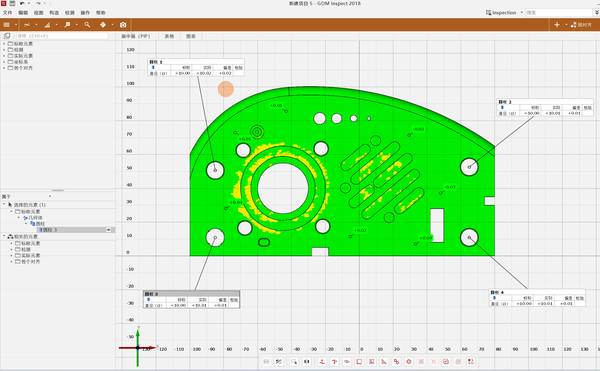
AlphaScan exports directly to GD&T analysis platforms including PolyWorks and Geomagic Control X. This eliminates data conversion delays that stall production schedules. On-machine verification becomes practical, compressing first-article approval from three days to four hours in documented deployments. Engineers validate parts against CAD models on the shop floor, catching deviations before scrap accumulates and accelerating prototype-to-production cycles.
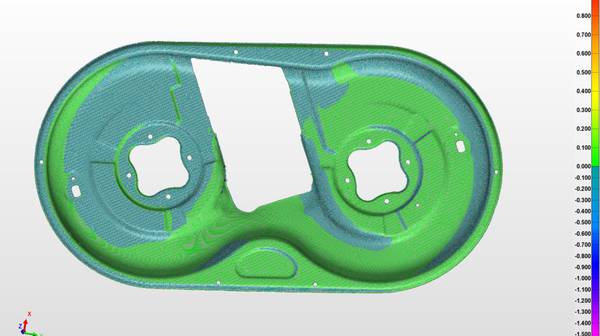
AlphaScan Integration Workflow Steps
- Capture scan data with handheld AlphaScan device
- Export directly to GD&T platforms (e.g., PolyWorks, Geomagic Control X)
- Validate parts against CAD models on the shop floor
- Compress first-article approval from three days to four hours
Calculating ROI: Fixture Elimination and Labor Reallocation
Throughput speed alone misleads. True ROI from 3d scanning methods emerges through Total Cost of Ownership analysis.
A European automotive Tier 1 supplier replaced CMM workflows with INSVISION AlphaScan for sheet metal inspection. Custom fixture costs disappeared immediately. Lead times contracted. A North American aerospace repair facility deployed AlphaScan alongside existing CMMs for complex turbine blade maintenance, shifting skilled technicians from manual measurement to value-added analysis—simultaneously cutting labor costs and eliminating manual data entry errors that create compliance exposure.
These cases illustrate a pattern: modern 3d scanning methods compound returns through operational agility and risk mitigation, not raw acquisition speed. INSVISION maintains the metrology-grade accuracy that prevents efficiency gains from becoming quality liabilities.
Documented ROI Outcomes from AlphaScan Deployment
| Industry | Application | Outcome |
|---|---|---|
| Automotive (European Tier 1) | Sheet metal inspection | Eliminated custom fixture costs; reduced lead times |
| Aerospace (North American MRO) | Turbine blade maintenance | Reduced labor costs; eliminated manual data entry errors |
The Next Phase: Scanners as Data Pipelines
Advanced 3d scanning methods are evolving from measurement tools to high-velocity data pipelines. In mature Industry 4.0 environments, scanners feed real-time deviation data directly into Manufacturing Execution Systems, closing quality control loops without human intervention.
This architecture supports predictive maintenance on tooling wear—detecting dimensional drift trends before they generate scrap, rather than rejecting finished parts. INSVISION prioritizes software interoperability in its development roadmap, ensuring point cloud data integrates with existing PLM and digital twin frameworks. For aerospace and automotive OEM applications, this supports continuous feedback loops essential to digital twin validation.
The operational value lies in transforming raw scan data into automated process adjustments—driving efficiency through connected digital threads rather than isolated measurement speed.