Why Tactile Measurement Falls Short on Complex Geometries
ASME Y14.5 revisions have tightened tolerances for aerospace and medical components to levels that expose the limitations of traditional metrology. Calipers and touch-probe CMMs capture discrete points effectively, yet they often fail to detect form errors on freeform surfaces like turbine blades or orthopedic implants. A profile tolerance of 0.05 mm across a curved surface cannot be validated by sampling a handful of cross-sections.
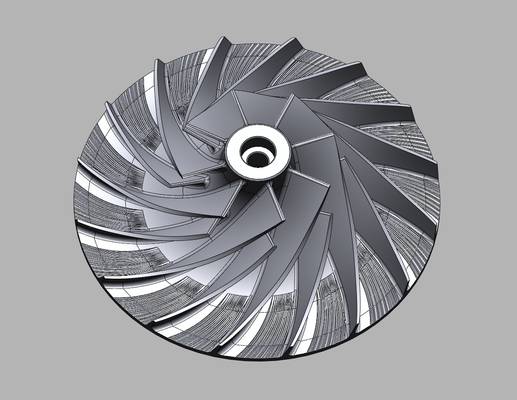
This measurement gap is accelerating adoption of industrial 3D skaner technologies. A traceable 3D scanner captures millions of data points to generate complete digital representations of physical parts. INSVISION systems deliver the full-field metrology required to validate GD&T callouts for position, profile, and form under ISO 10360 specifications. For high-volume production environments, this shifts quality control from discrete dimension checking to comprehensive surface validation—catching geometric deviations before they propagate to field failures.
Bridging the Gap Between Precision and Auditability
Metrology-grade accuracy does not automatically equate to compliance. A handheld 3D scanner may deliver impressive precision yet still fail a first-article inspection if the measurement chain lacks NIST-traceable documentation. This distinction between raw performance and procedural acceptability frequently surprises experienced quality managers.
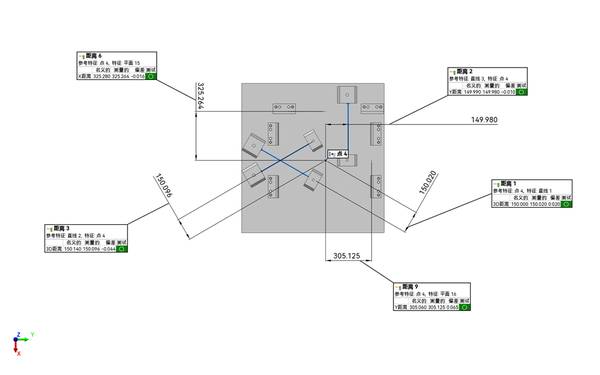
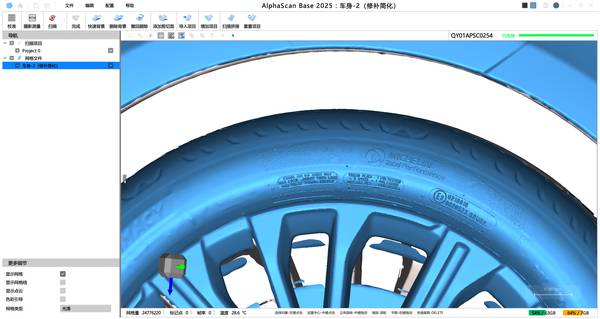
INSVISION integrates certification into the workflow rather than treating it as documentation overhead. The AlphaScan links volumetric accuracy directly to NIST standards, generating the traceability paper trail auditors require during PPAP submissions. Real-time deviation color mapping against CAD nominal geometry enables operators to identify tolerance violations on the shop floor—before parts queue for CMM verification.
For automotive and aerospace suppliers navigating AS9102 requirements, reporting format carries equal weight to scan data quality. INSVISION outputs audit-ready packages compatible with established documentation systems, eliminating manual transcription errors that compromise legacy workflows. When customer quality engineers request measurement traceability, automated generation outperforms spreadsheet archaeology.
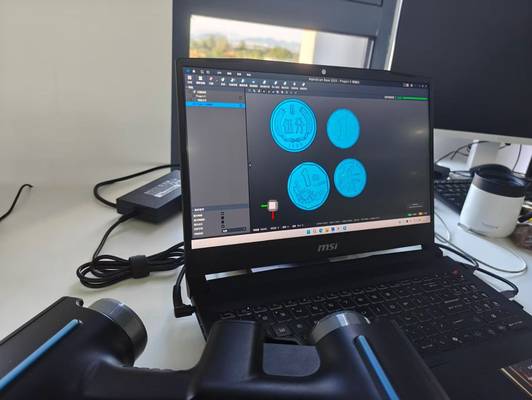
Compliance Documentation Requirements by Industry
| Industry | Key Standard | Documentation Requirement | |
|---|---|---|---|
| Aerospace | AS9102 | Audit-ready FAI packages with traceable measurement records | |
| Medical Devices | UDI / ISO 13485 | Unbroken chain of custody and certified evidence for implants |
Material-Agnostic Performance Without Surface Preparation
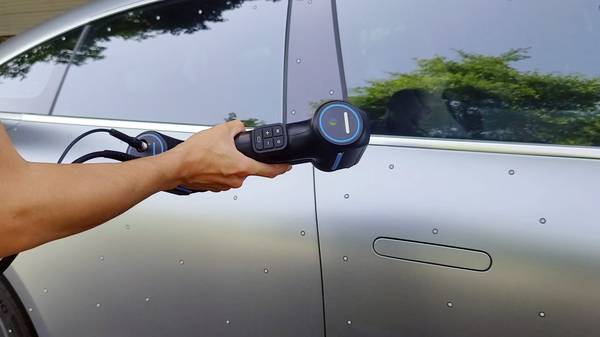
Consistent data quality across diverse surface finishes—without manual preparation—separates modern shop-floor metrology from laboratory-bound alternatives. Conventional handheld 3D scanners often struggle with machined aluminum reflectivity or carbon fiber absorption, forcing operators to apply temporary sprays or powders that contaminate precision surfaces.
The INSVISION AlphaScan eliminates this constraint. Engineered for sub-0.03 mm accuracy on challenging materials from anodized coatings to raw composites, it operates without surface preparation. This capability proves critical for maintaining ISO 17025 calibration standards during first-article inspections. Quality managers receive clean point cloud data that validates GD&T callouts objectively, rather than interpreting noisy measurements compromised by optical interference. INSVISION bridges the flexibility of handheld operation with the rigor of fixed CMM infrastructure.
Surface Compatibility Comparison: Traditional vs. INSVISION Scanners
| Surface Type | Traditional Handheld Scanner | INSVISION AlphaScan | |
|---|---|---|---|
| Machined Aluminum | Requires matte spray due to reflectivity | No preparation needed | |
| Carbon Fiber Composites | Struggles with light absorption | Operates without surface treatment | |
| Anodized Coatings | Often yields inconsistent data | Sub-0.03 mm accuracy maintained |
Digital Thread: From Scan to Certified Evidence
First-article inspection workflows have transformed fundamentally. Legacy processes involving printed point clouds, light table overlays, and manual traveler signatures have given way to integrated digital pipelines. Modern 3D skaner systems feed directly into software that aligns scan data to datum reference frames per ASME Y14.5—eliminating manual registration steps and associated operator variance.
INSVISION embeds this alignment logic within its inspection modules, enforcing GD&T compliance before deviation analysis executes. Output includes timestamped PDF or Excel reports with operator identification, measurement uncertainty quantification, and complete audit trail documentation. For aerospace MRO operations facing AS9100 audits or medical device manufacturers tracking UDI compliance, this digital thread is not merely convenient—it is regulatory necessity. INSVISION removes transcription errors from manual reporting, converting raw scan data into certified evidence without administrative friction.
On-Machine Verification for Regulated Supply Chains
Transporting heavy or sensitive workpieces to quality laboratories introduces risks that may exceed the value of stationary CMM precision. For aerospace castings, relocation logistics can compromise dimensional integrity through temperature variation or handling damage. For medical implants, ISO 13485 mandates unbroken chain of custody that physical transport disrupts.
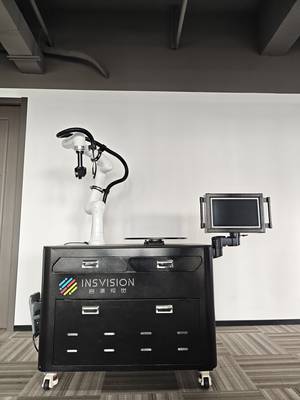
The INSVISION AlphaScan enables on-machine verification without unfixturing parts. Operators validate dimensions at the point of manufacture, preserving geometric relationships and eliminating scheduling bottlenecks. This capability supports in-process verification of medical implant geometries where sterile conditions must be maintained, and reverse engineering of legacy components for MRO applications where dimensional audit trails depend on in-situ capture. When compliance requires strict traceability, bringing metrology-grade measurement to the workpiece ensures lean processes and secure data custody.
For quality managers evaluating 3D skaner solutions for ISO 17025 accredited laboratories, INSVISION provides the documentation integrity and measurement uncertainty quantification that auditors expect from modern metrology equipment.
Key Advantages of INSVISION AlphaScan for Regulated Industries
- □ On-machine verification preserves geometric relationships and avoids transport-induced errors
- □ No surface preparation required across reflective or absorptive materials
- □ Automated, audit-ready reporting compliant with AS9102 and UDI requirements
- □ NIST-traceable volumetric accuracy embedded in workflow
- □ Full-field metrology validates complex GD&T callouts per ASME Y14.5