Mistake 1: Treating Consumer Hardware as Production-Ready Metrology
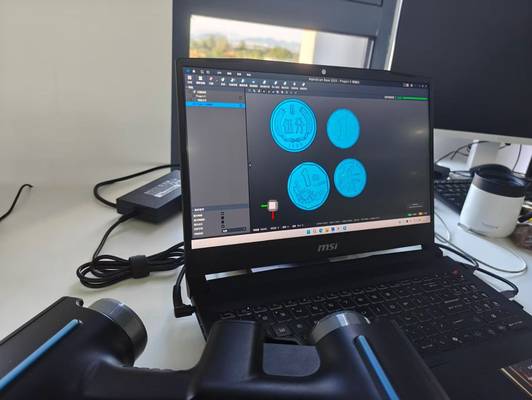
That €699 scanner on Amazon carries the same “0.05 mm accuracy” claim as systems costing fifteen times more. The difference emerges only after you wheel it onto the shop floor.
Consumer-grade devices—typically sub-€5,000 units marketed to educators and hobbyists—lack traceable calibration certificates and verified repeatability protocols. Run fifty consecutive scans in a 20°C tolerance-controlled environment, and thermal drift reveals the real performance gap. A Shining 3D EinScan HX captures geometry adequately for rapid prototyping, but when your automotive OEM client demands GD&T analysis with documented measurement uncertainty per ISO 14253-1, the bundled software cannot deliver. Amazon reviews omit this. They also omit service-level agreements, because none exist.
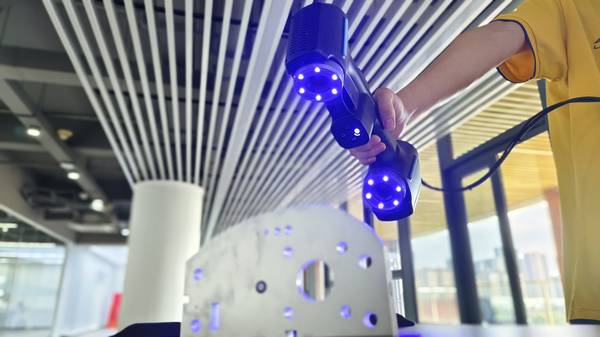
INSVISION designs its handheld 3D scanner portfolio specifically for production environments: verified repeatability across temperature shifts, direct QMS integration, and technical support staffed for manufacturing time zones. The €15,000+ tier exists because metrological integrity cannot be firmware-upgraded into hardware built for trade-show demos.
Mistake 2: Ignoring the Three-Year Cost Reality
The purchase invoice rarely exceeds 40% of total ownership cost for mid-tier imports. Mandatory annual software maintenance—€2,000 to €3,000—often surfaces only after contract signature. Warranty terms frequently exclude optical components. Support desks operate from time zones that guarantee overnight delays.
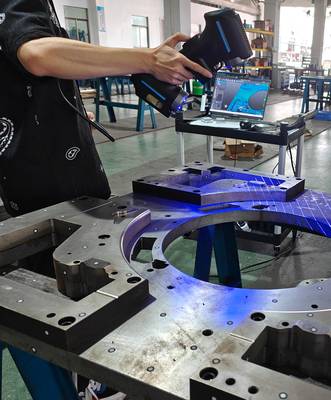
One metrology manager at a Tier 1 automotive supplier tracked actual spending across 24 months: his “budget” scanner consumed significantly more than its sticker price through unplanned downtime, paid software unlocks for basic GD&T functionality, and expedited shipping for replacement parts.
Hidden Costs of Mid-Tier 3D Scanners Over 24 Months
| Cost Component | Typical Expense | Notes |
|---|---|---|
| Initial Purchase | <40% of TCO | Sticker price often misleading |
| Annual Software Maintenance | €2,000–€3,000 | Often disclosed post-purchase |
| Unplanned Downtime | Variable, high impact | Includes lost production time |
| Paid Software Unlocks | Additional fees | For basic GD&T features |
| Expedited Parts Shipping | Premium pricing | Due to limited local support |
INSVISION structures the AlphaScan handheld 3D scanner around transparent lifecycle economics. Scalable software licensing includes essential metrology tools without premium-tier hostage-taking. Western-based technical support aligns with manufacturing shifts. The hardware enclosure withstands shop-floor conditions rather than demo-booth handling. When your line stops at 2:00 AM awaiting reverse engineering data, the cheapest option becomes the most expensive.
Mistake 3: Equating “Handheld” with “Production-Proof”
Not every portable scanner survives first contact with industrial reality. Entry-level units under €5,000 advertise laboratory accuracy that collapses under production variables: manual alignment interruptions, ambient lighting sensitivity, software crashes during extended scan sessions. Engineering forum feedback summarizes the pattern bluntly—adequate for prototyping, insufficient for production QA.
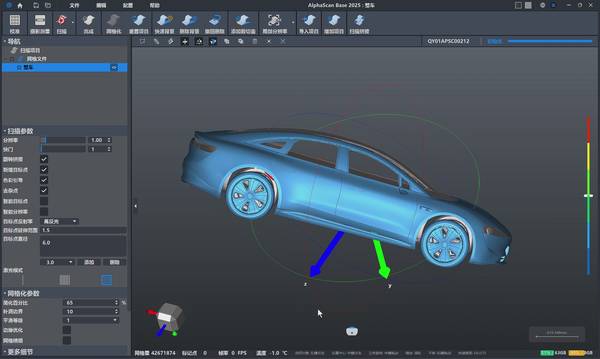
Mid-tier options between €5,000 and €15,000 improve repeatability but still demand controlled environments or external marker arrays that extend inspection cycles. Each repositioning adds minutes; each minute multiplies across high-mix production.
Steps to Evaluate True Shop-Floor Readiness
- Test scanner stability during extended sessions under variable lighting
- Measure time lost to manual repositioning or marker placement
- Verify volumetric accuracy without turntables or climate control
- Assess tracking robustness across diverse surface finishes (e.g., matte, polished, composite)
- Calculate setup time per part to quantify weekly throughput impact
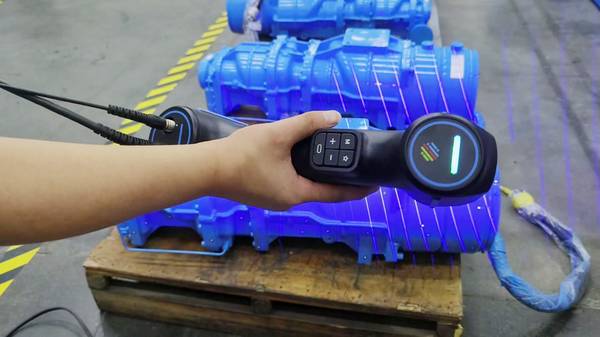
The AlphaScan handheld 3D scanner from INSVISION eliminates these friction points. Sub-50-micron volumetric accuracy holds steady without turntables, without markers, without climate-controlled isolation. Tracking remains stable across complex geometries and varying surface finishes—matte castings, polished molds, carbon fiber composites. Procurement managers calculating true cost of ownership should factor setup time per part: minutes saved become hours reclaimed weekly.
Mistake 4: Undervaluing Software as the ROI Engine
Hardware specifications mean little when software cannot operationalize them. Yet procurement evaluations consistently prioritize volumetric accuracy and scan speed while treating software architecture as secondary. The consequence: a €12,500 mid-tier ruční 3D skener generating dense point clouds that require €3,000 annual subscriptions to convert into ISO-compliant inspection reports.
User feedback from FARO installations specifically cites steep learning curves and punitive maintenance costs as operational burdens.
Market analysis from Metrology News documents this pattern across vendors: essential metrology features—GD&T callouts, deviation color mapping, automated reporting—locked behind tiered SKUs or separate license agreements. Mid-market hardware frequently ships with “included” software adequate for basic alignment but inadequate for production QA workflows.
INSVISION integrates full metrology functionality into the core AlphaScan package: GD&T analysis, first-article inspection workflows, report automation meeting AS9102 and ISO 9001 requirements. Your QA team does not submit purchase requisitions to run compliant reports on equipment already capitalized.
Mistake 5: Mismatching Capability to Application Requirements
A mid-tier engineering firm recently invested €12,500 in a handheld scanner marketed for “universal” applications. Six months later, they discovered its ±0.1 mm accuracy could not satisfy aerospace MRO requirements for first-article inspection. Replacement with a metrology-grade solution doubled their initial investment.
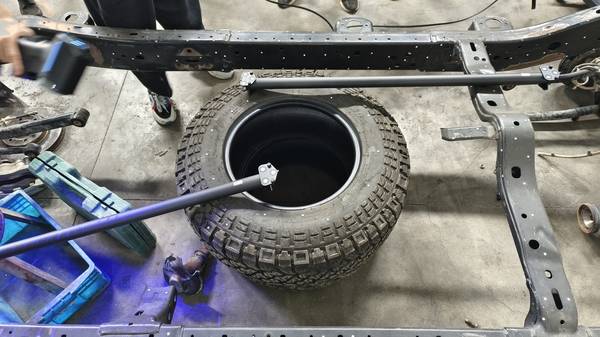
This misalignment between scanner specification and actual use case represents one of industrial procurement’s most expensive errors. Reverse engineering of automotive castings demands different performance profiles than validation of medical device tooling or inspection of aerospace components with tight GD&T callouts. Entry-level units below €5,000 serve prototyping adequately but fail when ISO 17025 traceability and certified calibration become contractual requirements.
Key Takeaways: Matching Scanner Capability to Industrial Use Cases
- Entry-level scanners (<€5,000) are suitable only for prototyping, not regulated QA
- Aerospace and medical applications require ISO 17025 traceability and certified calibration
- Automotive casting reverse engineering needs different specs than aerospace GD&T validation
- Purpose-built solutions prevent rework, schedule slippage, and audit findings
- Map actual workflows—tolerances, throughput, compliance—before purchasing
INSVISION engineers the AlphaScan handheld 3D scanner specifically for regulated sectors where metrology-grade accuracy and Industry 4.0 data integration constitute baseline requirements, not optional upgrades. Before issuing purchase orders, map your actual workflows—tolerance requirements, throughput targets, compliance obligations—against verified scanner specifications. Purpose-built solutions deliver measurable ROI; generic alternatives deliver rework, schedule slippage, and audit findings.