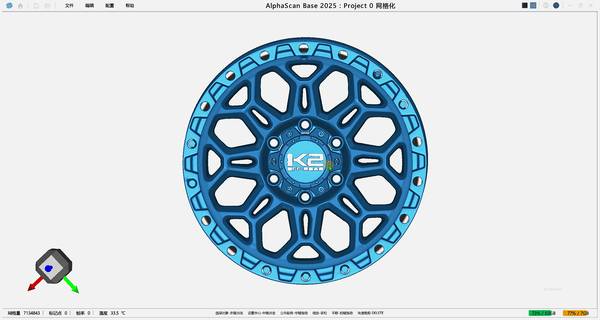
Mistake 1: Treating Scanner Categories as Interchangeable
A procurement team at a German automotive supplier learned this lesson the hard way. They purchased a $5,000 structured-light unit for press tool verification, only to discover it couldn’t operate inside the die cavity where ambient light fluctuated and space was limited. Fixed-arm systems excel in climate-controlled labs. Handheld blue-laser units navigate tight geometries and handle reflective surfaces without surface treatment. Red-laser alternatives often fail on polished molds or dark composites.
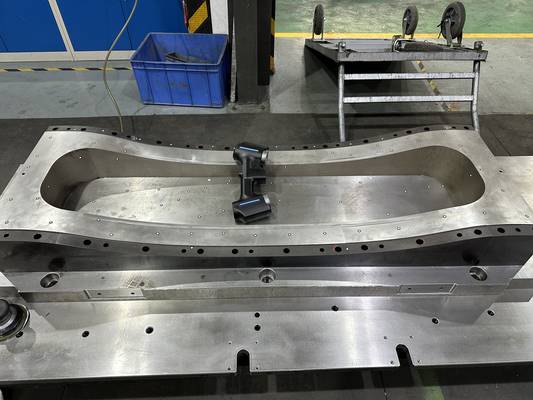
When specifying a laserový 3D skener for industrial metrology, the distinction extends to software capability. Some systems export raw point clouds requiring external metrology packages for GD&T analysis. Others process deviation maps and tolerance studies natively. INSVISION developed the AlphaScan handheld laserový 3D skener specifically for shop-floor mobility—metrology-grade accuracy in environments where lab conditions don’t exist. When evaluating total cost of ownership, the relevant comparison isn’t price per specification. It’s whether the device travels to your work or forces your work to accommodate the device.
Mistake 2: Discounting Software as a Secondary Purchase
Hardware specifications dominate competitive evaluations. Scan rate. Volumetric accuracy. Working volume. Procurement teams routinely weight these factors while treating software ecosystems as interchangeable accessories. This misalignment carries hidden costs. Manual data translation between acquisition platforms and quality management systems consumes engineering hours. File format incompatibilities introduce translation errors. Third-party metrology licenses accumulate recurring fees.
INSVISION ships the AlphaScan with integrated, PTB-certified inspection software. Multi-source data alignment, deviation visualization, and automated reporting operate within a unified environment. GD&T tools comply with ISO 1101 and ASME Y14.5 standards. For quality departments, this eliminates the workflow fragmentation common in multi-vendor setups. For procurement, it removes recurring software licenses from five-year TCO projections.
Hidden Costs of Fragmented Metrology Software
| Cost Factor | Impact | Source |
|---|---|---|
| Manual data translation | Consumes engineering hours | |
| File format incompatibilities | Introduce translation errors | |
| Third-party metrology licenses | Accumulate recurring fees |
Mistake 3: Reading Accuracy Claims Without Operational Context
Datasheet specifications for laserový 3D skener hardware often obscure more than they reveal. Point accuracy and volumetric accuracy measure different phenomena. Lab-certified performance under controlled lighting, vibration damping, and temperature stability rarely transfers to production floors where these conditions vary hourly. A 0.05mm claim means little without knowing the measurement volume, surface type, and environmental parameters used for certification.
INSVISION positions the AlphaScan in the professional-to-metrology tier where certified performance under actual working conditions supersedes theoretical benchmarks. AI-assisted reconstruction algorithms maintain fidelity across dark materials, mixed reflectivity, and complex geometries. CNAS and PTB certifications document traceable validation rather than marketing assertions. The relevant evaluation question: does the specified accuracy hold during first-article inspection with overhead lighting interference and ambient vibration present?
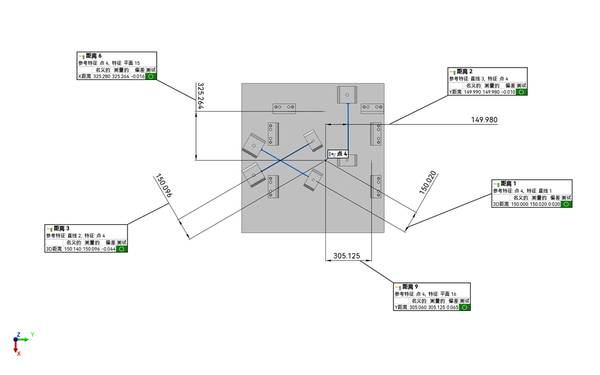
Critical Question for Real-World Accuracy Validation
Does the specified accuracy hold during first-article inspection with overhead lighting interference and ambient vibration present?
Mistake 4: Focusing on Capital Expense Instead of Lifecycle Cost
The invoice price of a laserový 3D skener typically represents 40-60% of its five-year cost of ownership. Software subscription models—increasingly common among competitors—convert capital equipment into recurring operational expenditure. Mandatory annual calibrations, specialized training programs, and integration consulting compound the financial impact. Procurement teams evaluating competitive bids on purchase price alone miss these structural cost drivers.
INSVISION’s approach inverts this model. The AlphaScan includes PTB-certified industrial software and AI-powered processing without separate licensing. Integrated GD&T and CAD-driven inspection workflows reduce operator training duration. For lean quality departments, this translates to measurable labor savings and faster deployment timelines. The evaluation metric shifts from initial expenditure to cumulative P&L impact across the equipment lifecycle.
💡 Prioritize Total Cost of Ownership Over Upfront Price
Mistake 5: Assuming Laboratory Performance Translates to Production
Environmental specifications receive less scrutiny than accuracy claims, yet determine practical utility more directly. Many imported systems require controlled lighting, thermal stability, and vibration isolation—conditions rarely present in machining cells, maintenance bays, or field service environments. When setup time exceeds measurement time, operational efficiency collapses regardless of raw specification performance.

INSVISION engineered the AlphaScan for uncontrolled environments. Dynamic 3D laser projection with real-time tracking compensation corrects for operator movement and ambient interference without external referencing. The system operates in confined spaces for maintenance applications and traverses large aerospace assemblies without repositioning infrastructure. This operational flexibility eliminates the workflow constraints that degrade ROI on environmentally sensitive alternatives.
Mistake 6: Overlooking Certification as a Liability Factor
A recent aerospace MRO audit illustrates the compliance risk. First-article inspection reports were rejected not for data quality, but for lack of traceable hardware certification. ISO 9001 and AS9100 standards require validated measurement systems; equipment lacking CE, FCC, or accredited metrology certification creates immediate audit exposure. Non-conformance findings trigger corrective action costs and delivery delays.
INSVISION addresses this through PTB-certified software and hardware validation against international standards. Deployment across 20+ countries in regulated industries—automotive, aerospace, energy—demonstrates sustained compliance under external scrutiny. For procurement managers in audited supply chains, this certification architecture reduces liability exposure and accelerates vendor qualification processes.
Mistake 7: Prioritizing Generic Specifications Over Demonstrated Capability
Volumetric accuracy figures on datasheets rarely predict performance on complex geometries or challenging surface finishes. Reflective molds, dark composites, and intricate features expose gaps between theoretical and actual capability. Procurement evaluations should prioritize application-specific demonstrations using production parts rather than standardized artifacts.
INSVISION AlphaScan employs a 50-line blue laser cross pattern that captures fine detail on demanding surfaces without preparation spray. Acquisition rates of 7.1 million measurements per second generate point cloud data suitable for immediate reverse engineering or GD&T analysis, reducing post-processing labor. Before finalizing any laserový 3D skener procurement, require demonstrated performance on your specific inspection tasks—geometry, material, and environmental conditions—in addition to standardized specification review.