—
Eliminating CMM Bottlenecks in Automotive Tier-1 Production
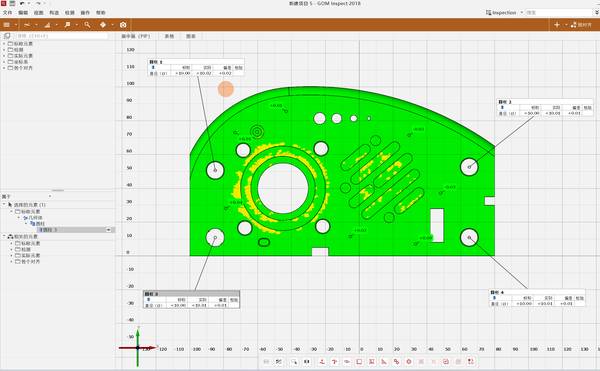
Automotive Tier-1 suppliers know the pain: a quality lab backlog stalls an entire production line. Traditional Coordinate Measuring Machines (CMMs) demand parts be removed from the floor, fixtured, and measured in controlled environments—a process that consumes hours per component.
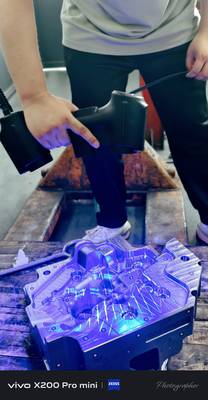
INSVISION’s AlphaScan handheld 3D scanner removes this constraint entirely. Operators capture complex geometries directly at the workstation, generating dense point clouds without transporting parts to metrology labs. The result: inspection cycles drop by up to 70%, even as the system maintains 0.02mm accuracy—well within automotive tolerance requirements.
In high-mix environments where production schedules shift daily, this flexibility proves decisive. Deviation reports generate immediately, allowing engineers to approve parts or trigger corrective actions before downstream processes compound errors. The ROI materializes through reduced WIP inventory, eliminated queue times, and sustained precision without the capital expense of additional CMM capacity.
—
Reverse Engineering Legacy Components in Aerospace MRO
When original CAD files vanish—common with turbine blades and structural components dating back decades—aircraft maintenance organizations face a stark choice: ground the asset or attempt manual measurement methods that introduce unacceptable uncertainty.
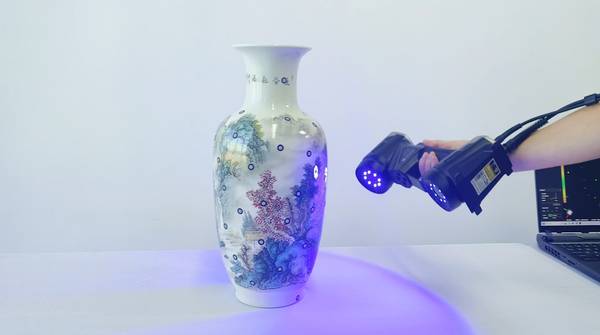
The AlphaVista blue light 3D scanner resolves this impasse. Its structured light projection captures worn aerodynamic surfaces at resolution sufficient to reconstruct manufacturing data for FAA/EASA certification. Maintenance teams convert physical artifacts into parametric models, then generate CAM toolpaths for replacement production.
A regional MRO facility recently applied this workflow to obsolete compressor blades. Rather than sourcing scarce spare parts or machining from approximate drawings, engineers scanned worn components, modeled the original design intent, and produced airworthy replacements within 72 hours. Aircraft downtime shortened from weeks to days, with full traceability preserved for regulatory compliance.
—
Scaling Metrology to Multi-Meter Assemblies
Ship hulls, rail carriages, and wind turbine nacelles exceed the practical range of conventional arm-based or fixed-frame 3D scanner systems. Operators historically “leapfrog” equipment across these structures—a process that accumulates alignment errors and consumes substantial labor hours.
INSVISION’s X-Track optical tracking system eliminates this compromise. Integrated with the AlphaScan handheld 3D scanner, it maintains volumetric accuracy across unlimited measurement volumes without repositioning. The tracker follows the scanner’s position in real time, ensuring that 0.02mm precision holds whether measuring a 2-meter gearbox housing or a 40-meter vessel section.
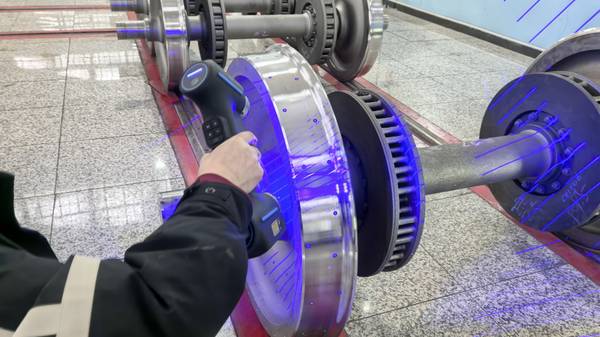
For a European rail manufacturer, this capability transformed hull inspection protocols. What previously required three days of sequential setup and measurement now completes in a single shift. The elimination of cumulative alignment errors also reduced measurement uncertainty, strengthening confidence in final assembly tolerances.
—
Unattended Quality Control for High-Volume Production
The transition toward lights-out manufacturing demands quality systems that operate without operator judgment or intervention. Manual inspection introduces variability; staffed stations constrain throughput.
The AlphaAutoScan-400 addresses both limitations. This automated 3D scanner integrates directly into production cells, executing programmed inspection routines on complex castings and molded components. Optical systems orient parts, trigger scan sequences, and feed dimensional data to Statistical Process Control (SPC) platforms in real time.
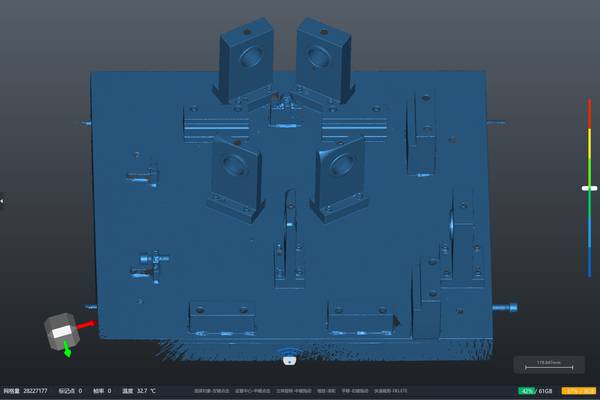
Engineering teams receive immediate alerts when tooling drift or process deviation threatens tolerance bands—often before defective parts accumulate. One automotive casting supplier reported 34% reduction in scrap rates within the first quarter of deployment, alongside measurable gains in Overall Equipment Effectiveness (OEE). The system operates continuously, aligning quality capacity with automated production rather than constraining it.
—
Deploying Without IT Disruption
New industrial hardware often carries hidden costs: middleware procurement, integration projects, and retraining programs that delay value realization. INSVISION’s 3D scanner architecture avoids this entirely.
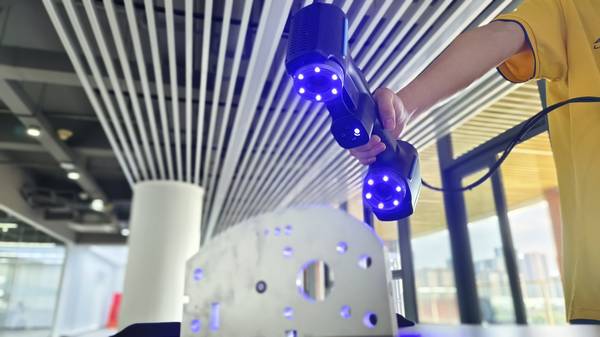
Both handheld and automated systems output directly to Siemens NX, Autodesk PowerInspect, Geomagic, and other standard metrology platforms. No proprietary software layers sit between the 3D scanner and existing CAD/CAM workflows. Quality engineers apply familiar tools to dense point cloud data immediately, shortening deployment from months to days.
This design choice reflects a fundamental principle: metrology investments should accelerate production, not consume engineering resources. Organizations preserve software training budgets, avoid vendor lock-in, and redirect technical capacity toward process improvement rather than system administration.
—
The Practical Case for Modern Metrology
Each scenario above shares a common thread. INSVISION 3D scanner technology replaces procedural friction with operational velocity—without the accuracy sacrifices that historically accompanied speed gains.
For procurement and operations leaders evaluating metrology investments, the relevant metrics extend beyond specification sheets. Inspection time reduction, elimination of specialized fixturing, compatibility with existing infrastructure, and scalability across application types collectively determine whether a 3D scanner deployment delivers projected returns.
The evidence from deployed systems suggests these returns materialize rapidly—often within the first production quarter.