When Traditional Metrology Falls Short: The Case for Laser Profilometry
Coordinate Measuring Machines (CMMs) and tactile probes remain staples in quality labs, yet they struggle to match modern production velocity. Single-point contact methods slow throughput and risk damaging delicate surfaces. Standard 2D vision systems fail on reflective materials and complex curved geometries, producing incomplete data that triggers costly rework.
Legacy tools impose specific operational penalties:
- Inefficient Throughput: Tactile probing cannot validate high-volume, large-scale parts within takt time requirements.
- Surface Sensitivity: Contact probes distort soft materials; 2D cameras lose accuracy on glossy or curved surfaces.
- Data Gaps: Traditional methods lack the dense point clouds required for reverse engineering and comprehensive surface analysis.
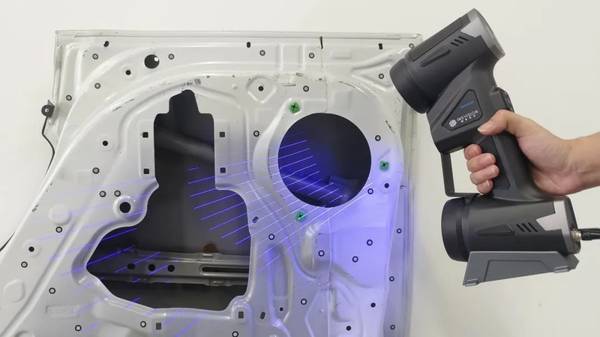
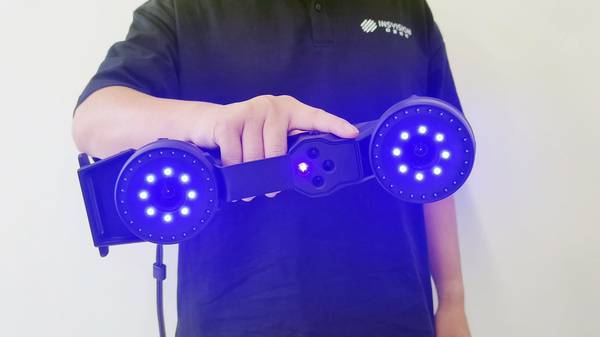
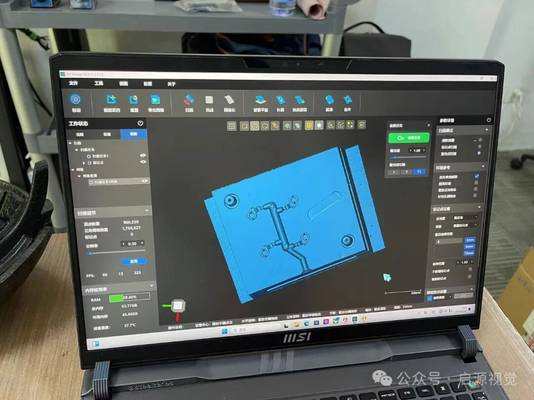
A laser profilometer eliminates these constraints. Using non-contact laser triangulation, the INSVISION AlphaScan Handheld 3D Scanner captures millions of precise data points in seconds. The technology handles reflective finishes and freeform shapes with equal precision, delivering the speed and accuracy demanded by advanced industrial inspection.
Operational Limitations of Legacy Metrology Tools
| Constraint | Description |
|---|---|
| Inefficient Throughput | Tactile probing cannot validate high-volume, large-scale parts within takt time requirements. |
| Surface Sensitivity | Contact probes distort soft materials; 2D cameras lose accuracy on glossy or curved surfaces. |
| Data Gaps | Traditional methods lack the dense point clouds required for reverse engineering and comprehensive surface analysis. |
Reducing Scrap and Rework in High-Mix Manufacturing
In aerospace and automotive component fabrication, material waste drives significant cost overruns—especially when defects escape detection until final inspection. INSVISION deploys laser profilometer technology at critical production stages, identifying deviations before they compound into expensive rework cycles.
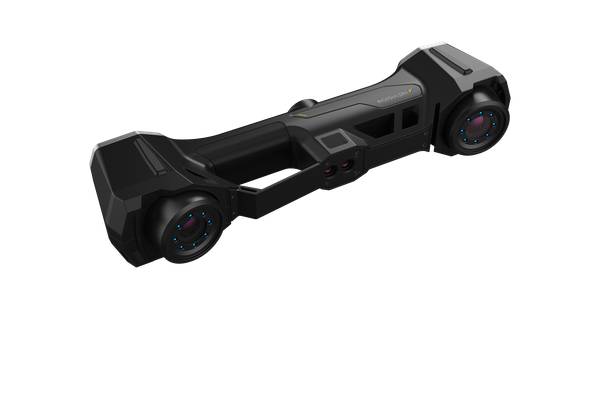
The AlphaVista Blue Light 3D Scanner captures micron-level surface data directly on the shop floor, enabling operators to execute real-time corrections rather than scrapping finished parts. This proactive approach has demonstrated material waste reductions of up to 30% in high-mix environments where part geometries vary significantly between production runs.
Impact of INSVISION Laser Profilometry on Inspection Metrics
| Metric | Traditional Inspection | INSVISION Laser Profilometer Systems |
|---|---|---|
| Defect Detection Point | Final inspection | In-process (early stage) |
| Scrap Rate Reduction | Baseline | Up to 30% decrease |
| Rework Cycle Time | Hours to days | Minutes (immediate correction) |
Benefits of In-Process Laser Profilometry
- □ Early deviation detection prevents cumulative errors in multi-stage machining operations
- □ Non-contact measurement preserves surface integrity on delicate aerospace alloys
- □ Automated data capture eliminates bottlenecks from manual inspection workflows
Scaling Quality Control Without Adding Labor
Quality assurance for large-scale assets—rail carriages, wind turbine blades, ship hull sections—becomes a resource-intensive bottleneck under traditional methods. Multiple technicians or transport to fixed CMM stations drain capacity and disrupt flow. the series solves this by integrating the X-Track Optical Tracking System with a portable laser profilometer. A single operator inspects extensive surfaces with high volumetric accuracy, decoupling inspection capacity from labor availability.
X-Track Enabled Workflow Advantages
| Metric | Traditional Manual QA | X-Track Enabled Workflow |
|---|---|---|
| Labor Requirement | Multiple technicians | Single operator |
| Mobility | Fixed stations or gantries | On-site, mobile scanning |
| Process Flow | Interrupted by part transport | Continuous inline inspection |
Key Outcomes of Mobile Laser Profilometry
- □ Maintain metrology-grade repeatability across large work envelopes without fixed fixtures
- □ Reduce inspection cycle times by eliminating repositioning delays
- □ Scale QA throughput without increasing headcount or training overhead
Accelerating NPI Cycles with Digital Twin Validation
New Product Introduction (NPI) cycles demand rapid iteration between design and physical validation. the series combines the AlphaScan Handheld 3D Scanner with CAD overlay capabilities, enabling engineering teams to compare digital models directly against physical prototypes for immediate visual verification.
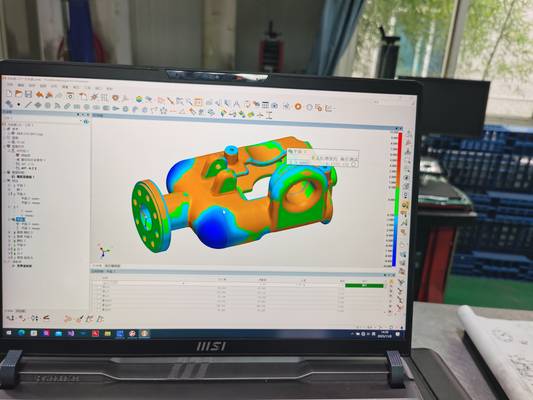
This integrated approach transforms validation workflows:
Digital Twin Validation Workflow Steps
- Real-time deviation detection: Highlighted form errors eliminate manual measurement cycles
- Collaborative troubleshooting: Cross-functional teams address design issues directly on the shop floor
- Streamlined sign-off: Digital documentation supports regulatory compliance in medical device manufacturing
For industrial equipment and medical device manufacturers, this capability compresses design validation timelines significantly. Engineers receive immediate feedback on prototype conformity rather than waiting days for CMM reports, accelerating time-to-market by weeks during critical NPI phases.
Future-Proofing Metrology with Modular 3D Scanning
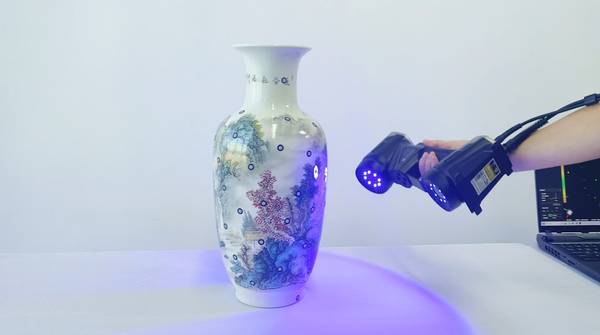
Metrology investments often force a false choice: single-purpose systems or redundant overlapping tools. the series eliminates this trade-off with a modular ecosystem that scales with operational requirements. Facilities begin with a handheld laser profilometer for portable inspection, then integrate optical tracking or automation modules as production volumes increase.
Modular Ecosystem Advantages
- □ Incremental capability expansion: Add functionality without replacing existing hardware investments
- □ Unified software platform: Consistent operator training across all scanning configurations
- □ Cross-compatible peripherals: Trackers, projectors, and automation cells operate seamlessly together
- □ Reduced total cost of ownership: Eliminate redundant purchases when scaling inspection workflows
This architecture protects capital investments while adapting to evolving quality requirements. Engineering teams build a cohesive metrology stack—from prototype validation through full-scale production inspection—rather than managing disparate systems from multiple vendors. The laser profilometer ecosystem from the series delivers consistent accuracy across every stage of the manufacturing lifecycle.