Closing the Gap Between CAD Intent and Shop Floor Reality
Closing the Gap Between CAD Intent and Shop Floor Reality
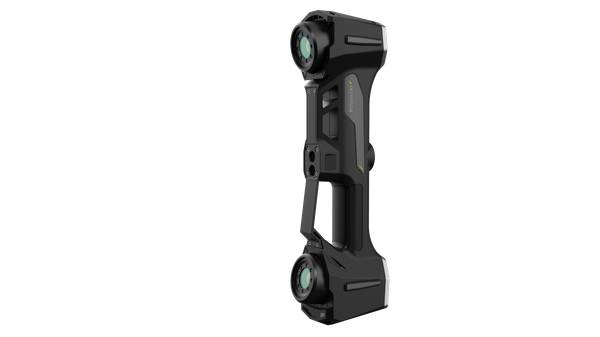
Aerospace and automotive manufacturers lose millions annually to dimensional errors discovered too late in the production cycle. INSVISION’s AlphaVista and AlphaAutoScan-400 3D measuring machine systems attack this problem at the source—during assembly rather than after.
These systems run on PTB-certified metrology software that aligns physical components against their nominal CAD geometry in real time. Multi-source data fusion and integrated GD&T analysis let operators spot deviations the moment they occur, before defective parts propagate downstream. Dynamic tracking continuously monitors workpiece position and auto-corrects measurement coordinates if parts shift—eliminating the need to restart sequences or scrap data.
The payoff: programmed guidance replaces manual marking, omissions drop, and out-of-tolerance assemblies never reach the next station. Native compatibility with FiberSIM and CATIA CPD means engineers validate quality without format conversion delays. Scrap rates fall. Late-stage rework—the kind that blows budgets and delivery schedules—becomes the exception rather than the rule.
Key Benefits of Real-Time In-Process Metrology
| Benefit | Description |
|---|---|
| Reduced Scrap Rates | Out-of-tolerance assemblies are caught before moving to the next station |
| Eliminated Format Conversion Delays | Native compatibility with FiberSIM and CATIA CPD enables immediate validation |
| Dynamic Tracking | Auto-corrects measurement coordinates if parts shift, avoiding data loss |
From Chalk Lines to Laser-Guided Precision
From Chalk Lines to Laser-Guided Precision
Manual scribing and physical templates still dominate large-structure assembly. The result? Bottlenecks, variability, and rework loops that plague fuselage and wind blade production.
INSVISION’s Alpha-Projector replaces this analog legacy with digital laser projection. High-precision binocular machine vision achieves 0.25mm positioning accuracy—directly from 3D CAD data to the shop floor. Unlike conventional 3D measuring machine solutions that simply capture point clouds, the Alpha-Projector actively guides technicians through each operation, eliminating skipped steps and misplacement.
Dynamic tracking maintains projection lock even when workpieces move or vibrate. PTB-certified software ingests 2D drawings or 3D models from CATIA CPD and FiberSIM, generating task files in minutes rather than hours. The transition strips out non-value-added layout time while tightening adherence to design specifications. No chalk lines. No template storage. No dimensional drift between shifts.
Digital Projection Advantages Over Manual Methods
- □ Eliminates skipped steps and misplacement through active technician guidance
- □ Achieves 0.25mm positioning accuracy directly from 3D CAD data
- □ Removes need for chalk lines, physical templates, and associated storage
- □ Maintains projection lock despite workpiece movement or vibration
Automated Metrology That Scales With Demand
Expanding quality capacity traditionally means hiring scarce metrology specialists—if you can find them. The AlphaAutoScan-400 offers an alternative: a 3D measuring machine that integrates into production lines and runs unattended.
PTB-certified software ensures measurement integrity without constant operator oversight. CAD-driven task creation and streamlined operational logic guide the inspection sequence, removing the variability that creeps in with human fatigue or inconsistent technique. The system aligns data from multiple sources, applies GD&T analysis automatically, and feeds results directly into quality dashboards.
Round-the-clock operation becomes practical. Throughput increases without headcount inflation. Manufacturers expand quality coverage across more stations, more shifts, more product variants—without diluting the standards that aerospace and automotive customers demand.
Unattended Metrology Workflow Steps
- CAD-driven task creation initiates the inspection sequence
- System aligns multi-source data and applies automatic GD&T analysis
- Results feed directly into quality dashboards for real-time monitoring
- Production continues across shifts and variants without added personnel
One Platform, Distributed Operations
Global supply chains generate inspection data in incompatible formats across multiple facilities. Consolidating this into actionable intelligence typically consumes engineering hours better spent on root-cause analysis.
INSVISION’s software architecture eliminates this friction. Direct CATIA and FiberSIM CPD compatibility means data from any 3D measuring machine in the network feeds into a unified environment—no translation errors, no lost metadata. Built-in GD&T tools and reverse engineering capabilities let engineers compare actual versus nominal geometry instantly, accelerating non-conformance investigations and PPAP documentation.
The interface prioritizes speed: engineers navigate from data ingestion to deviation analysis without wrestling with file conversions or fragmented workflows. Decisions happen faster. Production delays shrink. Quality consistency extends across suppliers and continents.
Data Integration Capabilities Across Global Facilities
| Feature | Impact |
|---|---|
| Direct CATIA & FiberSIM CPD Compatibility | Unified data environment without translation errors or metadata loss |
| Built-in GD&T Tools | Instant comparison of actual vs. nominal geometry |
| Streamlined Interface | Accelerates deviation analysis without file conversion hurdles |
Precision That Survives the Shop Floor
Metrology labs maintain tight environmental controls. Assembly lines don’t. Temperature swings, vibration, and part movement have historically forced a choice: sacrifice accuracy for speed, or slow production to accommodate delicate equipment.
INSVISION’s optical systems reject this trade-off. The Alpha-Projector deploys binocular machine vision as a field-hardened 3D measuring machine, holding 0.25mm accuracy despite ambient conditions. Dynamic tracking compensates for real-time part movement, vibration, and thermal drift—corrections happen automatically, without operator intervention.
First-article inspection and tool validation move to the point of production. Engineers verify complex geometries where the work actually happens, not in a remote lab. Digital positioning replaces manual scribing. Programmed guidance prevents omissions. Delivery schedules compress because quality gates no longer require production stops or part transport.
The outcome: lab-grade certainty in environments that break conventional metrology equipment—delivered by precision 3D measuring machine technology that keeps production moving.