Replace Manual Layout with Laser-Guided Precision
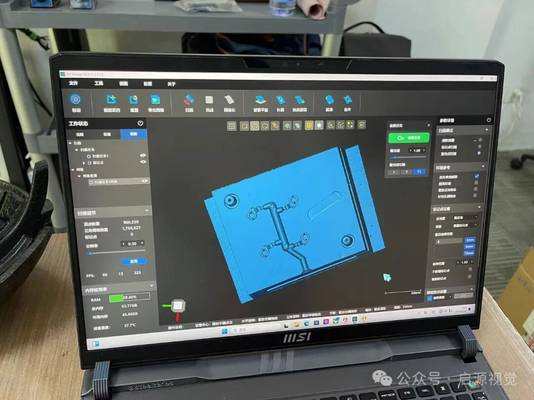
Manual scribing in aerospace and automotive assembly doesn’t just slow production—it guarantees rework. INSVISION eliminates this bottleneck by integrating the Alpha-Projector with metrology-grade 3D skanner data from the AlphaVista. The result: CAD-driven laser projection that positions components to 0.25mm verified accuracy without human interpretation.
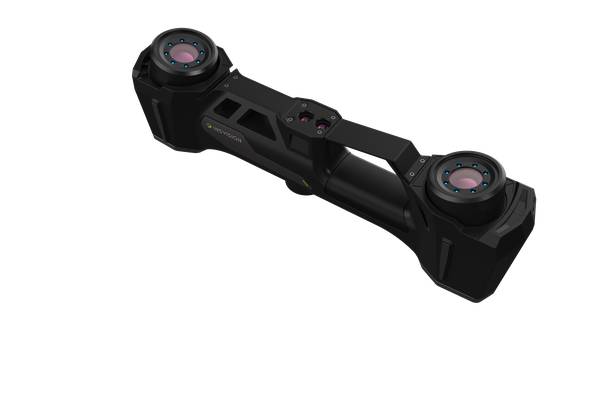
The system’s binocular vision architecture tracks workpiece movement dynamically. When a part shifts during complex assembly, projection parameters adjust in real time—no recalibration, no downtime. Operators work from native 2D or 3D CAD models, removing transcription errors and out-of-tolerance placements entirely.
For procurement teams, the math is straightforward. First-time-right assembly translates directly to material savings and compressed lead times. The Alpha-Projector pays for itself by eliminating the scrap and labor costs that manual methods bake into every production run.
Key Benefits of Laser-Guided Assembly
| Benefit | Description |
|---|---|
| Accuracy | CAD-driven laser projection with 0.25mm verified accuracy |
| Dynamic Adjustment | Real-time projection parameter updates when parts shift |
| Cost Savings | Eliminates scrap and labor costs inherent in manual methods |
Cut First Article Inspection Time by 70% Without Sacrificing Accuracy
First Article Inspection (FAI) has long forced a choice: thoroughness or speed. INSVISION removes the compromise. The AlphaVista 3D skanner deploys blue-light structured light technology to capture complex geometries in minutes, not hours.
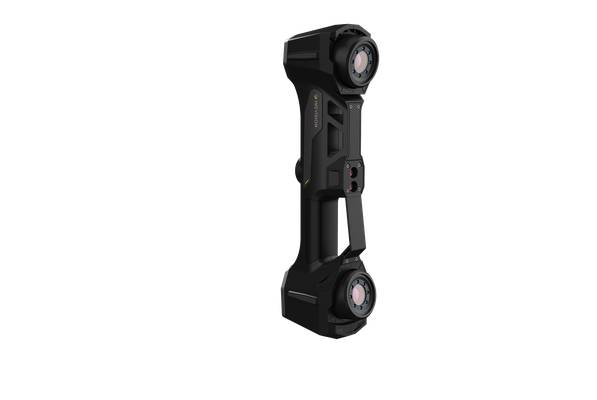
PTB-certified software compares scan data directly against native CAD models—no intermediate conversions, no degradation. Built-in GD&T tools automate deviation analysis, generating audit-ready reports on demand. Quality engineers spend less time processing data and more time addressing root causes.
The operational impact is immediate. Manufacturers report FAI cycle reductions up to 70%, allowing production ramps to proceed on schedule without waiving metrology-grade validation. For suppliers facing stringent OEM qualification requirements, this capability protects both delivery commitments and contractual margins.
FAI Workflow Advantages
- □ Blue-light structured light captures complex geometries in minutes
- □ PTB-certified software enables direct CAD comparison without data loss
- □ Automated GD&T deviation analysis generates audit-ready reports
- □ FAI cycle time reduced by up to 70% while maintaining validation rigor
Automate Scan Path Generation for Unpredictable Production Schedules
Contract manufacturers and high-mix operations know the pain: every new part geometry demands fresh programming, idle equipment, and specialized expertise. The AlphaAutoScan-400 3D skanner removes this constraint entirely.
Scan paths generate automatically from CAD models. Technicians load a new jig, casting, or tooling configuration and begin digitizing within minutes—no manual teaching, no code writing. PTB-certified alignment algorithms ensure data integrity across diverse part families, while the system’s architecture supports lights-out operation for maximum equipment utilization.
The flexibility extends to workforce deployment. Operators manage varied inspection tasks with minimal training, reducing dependency on specialized programmers. For operations juggling unpredictable demand, this adaptability converts fixed costs into variable capacity and accelerates equipment ROI.
Steps to Deploy AlphaAutoScan-400
- Load new jig, casting, or tooling configuration
- System auto-generates scan path from CAD model
- Begin digitizing within minutes without manual programming
- Execute lights-out operation with PTB-certified alignment
Capture Large-Scale Assets Without Fixed Infrastructure
Aircraft fuselages, wind turbine blades, and heavy tooling defy traditional metrology setups. Moving the part is impractical; moving the equipment repeatedly kills throughput. INSVISION solves this with the AlphaScan handheld 3D skanner paired to X-Track optical tracking.
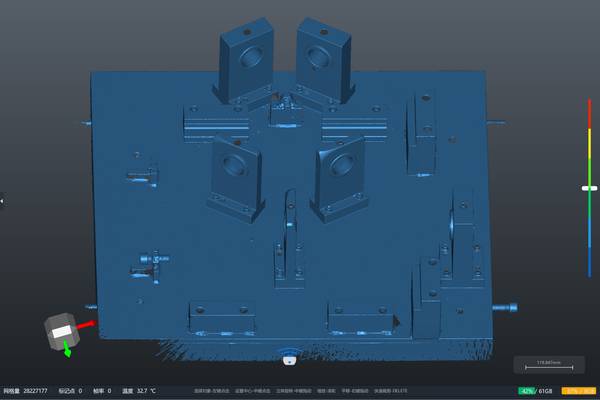
Technicians move freely around stationary assets. The X-Track system maintains continuous position awareness, correcting for motion in real time and eliminating the repositioning cycles that fragment data capture. The same 0.25mm binocular vision precision applies—now deployable across meters of physical space.
Live deviation feedback appears on the shop floor as scanning progresses. Assembly teams correct issues immediately rather than discovering them during downstream inspection. Native integration with CATIA CPD and FiberSIM preserves design intent through the PLM chain, while built-in reverse engineering tools support legacy part reproduction without original documentation.
Scrap rates fall. Inspection cycles compress. The gap between engineering specification and physical reality narrows to measurement uncertainty.
Large-Scale Scanning Capabilities
| Feature | Impact |
|---|---|
| Handheld AlphaScan + X-Track | Enables scanning of immovable large-scale assets |
| Real-time motion correction | Eliminates repositioning cycles and fragmented data |
| Live deviation feedback | Allows immediate correction during scanning |
| Reverse engineering tools | Support legacy part reproduction without original docs |
Maintain Data Fidelity Across the Digital Thread
Vendor lock-in and format incompatibilities fracture digital workflows. INSVISION builds on open architecture: CATIA CPD, FiberSIM, STEP, and other industrial standards flow directly from 3D skanner capture into simulation, metrology, and MES platforms.
PTB-certified industrial software underpins every data exchange. Multi-source alignment capabilities merge scan data from multiple sessions or sensors without coordinate system gymnastics. GD&T analysis proceeds natively, preserving dimensional intent through deviation reporting and reverse engineering.
Engineering teams spend less time translating files and more time extracting insight. Physical inspection connects seamlessly to digital design, closing feedback loops that previously required manual intervention. The infrastructure investment—already made—delivers fuller returns when data moves freely rather than accumulating in proprietary silos.
The Bottom Line
the series’s 3D skanner ecosystem addresses manufacturing pain points with specific, measurable capabilities: sub-millimeter laser guidance, automated inspection workflows, and interoperability that protects existing digital investments. For operations leaders evaluating metrology investments, the value proposition centers on throughput gains, workforce flexibility, and the elimination of rework costs that erode margin in precision manufacturing.