The Metrology Gap: Why Standard 3D Scanners Fail on Miniature Components
Small-part scanning exposes the limitations of generic metrology equipment. Standard systems struggle with two non-negotiable requirements: capturing fine surface detail at sub-millimeter scale and handling the reflective finishes common in precision-machined components. Resolution drops off. Edge fidelity degrades. The resulting point clouds require extensive cleanup before any meaningful analysis can begin.
Key Limitations of Generic 3D Scanners on Small Parts
| Limitation | Impact |
|---|---|
| Inadequate resolution at sub-millimeter scale | Loss of fine surface detail, requiring extensive point cloud cleanup |
| Poor performance on reflective surfaces | Degraded edge fidelity and unreliable data capture |
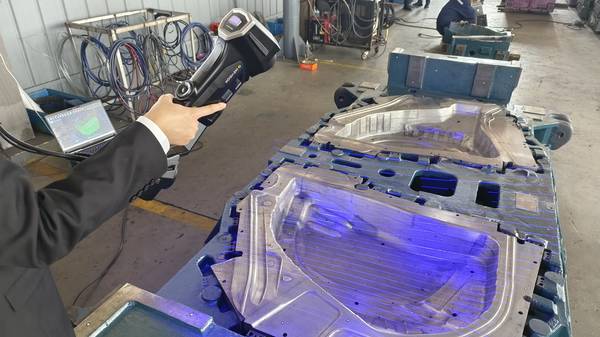
When searching for the best 3d scanner for small parts, engineers quickly discover that generic metrology tools fail these critical applications. INSVISION designed its AlphaVista platform specifically for this gap. The hardware combines high-density structured light projection with advanced optical filtering to maintain signal integrity on polished or coated surfaces. More critically, the system ships with PTB-certified analysis software—not an afterthought, but an integrated metrology engine. Built-in GD&T tools eliminate the export-import cycles that introduce alignment errors. Multi-source data fusion lets engineers combine scan data with tactile probe measurements or CAD references without manual registration. For production environments, this stability translates directly to fewer rejected parts and faster first-article approvals.
AlphaVista Platform Capabilities
| Feature | Benefit |
|---|---|
| High-density structured light + optical filtering | Maintains signal integrity on polished/coated surfaces |
| PTB-certified analysis software | Ensures measurement traceability and audit readiness |
| Built-in GD&T tools | Eliminates export-import cycles and alignment errors |
| Multi-source data fusion | Combines scan, tactile probe, and CAD without manual registration |
Blue Light or Laser? The Technical Choice Behind Repeatable Micron-Level Results
The hardware decision for small-part scanning typically falls between blue light structured light and laser triangulation. Blue light systems reduce ambient noise and improve edge definition—essential when capturing sharp corners on micro-machined components or thin-walled features that laser systems often blur. Laser triangulation retains advantages for dynamic scanning and mixed-surface applications, but for static, high-detail capture, structured light delivers superior data density.
Raw specifications, however, mislead more than they inform. A 5-micron accuracy claim on a datasheet means little without traceable calibration and certified analysis algorithms. INSVISION pairs its AlphaVista scanner with software that carries PTB certification for length measurement uncertainty, ensuring that reported deviations hold up to supplier audits and regulatory scrutiny. The combination of high-fidelity capture and certified analysis separates inspection-grade systems from equipment that merely generates pretty point clouds.
Critical Requirements for Inspection-Grade Small-Part Scanning
- □ High-density structured light projection for edge definition on micro-features
- □ Advanced optical filtering to handle reflective or coated surfaces
- □ PTB-certified analysis software for traceable measurement uncertainty
- □ Integrated GD&T tools to avoid alignment errors from data conversion
Reclaiming 60% of Inspection Time: The Case for Integrated Scan-to-Decision Workflows
Scanner hardware represents only one bottleneck in quality control. The larger drag comes from manual alignment, fixture setup, and repetitive programming for similar components. INSVISION’s three-component architecture—AlphaVista scanner, Alpha-Projector, and unified analysis platform—addresses this systematically. For companies seeking the best 3d scanner for small parts, this integrated approach eliminates common workflow bottlenecks.
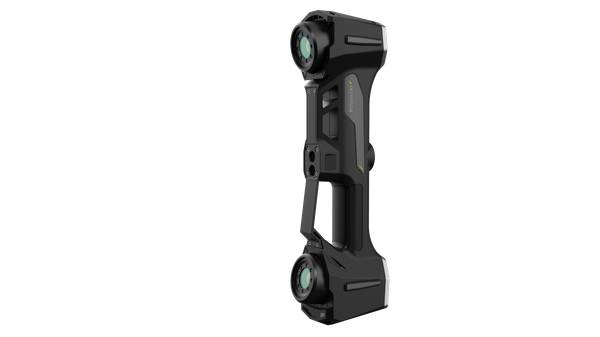
The Alpha-Projector deploys binocular vision positioning at 0.25mm accuracy to project laser guidance contours directly onto components. Unlike static templates, the system tracks workpiece movement in real time and adjusts projections automatically. Technicians load a CAD model, and the projector displays exactly where to place probes or what features require inspection—no scribing, no manual alignment, no programming for each new part variant.
This CAD-driven workflow collapses the traditional sequence of scan-process-analyze-report into a continuous operation. First-article inspections that previously consumed hours now complete in minutes. Deviation analysis and GD&T reporting execute within the same environment, eliminating format conversions and data loss. Field deployments consistently demonstrate 60%+ reduction in total inspection time, with proportional compression of new product introduction cycles.
Integrated Scan-to-Decision Workflow Steps
- Load CAD model into unified analysis platform
- Alpha-Projector displays laser guidance contours on component using binocular vision
- System tracks workpiece movement and auto-adjusts projections in real time
- Scan, deviation analysis, and GD&T reporting execute in single environment
- Complete first-article inspection in minutes instead of hours
Where Precision Translates to Compliance: Medical, Aerospace, and Electronics Applications
Medical implant manufacturers face unforgiving tolerance requirements on components like surgical screws and fixation plates. INSVISION’s PTB-certified software provides the measurement traceability required for FDA submissions and ISO 13485 compliance. Built-in GD&T automation ensures that complex datum schemes—critical for functional fit—are applied consistently across inspection batches.
Aerospace suppliers encounter different pressures: turbine blade roots, fuel system fittings, and structural fasteners must meet AS9100 standards while production volumes strain inspection capacity. The the series’s dynamic tracking eliminates the manual scribing that introduces alignment errors and consumes skilled technician hours. Binocular vision positioning maintains guidance accuracy even when components shift slightly during handling.
Electronics manufacturers leverage the platform’s reverse engineering capabilities for legacy connector documentation and competitive analysis. Multi-source data alignment merges scan data with existing CAD or 2D drawings, accelerating redesign cycles for obsolete parts. The programmatic guidance ensures no critical dimensions are overlooked—common when relying on manual measurement routines for complex miniature geometries.
The Hidden Cost Factors: What Procurement Teams Miss in Scanner Evaluation
Initial hardware price dominates most RFP evaluations, yet represents a fraction of total cost of ownership. Systems lacking native support for industry-specific formats—FiberSIM for composites, CATIA CPD for aerospace—force expensive middleware development or manual data translation. Non-certified software introduces measurement uncertainty that generates false passes, false failures, and the rework costs that follow.
Operator training presents another underestimated expense. Complex interfaces extend ramp-up periods and increase dependency on specialized personnel. the series’s software architecture emphasizes task-based workflows over feature proliferation. The same 0.25mm-accurate binocular positioning that guides inspection also accelerates operator proficiency—projected laser contours reduce interpretation errors and standardize execution across skill levels.
Dynamic tracking capabilities eliminate a persistent source of scrap: workpiece movement during multi-step inspections. When components shift, the system recalculates and reprojects guidance automatically rather than requiring restart or manual correction. This resilience in production environments—where vibration, thermal drift, and handling variation are realities—protects the investment case against the operational friction that undermines many metrology deployments.
The best 3d scanner for small parts ultimately proves itself not in specification sheets but in sustained throughput, measurement confidence, and the elimination of quality escapes that reach customers.