Legacy Inspection Challenges vs. Production Demands
| Legacy Method | Limitation | Production Impact |
|---|---|---|
| Manual calipers, micrometers, touch-probe CMMs | Capture single points slowly | Inspection queues stall throughput, overtime costs, QA forced to sample |
| Human-driven processes | Operator fatigue and handwritten records | Measurement variation, audit vulnerabilities, delayed shipments, recalls |
Why Legacy Inspection Methods Can’t Keep Pace
Modern manufacturing lines move faster than ever—yet quality control often lags behind. Facilities still using manual calipers, micrometers, or touch-probe CMMs face a fundamental mismatch: these tools capture single points slowly, while production cycles demand complete surface data in seconds. The result? Inspection queues that stall throughput, overtime costs to clear backlogs, and QA teams forced to sample rather than verify.
Human-driven processes compound the problem. Operator fatigue introduces measurement variation, and handwritten records create audit vulnerabilities. For manufacturers under pressure from OEM customers and regulatory bodies, these gaps translate directly to risk—delayed shipments, concession requests, and in worst cases, warranty claims or recalls.
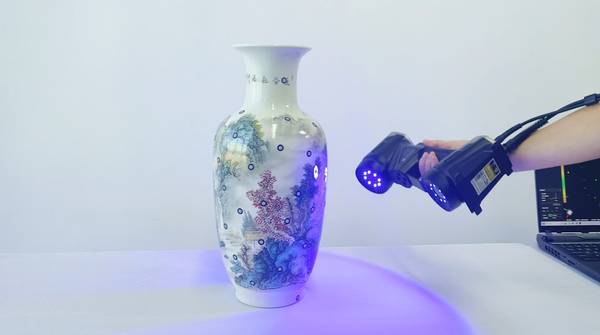
INSVISION’s industrial scanner systems replace this friction with automated optical capture. A single scan generates millions of data points in seconds, closing the gap between inspection speed and production tempo while building defensible quality documentation.
Handheld Scanning Workflow Benefits
- Engineers perform metrology-grade capture directly at the point of manufacture
- Scan data is compared to CAD models immediately
- Deviations surface in minutes, enabling rapid tooling adjustments or design iterations without stopping the line
- Prototype-to-production cycles reduced by 30-50% for heavy equipment OEMs
- Scrap from tooling mismatches drops measurably
Handheld Scanning: From Prototype Validation to Production Ramp
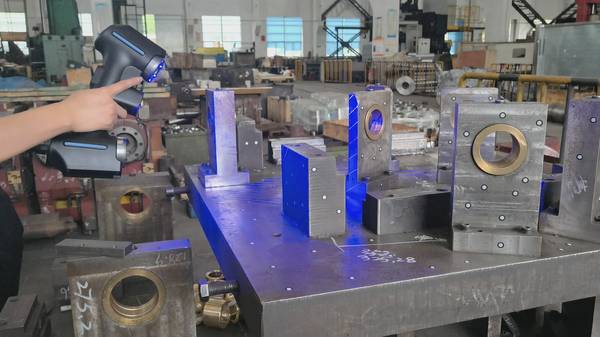
The transition from design approval to volume production remains a critical vulnerability in automotive, aerospace, and heavy equipment sectors. Tooling verification, first-article inspection, and supplier part qualification traditionally require parts to leave the floor for metrology lab analysis—adding days or weeks to schedules already compressed by market demands.
INSVISION’s AlphaScan handheld 3D scanner removes this dependency. Engineers perform metrology-grade capture directly at the point of manufacture, comparing scan data to CAD models immediately. Deviations surface in minutes, not days, enabling rapid tooling adjustments or design iterations without stopping the line.
For a heavy equipment OEM validating casting tooling, this capability typically reduces prototype-to-production cycles by 30-50%. Scrap from tooling mismatches drops measurably. More critically, the manufacturer gains schedule confidence—knowing that production tooling is proven before volume commitments are made.
Industrial Scanner Capabilities in Harsh Environments
| Feature | Benefit | Application Impact |
|---|---|---|
| Sub-10-micron repeatability | Maintained despite shop-floor vibration, dust, and lighting variation | Enables audit-compliant measurement histories without removing parts from value stream (Source: P11, P12) |
| Blue-light technology + advanced algorithms | Filters ambient interference; compensates for thermal drift and mechanical instability | Validates complex geometries (e.g., turbine blades, transmission housings) without metrology lab queues (Source: P11, P12) |
Micron-Level Precision in Uncontrolled Environments
Laboratory CMMs deliver accuracy, but they demand laboratory conditions: temperature stability, vibration isolation, and controlled lighting. Production floors offer none of these. Aerospace and automotive suppliers have historically accepted this trade-off—sampling parts offline and hoping production variation stays bounded.
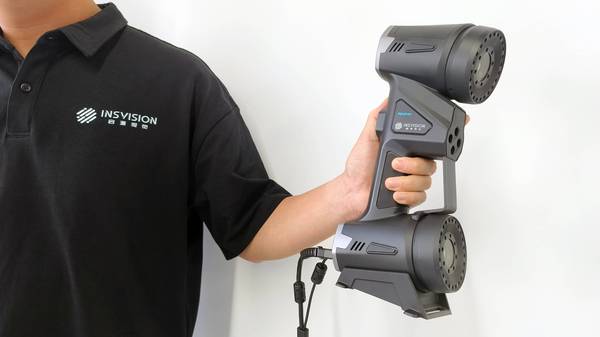
The AlphaVista blue-light industrial scanner challenges this compromise. Engineered for ambient industrial environments, the system maintains sub-10-micron repeatability despite shop-floor vibration, dust, and lighting variation. Blue-light technology filters ambient interference, while advanced algorithms compensate for thermal drift and mechanical instability.
For AS9100-certified aerospace suppliers, this means building audit-compliant measurement histories without removing parts from the manufacturing value stream. For automotive Tier 1s facing PPAP deadlines, it means validating complex geometries— turbine blades, transmission housings, structural castings—without metrology lab queues. The cost avoidance is substantial: a single aerospace rework event can exceed $50,000 in material, labor, and schedule impact.
Benefits of Automated 100% Inspection
- □ Eliminates dependency on specialized metrology technician hiring and retention
- □ Performs continuous dimensional verification without operator intervention
- □ Decouples inspection capacity from shift schedules and absenteeism
- □ Delivers 15-25% OEE improvement by eliminating inspection bottlenecks
- □ Enables immediate containment of out-of-spec parts before further processing
Automated 100% Inspection: Scaling Without Staffing
Quality headcount rarely scales linearly with production volume. Hiring specialized metrology technicians requires months; retaining them in competitive labor markets demands ongoing investment. Yet customer mandates for 100% inspection—common in medical device, EV battery, and safety-critical automotive applications—create impossible staffing arithmetic.
The AlphaAutoScan-400 resolves this constraint through inline automation. Integrated directly into machining cells, assembly lines, or robotic handling systems, the platform performs continuous dimensional verification without operator intervention. Inspection capacity becomes decoupled from shift schedules and absenteeism.
Facilities deploying automated industrial scanner systems typically report 15-25% OEE improvement from eliminated inspection bottlenecks. Error detection shifts from downstream discovery to immediate containment—stopping out-of-spec parts before value-added processing continues. For a mid-volume manufacturer, the labor avoidance and scrap reduction often justify system investment within 12-18 months.
Building the Digital Thread: From Scan Data to Strategic Asset
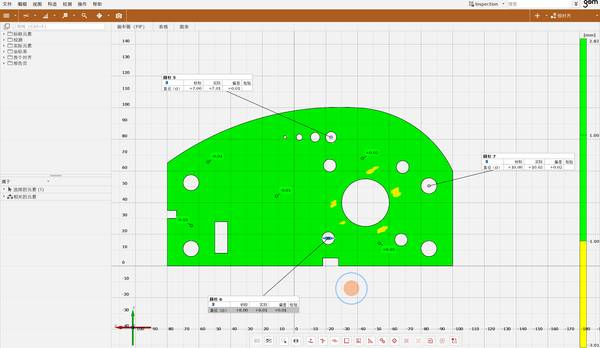
Industry 4.0 investments falter when data remains trapped in proprietary formats. Point clouds that can’t import cleanly into Siemens NX, PTC Creo, or quality management databases become technical debt—requiring manual translation, losing fidelity, or simply going unused.
INSVISION systems output standardized, CAD-ready point clouds compatible with mainstream PLM, SPC, and reverse engineering platforms. This interoperability enables downstream applications beyond dimensional compliance: digital twin population, supplier correlation studies, predictive wear analysis, and global engineering collaboration.
The practical impact extends across the product lifecycle. Design teams reference as-built scan data to refine next-generation products. Service organizations use archived scans for remanufacturing and obsolescence management. Quality engineering feeds measurement histories into statistical process control, catching drift before it produces non-conforming material.
For procurement and operations leaders evaluating metrology investments, this connectivity ensures that industrial scanner technology delivers returns beyond the quality department—supporting enterprise digital transformation rather than creating another isolated data silo.