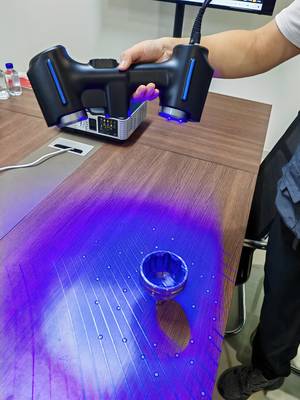
Impact of Point Cloud Scanning on Development Cycles
| Traditional Method | Point Cloud Scanning (e.g., INSVISION AlphaScan) |
|---|---|
| Days or weeks for tactile probing | Complete complex geometries captured in minutes |
| Delayed iterative design feedback | Dense datasets fed directly into iterative design workflows |
From Prototype to Production: Cutting Development Cycles with Real-Time 3D Capture
Automotive and aerospace manufacturers live and die by validation speed. The gap between prototype approval and production ramp-up often determines market position—and traditional measurement methods routinely stretch this timeline by weeks.
Point cloud scanning has fundamentally altered this equation. Engineers now capture complete complex geometries in minutes rather than the days or weeks required for tactile probing. INSVISION’s AlphaScan exemplifies this shift: metrology-grade digitization happening in real time, feeding dense datasets directly into iterative design workflows. This advanced escaner nube de puntos delivers the precision manufacturers need to accelerate development cycles.
The operational impact extends beyond speed. Manual inspection creates predictable chokepoints—queueing parts, operator availability, measurement uncertainty. Automated point cloud acquisition removes these variables entirely. Design iterations validate immediately against as-built conditions, slashing prototyping costs while ensuring dimensional confidence before any tooling commitment.
Advantages of 100% Inspection Over Statistical Sampling
- □ Eliminates blind spots inherent in statistical sampling for high-value components
- □ Captures surface deviations and micrometric distortions invisible to mechanical probes
- □ Prevents field failures, emergency containment actions, and customer-facing quality events
Why 100% Inspection Beats Statistical Sampling
Statistical process control has its place. For high-value components, it also has dangerous blind spots.
Traditional tactile methods, while precise, impose throughput limits that make full-lot inspection economically unfeasible. A CMM might need 20 minutes for a complex casting; multiply across production volumes and the math breaks quickly.
INSVISION’s AlphaVista system deploys blue-light scanning to capture complete component geometry in seconds. The shift from sampling to 100% inspection isn’t incremental—it’s categorical. Surface deviations and micrometric distortions visible in the point cloud data simply don’t register on mechanical probes limited by touch-point density. This escaner nube de puntos technology ensures comprehensive quality control.
Production directors measure this value in avoided costs: no field failures from escaped defects, no emergency containment, no customer-facing quality events. The technology investment converts directly into risk reduction.
Integration of Metrology Into Production Lines
- Embed point cloud acquisition directly into production flow using systems like AlphaAutoScan-400
- Enable immediate data feed into Statistical Process Control systems for real-time adjustments
- Maintain traceability and production rhythm while eliminating downtime
Embedding Metrology Into Automated Production Lines
Smart manufacturing demands quality processes that accelerate rather than interrupt throughput. Isolated inspection stations—however precise—create logistical friction that undermines lean objectives.
INSVISION’s AlphaAutoScan-400 addresses this by embedding point cloud acquisition directly into production flow. The system operates as a high-speed automated scanner with native PLC communication and direct integration with existing metrology software packages.
Inspection data feeds Statistical Process Control systems immediately, enabling real-time process adjustment rather than retrospective analysis. For high-cadence environments, the operational case is straightforward: eliminated downtime, maintained traceability, preserved production rhythm. Three-dimensional scanning becomes continuous process infrastructure rather than discrete quality gate.
Real-World Applications Preventing Major Losses
| Application | Outcome |
|---|---|
| Injection mold recovery | Preserved production continuity by generating digital twins from deteriorated physical molds without original CAD |
| Heavy machinery assembly verification | Detected structural interferences pre-assembly, avoiding million-euro field corrections |
| Regulatory documentation | Neutralized audit risk under AS9100 by demonstrating complete measurement lineage |
When Point Cloud Data Prevented Million-Dollar Losses: Three Applications
European industrial competitiveness increasingly hinges on operational risk mitigation. the series deployments illustrate specific scenarios where point cloud scanning delivered decisive protection:
*Injection mold recovery.* Worn casting molds historically triggered multi-week downtime for reverse engineering and replacement tooling fabrication. Precise digitization of deteriorated physical components enabled digital twin generation without original CAD—new tooling produced from as-manufactured reality rather than theoretical reconstruction. Production continuity preserved.
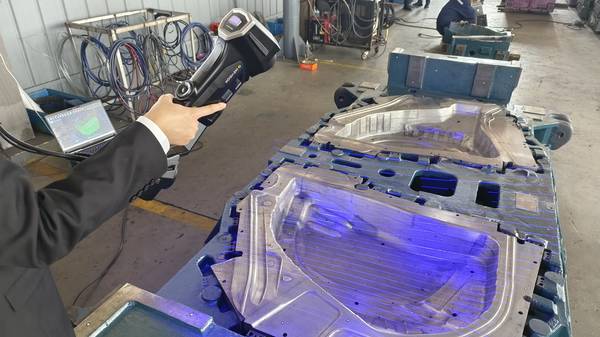
*Heavy machinery assembly verification.* Complex structural assemblies traditionally faced verification bottlenecks at final integration. Pre-assembly point cloud comparison detected structural interferences that would have required million-euro field corrections. Issues resolved at component level, not customer site.
*Regulatory documentation.* Aerospace suppliers facing AS9100 audits demonstrated complete measurement lineage—who captured data, when, under what environmental conditions, with what calibration status. Audit risk neutralized through data integrity rather than procedural assertion.
Typical customer payback: under six months.
Hardware Selection as Compliance Strategy
In regulated industries, quality capability and quality demonstrability are distinct requirements. ISO 17025, AS9100, and similar standards demand the latter.
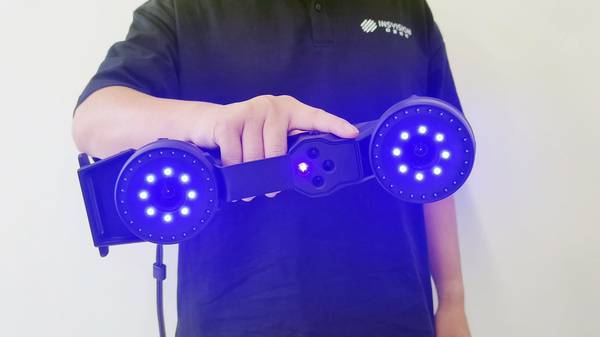
the series’s integrated ecosystem—X-Track tracking systems combined with AlphaVista measurement platforms—addresses both. The point cloud scanner captures geometry; the surrounding infrastructure ensures every measurement carries complete audit metadata. Reproducibility on demand. No information gaps during regulatory scrutiny.
Quality directors gain something beyond inspection accuracy: defensible processes. Non-conformity risk drops. The quality infrastructure investment protects itself through audit resilience and sustained certification. Choosing the series’s escaner nube de puntos means investing in compliance-ready metrology.
—
About the series
the series develops industrial 3D measurement systems for manufacturers requiring metrology-grade precision at production speed. Applications span automotive, aerospace, heavy machinery, and precision casting sectors across European and North American markets.