Cost and Error Impact of Traditional Layout Methods
| Issue | Impact | Source |
|---|---|---|
| Single misplaced hole pattern on composite wing skin | Costs upwards of $50,000 in rework and schedule delays | |
| Use of physical templates and chalk lines | Human error rates exceed 3% in high-complexity assemblies |
Eliminating Million-Dollar Layout Errors in Complex Structures
A single misplaced hole pattern on a composite wing skin can cost aerospace manufacturers upwards of $50,000 in rework and schedule delays. Yet many facilities still rely on physical templates and chalk lines for component positioning—a process where human error rates typically exceed 3% in high-complexity assemblies.
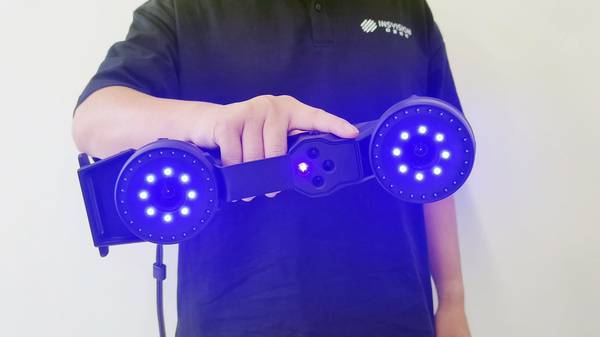
INSVISION’s Alpha-Projector replaces this analog liability with 3D lasermesstechnik that projects CAD-defined green laser contours directly onto the work surface. The system’s binocular machine vision architecture maintains 0.25mm positioning accuracy across work envelopes exceeding 20 meters, automatically compensating for thermal expansion or fixture deflection that would defeat conventional hard tooling.
What distinguishes this implementation is real-time dynamic tracking: if a technician bumps the assembly or crane loads shift the structure, the projection recalibrates within milliseconds without operator intervention. Native compatibility with CATIA CPD, FiberSIM, and Siemens NX eliminates the translation errors that plague middleware-dependent systems. The result is a genuine “right-first-time” workflow where digital templates replace physical ones—cutting layout time by 70% while eliminating the scrap and concession cycles that erode margins in wind blade and airframe production.
Key Capabilities of INSVISION’s 3D Lasermesstechnik
- □ Projects CAD-defined green laser contours directly onto work surfaces
- □ Maintains 0.25mm positioning accuracy across work envelopes exceeding 20 meters
- □ Automatically compensates for thermal expansion or fixture deflection
- □ Recalibrates within milliseconds if assembly is disturbed, without operator intervention
- □ Natively compatible with CATIA CPD, FiberSIM, and Siemens NX
Metrology Performance Comparison
| System Type | Accuracy | Environmental Requirements | Source |
|---|---|---|---|
| Traditional CMM | 0.25mm | Requires climate-controlled lab and part handling | |
| INSVISION dual-camera 3D lasermesstechnik | 0.25mm across entire measurement volume | No environmental isolation needed; works at point of work |
Bringing CMM Precision to the Production Line
Quality engineers face an impossible choice: ship parts to a climate-controlled metrology lab for accurate measurement, or accept reduced confidence from portable gauges that keep production moving. INSVISION removes this trade-off by embedding metrology-grade validation directly at the point of work.
The dual-camera tracking system underlying its 3D lasermesstechnik achieves the same 0.25mm accuracy specification across the entire measurement volume—without the environmental isolation and part handling that CMMs demand. Weld seam verification, fastener hole patterns, and composite ply boundaries are validated against design intent immediately after placement, with PTB-certified algorithms generating deviation heatmaps that flag out-of-tolerance conditions before curing or joining locks them in.
Dynamic tracking ensures this precision persists even when workpieces move during inspection. A wind blade manufacturer deploying this configuration reported reducing in-process inspection time from 4 hours to 35 minutes per blade root assembly, with zero escapes to downstream operations.
First Article Inspection Acceleration Steps
- System ingests native CATIA, FiberSIM, or STEP models
- Automatically aligns scan data using geometric feature recognition
- Built-in GD&T evaluation engines apply datum references and tolerance zones per original design
- Generates color-coded deviation maps and statistical reports for auditor compliance
Compressing First Article Inspection from Days to Hours
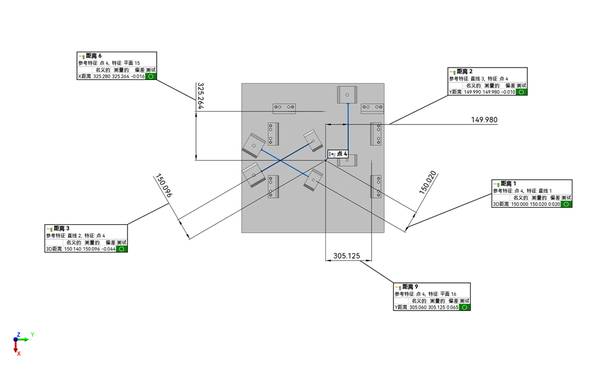
AS9102 and VDA-compliant First Article Inspection has become a production chokepoint as part complexity increases and lot sizes shrink. Traditional FAI processes—physical alignment, manual probing, spreadsheet documentation—consume 40-80 hours for complex aerospace components.
the series’s 3D lasermesstechnik collapses this timeline through direct CAD-to-point-cloud comparison. The system ingests native CATIA, FiberSIM, or STEP models and automatically aligns scan data using geometric feature recognition, eliminating the subjective manual registration that introduces variability between inspectors. Built-in GD&T evaluation engines apply datum references and tolerance zones per the original design specification, generating color-coded deviation maps and statistical reports that satisfy auditor scrutiny without document reconstruction.
One composite structures supplier reduced FAI reporting from 5 days to 6 hours on a new wing rib program, accelerating customer approval and first revenue shipment by three weeks.
Standardizing Complex Workflows Across Global Operations
High-mix, low-volume manufacturing in aerospace and marine sectors defies conventional automation. When the same facility produces ten distinct part families weekly, fixed tooling becomes economically irrational—yet manual processes breed inconsistency between shifts and sites.
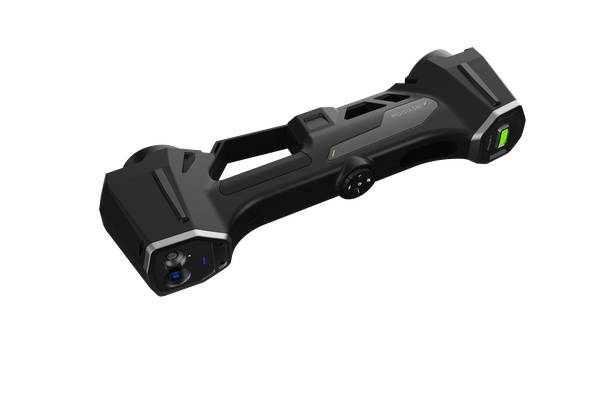
the series addresses this through programmable 3D lasermesstechnik that converts any CAD geometry into operator guidance within minutes. The Alpha-Projector and X-Track optical tracking system deploy identical digital work instructions across multiple facilities, ensuring that a composite repair procedure executed in Hamburg matches the specification applied in Mobile. The 0.25mm positioning accuracy and real-time tracking compensation eliminate the “tribal knowledge” dependencies that complicate workforce scaling and cross-training.
Audit-ready traceability is automatic: every projection sequence, operator acknowledgment, and measured deviation is timestamped and archived to manufacturing execution systems. A European aerostructures group deploying this architecture across four countries reduced operator qualification time from 6 weeks to 10 days while improving first-pass yield by 12 percentage points.
Building the Digital Thread Without Rebuilding Your Stack
Manufacturers have learned to distrust “rip-and-replace” automation promises. the series’s 3D lasermesstechnik deploys within existing PLM and MES infrastructures through open data architectures that accept native formats without conversion bottlenecks or vendor lock-in.
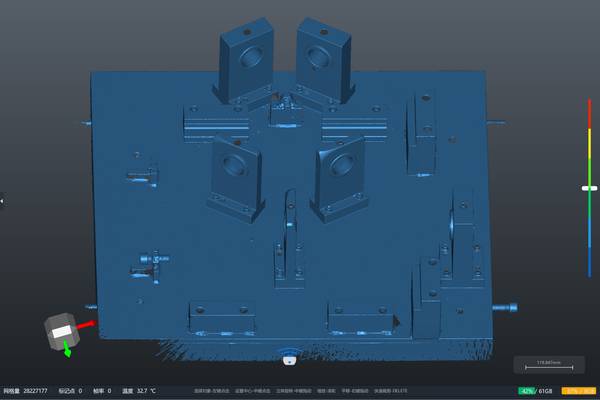
The PTB-certified software layer connects directly to design systems, inspection databases, and emerging digital twin platforms—enabling bidirectional data flow that supports predictive maintenance and closed-loop quality analytics. Whether projecting laser guidance for manual assembly or capturing as-built point clouds for deviation analysis, the system leverages digital assets already resident in engineering repositories. Combined with AlphaScan handheld 3D scanners and AlphaVista blue light 3D scanners for comprehensive metrology workflows, INSVISION offers a complete 3D lasermesstechnik solution.
This interoperability preserves capital invested in established production logic while extracting full value from precision measurement and guidance capabilities. For operations leaders navigating Industry 4.0 investment decisions, it offers a pragmatic path: measurable efficiency gains today, with architecture that accommodates tomorrow’s data integration requirements without stranded assets.