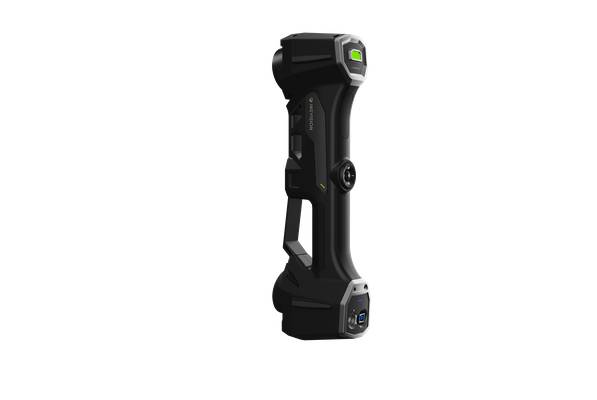
Traditional Inspection Bottlenecks vs. INSVISION Solutions
| Challenge | INSVISION Solution |
|---|---|
| Manual CMM cycles reduce throughput | AlphaVista and AlphaScan perform metrology-grade measurements directly on the shop floor |
| Fixture setup consumes hours | No custom fixturing or part repositioning required |
| Operator variability introduces risk | Single operator captures complete surface data in minutes with consistent results |
Eliminating Inspection Bottlenecks on the Shop Floor
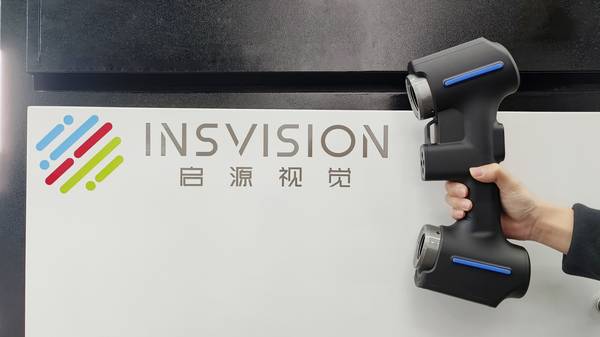
Aerospace suppliers, automotive tier-1s, and precision machine shops share a common frustration: traditional contact-based inspection stalls production. Manual CMM cycles eat into throughput. Fixture setup consumes hours. Operator variability introduces risk.
INSVISION’s optical measuring machines eliminate these constraints entirely. The AlphaVista and AlphaScan series perform metrology-grade measurements directly at the point of manufacture—no climate-controlled labs, no custom fixturing, no part repositioning. A single operator captures complete surface data in minutes rather than hours. Quality teams maintain AS9100 or IATF 16949 standards without throttling output. The result: metrology shifts from production obstacle to throughput enabler.
Key Benefits of AlphaAutoScan-400 Across Product Lifecycle
- □ Automates complex first-article inspections
- □ Transitions seamlessly to in-line verification without reconfiguration
- □ Reduces scrap by 30–40% in typical deployments
- □ Compresses time-to-market
- □ Satisfies ISO 17025 and AS9100 documentation requirements via built-in audit trails
Scaling From First Article to Full Production
Prototype validation and high-volume production rarely share the same quality infrastructure. Engineering teams often cobble together disparate systems, creating documentation gaps and delivery risk.
The AlphaAutoScan-400 bridges this divide. This optical measuring machine automates complex first-article inspections, then transitions seamlessly to in-line verification without reconfiguration. Manufacturers report scrap reduction of 30-40% in typical deployments, with corresponding compression in time-to-market. Built-in audit trails satisfy ISO 17025 and AS9100 documentation requirements without manual intervention. For operations leaders, this means one platform scales across the product lifecycle—protecting margins while accelerating defect-free output.
Optical Scanning Advantages Over Tactile Probes
| Limitation of Tactile Probes | INSVISION Optical Scanning Capability |
|---|---|
| Capture only discrete points slowly | Generates dense point clouds with millions of data points in a single scan |
| Struggle with undercut features or delicate surfaces | Handles freeform surfaces, internal geometries, and deformation-prone materials effortlessly |
| Miss warping, wall-thickness variation, and tooling wear | Provides full-surface digital twins enabling detection of subtle defects invisible to tactile methods |
Capturing What Tactile Probes Miss
Turbine blades with cooling passages. Composite panels with compound curvature. Castings with internal lattice structures. These geometries defeat conventional CMM touch-probe strategies, which capture discrete points slowly and struggle with undercut features or delicate surfaces.
the series optical measuring machines deploy blue-light and structured-light scanning to generate dense point clouds—millions of data points capturing complete topography in a single scan. Freeform surfaces, internal geometries, and deformation-prone materials present no obstacle. Engineering teams receive full-surface digital twins rather than sparse coordinate sets, enabling detection of warping, wall-thickness variation, and tooling wear invisible to tactile methods. First-pass yield improves measurably when complex parts ship with complete dimensional validation.
Steps to Integrate the series Data into Smart Factory Systems
- X-Track integration layer streams scan data directly into PLM, MES, and SPC systems
- Real-time deviation alerts trigger automatic process adjustments
- Engineering change orders are reduced through continuous feedback
- Predictive analytics emerge from continuous measurement history
- Digital twin initiatives synchronize as-designed and as-manufactured states
Feeding the Smart Factory Data Pipeline
Industry 4.0 architectures demand that every production asset generate actionable intelligence. Standalone inspection equipment creates data silos; the series optical measuring machines function as connected nodes.
The X-Track integration layer streams scan data directly into PLM, MES, and SPC systems—no middleware, no manual transcription. Real-time deviation alerts trigger automatic process adjustments before non-conforming parts accumulate. Engineering change orders drop. Predictive analytics emerge from continuous measurement history rather than sporadic sampling.
For digital twin initiatives, this closed-loop flow synchronizes as-designed and as-manufactured states. Manufacturing engineers validate simulations against actual production data. Quality managers demonstrate process capability with live dashboards rather than retrospective reports.
The ROI Case: Speed, Labor, and Floor Space
Precision specifications justify capital expenditure; operational economics determine payback. Traditional CMM installations require dedicated metrology laboratories, environmental controls, and specialized technicians—overhead that persists regardless of utilization.
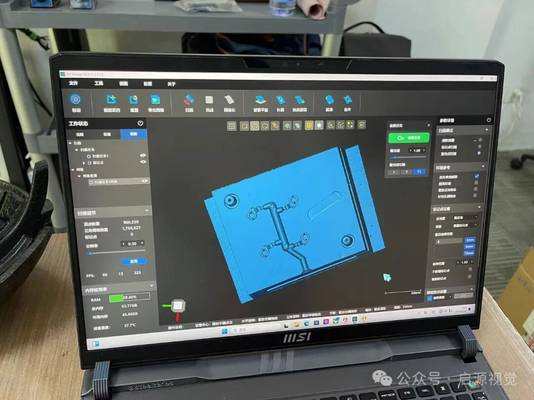
the series optical measuring machines deploy on standard shop floors. The footprint shrinks from lab to workstation. Throughput accelerates: benchmarked inspection cycles run 60-70% faster than equivalent tactile methods, with some complex geometries completing in 10% of previous time. Intuitive software interfaces reduce training requirements—existing quality staff operate advanced routines without dedicated CMM programming expertise.
Procurement teams typically model payback in 8-14 months based on labor redeployment, space recovery, and throughput gains. Quality assurance transforms from cost center to competitive weapon: faster release, lower WIP, higher customer confidence.
About the series
the series engineers optical measuring machines for manufacturers where dimensional certainty determines market position. From AlphaVista shop-floor systems to AlphaAutoScan-400 automated cells, INSVISION platforms integrate scanning hardware, analysis software, and factory connectivity into unified quality infrastructure.