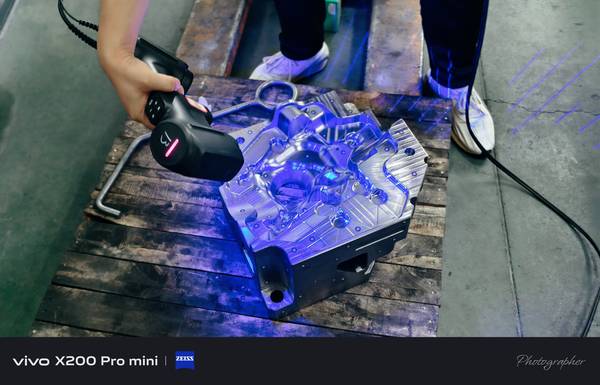
From Lab-Bound to Line-Side: The Metrology Migration
Manufacturing in 2025 runs on compressed timelines and distributed production. The reshoring surge and digital twin mandates have exposed a critical gap: traditional CMMs, accurate as they are, cannot keep pace with shop-floor realities. Stationary machines demand climate-controlled environments, part transport, and hours of setup—luxuries few operations can afford.
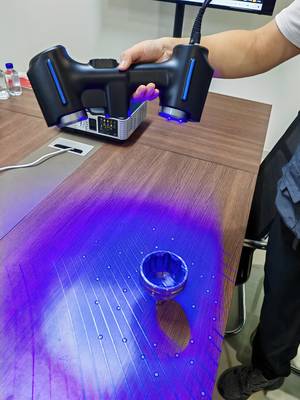
This is where the 3d scanner 2025 market has shifted decisively toward portable, metrology-grade solutions. INSVISION‘s AlphaScan sits at the center of this transition, delivering NIST-traceable accuracy without the infrastructure overhead. For aerospace castings, automotive tooling, and heavy equipment refurbishment, the ability to capture sub-0.02mm precision at the point of manufacture has moved from competitive advantage to operational necessity. The difference shows up in first-article inspection cycles, where immediate feedback prevents downstream defects, and in reverse engineering workflows where legacy part documentation no longer requires weeks of outsourcing.
Where CMMs Hit Their Limits
Coordinate measuring machines still serve their purpose—small, complex components in controlled conditions. But when a 400kg gearbox housing needs inspection or a worn turbine blade requires reverse engineering on-site, the logistics break down. Moving parts to the metrology lab introduces damage risk, thermal equilibration delays, and production bottlenecks that compound daily.
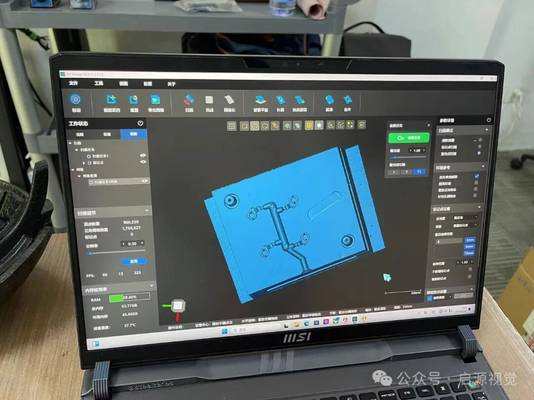
INSVISION engineered the AlphaScan specifically for these friction points. The system operates wirelessly across factory floors, generating dense point clouds in real time without halting adjacent operations. Engineers visualize mesh data immediately, identifying out-of-tolerance features while the part remains fixtured. For mold maintenance teams, this means catching wear patterns during scheduled downtime rather than discovering them mid-production. The ROI calculation becomes straightforward: eliminate transport, reduce inspection cycles, and reclaim floor space previously dedicated to dedicated measurement rooms.
Module title
| Limitation | Traditional CMM Impact | AlphaScan Advantage |
|---|---|---|
| Part Size & Weight | Impractical for large/heavy components (e.g., 400kg gearbox) | On-site scanning regardless of size |
| Environment | Requires climate-controlled lab | Operates directly on factory floor |
| Workflow Disruption | Halts production during transport and setup | Real-time scanning without stopping adjacent operations |
Quantifying the Speed Advantage
Time compression defines the current manufacturing environment, and inspection remains a frequent chokepoint. The AlphaScan addresses this through hardware-software integration that cuts typical workflows by 60% or more.
Consider turbine blade validation—a process that historically consumed half a day per component. With AI-assisted alignment eliminating manual registration steps, AlphaScan completes full-surface capture in under eight minutes. The same acceleration applies to legacy digitization: obsolete parts without CAD records can move from physical artifact to production-ready model within a single shift, bypassing the archival delays that often stall aftermarket operations.
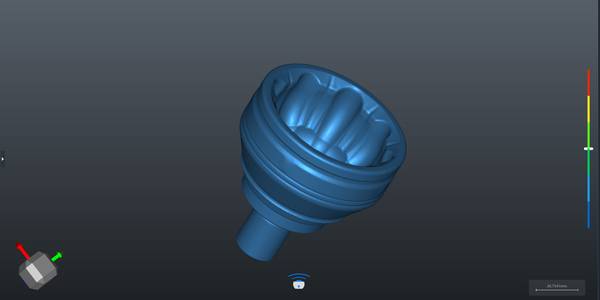
Integration with established platforms matters here. Native compatibility with PolyWorks, Geomagic, and Siemens NX means scan data flows directly into existing design pipelines without format conversion or rework. Engineering managers tracking capital efficiency see the impact in reduced outsourcing costs and faster iteration cycles—tangible metrics that justify metrology investments to procurement stakeholders.
Module title
- AI-assisted alignment eliminates manual registration steps
- Full-surface capture completed in under eight minutes for turbine blades
- Scan data flows directly into PolyWorks, Geomagic, and Siemens NX without format conversion
- Obsolete parts digitized from physical artifact to production-ready model within a single shift
Interoperability as Infrastructure
Hardware purchases in 2025 must outlast immediate requirements. INSVISION approaches this through open architecture rather than proprietary ecosystems. The AlphaScan outputs directly to STEP, IGES, and industry-standard point cloud formats, preserving flexibility as software environments evolve.
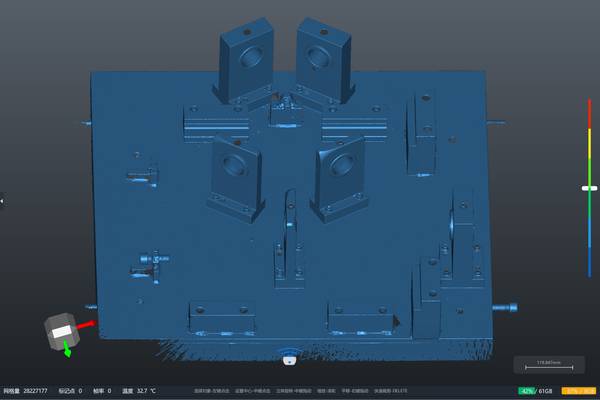
Beyond geometry, the system generates automated GD&T reports and cloud-accessible scan archives. This bridges the gap between shop-floor measurement and enterprise-level PLM strategies, maintaining digital thread continuity without middleware dependencies. For facilities navigating vendor consolidation or platform migrations, this adaptability protects prior investments while supporting incremental capability upgrades.
Module title
| Feature | Benefit |
|---|---|
| Open architecture | Future-proofs hardware against software obsolescence |
| Native output to STEP/IGES/point cloud | Eliminates format conversion and rework |
| Automated GD&T reports | Supports ISO-compliant quality systems |
| Cloud-accessible scan archives | Enables digital thread continuity with PLM |
Separating Industrial-Grade from “Good Enough”
Market confusion persists around handheld scanning capabilities. Devices like the SOL 3D scanner or dental-oriented 3Shape systems serve their intended applications adequately—hobbyist modeling, intraoral imaging, small-scale prototyping. They are not, however, engineered for manufacturing environments where measurement uncertainty carries six-figure consequences.
The AlphaScan’s differentiation lies in specifications that matter on the floor: IP54 ingress protection against coolant mist and metal particulate, thermal stability across 5-40°C operational ranges, and factory calibration traceable to NIST standards. These are not marketing differentiators; they are prerequisites for ISO-compliant quality systems where measurement data must withstand supplier audits and regulatory scrutiny.
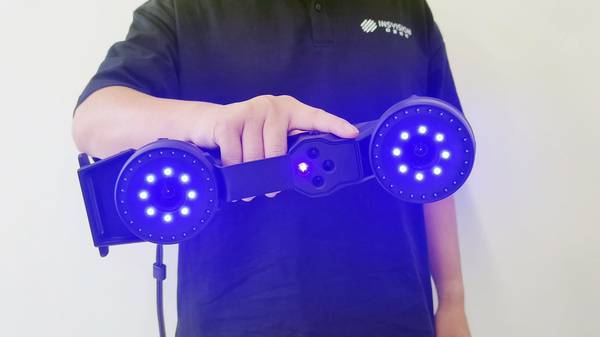
The risk of deploying consumer-grade hardware in industrial settings extends beyond accuracy concerns. Inconsistent calibration, fragile optics, and unsupported software stacks create hidden liability—rework costs, rejected shipments, and failed certifications that dwarf initial equipment savings.
Module title
- □ IP54 ingress protection against coolant mist and metal particulate
- □ Thermal stability across 5-40°C operational ranges
- □ Factory calibration traceable to NIST standards
- □ Supports ISO-compliant quality systems for audit readiness
- □ Avoids hidden liabilities like rework costs and failed certifications
The Procurement Calculation
For engineering leaders evaluating 3d scanner 2025 investments, the analysis increasingly centers on total workflow impact rather than unit specifications alone. The AlphaScan’s value proposition rests on three measurable pillars: elimination of part transport and associated downtime, compression of inspection-to-decision cycles, and preservation of operational flexibility through open data standards.
In an environment where reshoring initiatives demand domestic quality capabilities and digital twin requirements mandate comprehensive part documentation, portable metrology has become infrastructure rather than accessory. INSVISION’s positioning reflects this reality—hardware built for the manufacturing conditions that actually exist, not the controlled environments of specification sheets.