Why Traditional Metrology Hits Its Limits on the Shop Floor
Coordinate Measuring Machines (CMMs) and laser trackers built the foundation of modern quality control. Yet in aerospace, automotive, and precision manufacturing, these workhorses increasingly struggle to keep pace. CMMs demand climate-controlled environments—move them onto the production floor for large-assembly inspection, and measurement uncertainty spikes. Laser trackers falter with intricate geometries or reflective surfaces, often forcing operators to apply matte spray coatings that add 15–30 minutes per part and contaminate sensitive components.
Limitations of Traditional Metrology Tools
| Tool | Key Limitation | Impact |
|---|---|---|
| Coordinate Measuring Machines (CMMs) | Require climate-controlled environments | Measurement uncertainty spikes on the shop floor |
| Laser Trackers | Falter with intricate geometries or reflective surfaces | Require matte spray coatings, adding 15–30 minutes per part and contaminating components |
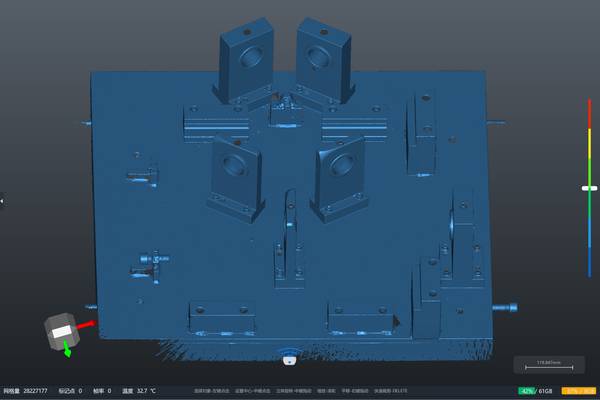
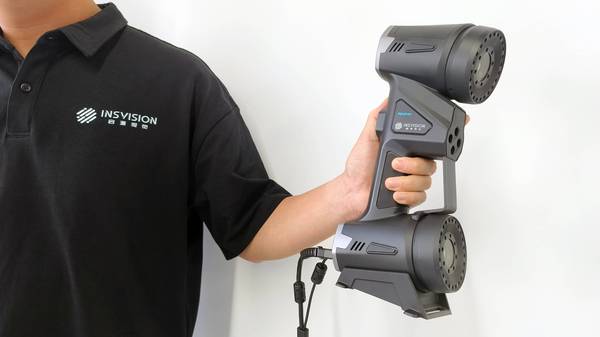
3d scanning structured light technology from INSVISION eliminates these trade-offs. This non-contact approach captures up to 5 million data points per second, mapping complex freeform surfaces and polished metals without surface preparation. For a leading European turbine manufacturer, this translated to reducing inspection time for a 1.2-meter impeller from 4 hours on a CMM to 12 minutes—while capturing 400x more surface data. When production schedules tighten and tolerance bands shrink, structured light 3D scanning delivers the measurement density and speed that contact methods simply cannot match.
Blue Light vs. White Light: Matching the Source to the Application
Not all structured light 3D scanning systems perform identically. The spectral characteristics of the projected pattern directly impact measurement reliability in real-world conditions.
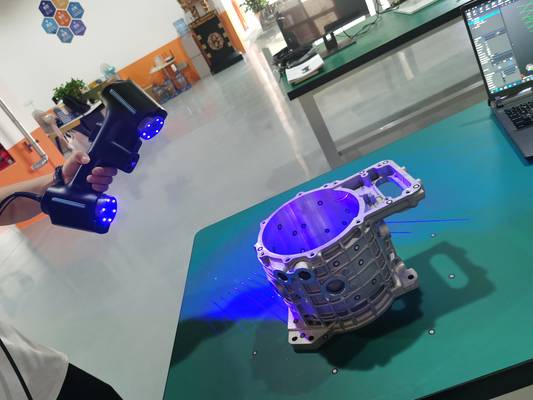
Blue-light systems—operating at approximately 450 nm—excel at filtering ambient shop-floor lighting. The shorter wavelength scatters less on reflective surfaces, enabling metrology-grade data capture on machined aluminum or polished steel without environmental isolation. INSVISION deploys blue-light architecture for applications like turbine blade inspection, where 25-micron tolerances must hold across hundreds of cooling-hole arrays.
White-light systems leverage broader spectral output to maximize field-of-view coverage. For digitizing large composite molds or vehicle body panels where ±0.1 mm precision suffices, the wider pattern projection reduces the number of scan positions required—cutting acquisition time by 40% compared to narrow-field alternatives.
Structured Light System Comparison
| System Type | Wavelength | Best For | Performance Benefit |
|---|---|---|---|
| Blue-light | ~450 nm | Reflective surfaces, high-precision tasks (e.g., turbine blades) | Less scatter on reflective surfaces; enables metrology-grade data without environmental isolation |
| White-light | Broad spectrum | Large composite molds, vehicle body panels | Wider pattern projection reduces scan positions; cuts acquisition time by 40% |
INSVISION’s application engineering team maps these characteristics against specific measurement tasks, ensuring customers avoid over-specifying resolution or compromising on surface compatibility.
From First Article Inspection to Digital Twin Deployment
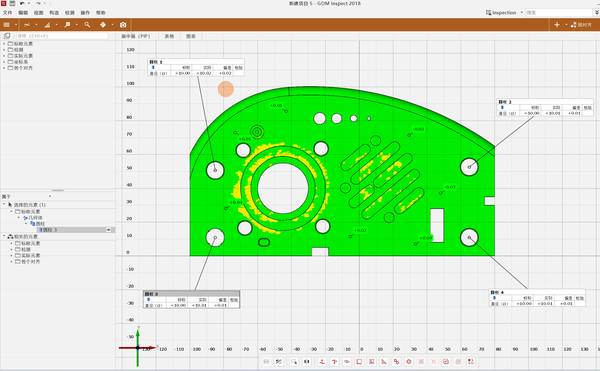
Structured light 3D scanning has moved beyond prototyping into core production workflows. In First Article Inspection, INSVISION systems compare as-built castings and forgings to nominal CAD within minutes, flagging dimensional deviations before tooling adjustments become prohibitively expensive. A North American aerospace supplier reduced scrap rates by 34% after implementing automated geometric dimensioning and tolerance (GD&T) analysis directly from scan data.
The technology equally supports reverse engineering of legacy tooling. When original drawings degrade or disappear, engineers capture complete surface definitions—enabling native CAD recreation and updated manufacturing documentation. These digital assets feed directly into PLM environments, accelerating digital twin creation for predictive maintenance and process simulation.
Digital Workflow Integration Steps
- Perform First Article Inspection by comparing as-built parts to CAD within minutes
- Implement automated GD&T analysis from scan data to reduce scrap rates
- Capture complete surface definitions of legacy tooling for reverse engineering
- Recreate native CAD models and update manufacturing documentation
- Feed digital assets into PLM environments to accelerate digital twin creation
Handheld Agility or Stationary Precision: Selecting Your Configuration
Operational requirements—not hardware specifications—should drive scanner selection. the series offers two distinct architectures:
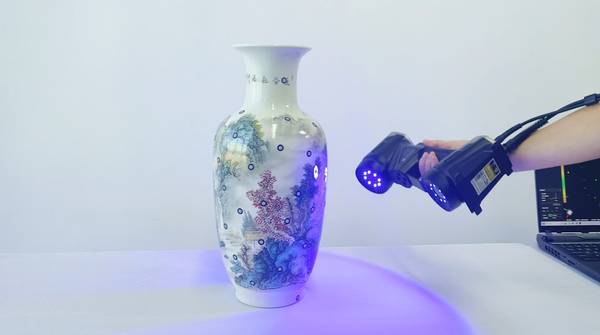
The AlphaScan handheld system addresses large assemblies and immobile components. Weighing 1.8 kg with integrated tracking, it enables measurements inside vehicle cavities, on elevated structures, or within active production cells. For a German automotive OEM, AlphaScan eliminated 90% of part transportation to quality labs, reclaiming 2,400 annual labor hours.
The AlphaVista stationary system targets micron-level applications. Its blue-light projector and 12-megapixel stereo cameras achieve 10-micron accuracy on complex geometries like injection molds or medical implants. Fixed mounting eliminates operator-induced variability, supporting statistical process control requirements.
Misalignment between capability and application remains a primary cause of metrology investment underperformance. the series’s pre-deployment assessment validates configuration selection against actual production demands.
Implementation Success Checklist
- □ Ensure software interoperability with native point cloud export to PolyWorks, Geomagic, and proprietary CAQ platforms; enable direct MES integration for automated inspection routing
- □ Establish compliance architecture with measurement uncertainty budgets and audit trails supporting ISO 17025, AS9100, and customer-specific quality agreements
- □ Execute competency transfer through structured training programs certifying internal operators, reducing dependency on external service contracts
Integration-First Implementation
Hardware acquisition without workflow integration delivers limited value. the series structures implementations around three pillars:
– Software interoperability: Native point cloud export to PolyWorks, Geomagic, and proprietary CAQ platforms; direct MES integration for automated inspection routing
– Compliance architecture: Measurement uncertainty budgets and audit trails supporting ISO 17025, AS9100, and customer-specific quality agreements
– Competency transfer: Structured training programs certifying internal operators, reducing dependency on external service contracts
This systems-level approach ensures structured light 3D scanning capabilities translate into measurable throughput gains and defensible quality documentation—without the implementation delays that erode projected ROI. For manufacturers seeking to modernize quality control, INSVISION’s 3d scanning structured light solutions provide the precision, speed, and integration required to stay competitive in demanding industrial environments.