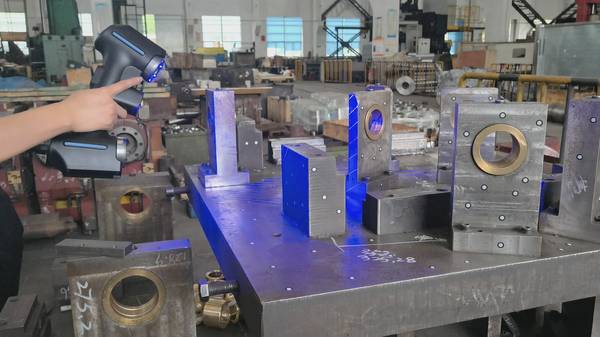
Taking Metrology to the Shop Floor
Automotive OEMs and Tier 1 suppliers lose an average of 3-5 days per design iteration when parts must travel to temperature-controlled CMM labs. That latency compounds across hundreds of iterations in a typical vehicle program.
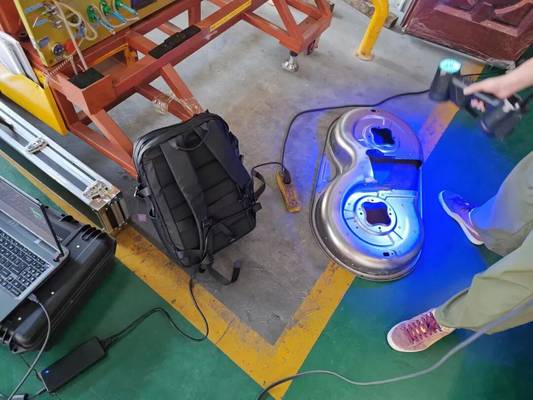
Advanced 3D scanning automotive workflows collapse that timeline. Engineers capture full-field point cloud data directly beside clay modeling studios or stamping presses—no environmental chambers, no fixture setups, no logistics coordination. The AlphaScan handheld scanner from INSVISION exemplifies this shift: operators begin scanning within minutes of unboxing, collecting up to 2 million measurement points per second on surfaces ranging from matte clay to reflective chrome.
The operational math is straightforward. A mid-size OEM running 50 concurrent design studies saves approximately 150-250 labor days per program by eliminating lab transit. Those hours redirect toward iterative refinement rather than waiting.
Time Savings Comparison: Lab-Based vs. Shop-Floor Scanning
| Metric | Lab-Based CMM | Shop-Floor 3D Scanning | |
|---|---|---|---|
| Average delay per design iteration | 3–5 days | Near real-time | |
| Labor days saved per program (50 studies) | 0 | 150–250 days |
Closing Tolerance Stack-Ups Before They Hit the Line
Multi-supplier assemblies present a familiar headache. When door panels from Supplier A meet hinges from Supplier B on Body-in-White, cumulative tolerances surface as visible gaps, flush misalignment, or wind noise complaints. Catching these issues post-assembly triggers expensive line stoppages—often $10,000+ per minute on high-volume programs.
Metrology-grade 3D scanning automotive solutions shift detection upstream. Quality teams perform first-article inspection directly at receiving docks, comparing supplier components against master CAD within hours rather than days. Gap-and-flush analysis on complex surfaces—A-pillars, tailgate interfaces, headlamp housings—yields quantitative deviation maps that suppliers can act on before shipping.
INSVISION’s AlphaScan delivers sub-0.1mm accuracy in variable shop-floor conditions, producing audit-ready reports that satisfy IATF 16949 documentation requirements. The result: dimensional conformance locked in before components reach the assembly hall.
Benefits of Upstream Tolerance Validation
- □ First-article inspection at receiving docks within hours
- □ Quantitative gap-and-flush deviation maps for complex surfaces
- □ Sub-0.1mm accuracy under variable shop-floor conditions
- □ Audit-ready reports compliant with IATF 16949
Rebuilding What CAD Forgot
Classic restoration programs, service parts operations, and discontinued tooling lines share a common vulnerability: missing or obsolete CAD data. Manual reverse engineering stretches 40-200 hours per component depending on complexity. Worse, hand measurements introduce propagation errors that compound across mating surfaces.
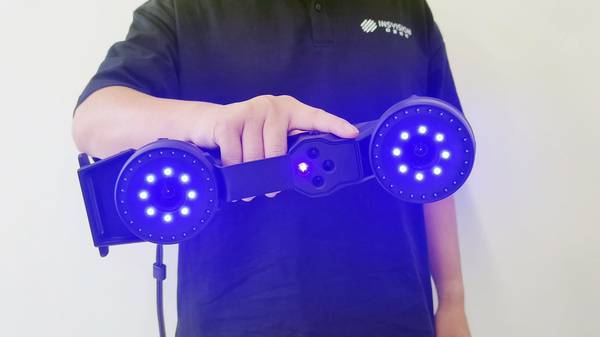
3D scanning automotive technology compresses that reconstruction cycle. Portable scanners capture complete surface geometry—including undercuts, freeform curves, and texture detail—in a single session. INSVISION’s AlphaScan processes raw point cloud data through integrated meshing algorithms, exporting watertight STL or parametric CAD formats compatible with major CAM platforms.
A European transmission remanufacturer recently applied this workflow to a 1980s gearbox housing with no surviving drawings. Scan-to-CAD completion took 6 hours versus an estimated 3 weeks of manual measurement. The digitized archive now supports on-demand casting patterns without recurring engineering costs.
Reverse Engineering Workflow Steps
- Capture complete surface geometry including undercuts and freeform curves in a single scanning session
- Process raw point cloud data through integrated meshing algorithms
- Export watertight STL or parametric CAD formats compatible with major CAM platforms
- Utilize digitized archive for on-demand manufacturing without recurring engineering
Validating Crash Performance with Full-Field Data
Post-crash deformation analysis traditionally relies on coordinate probing—effective for discrete points, blind to complex buckling patterns between measurement locations. Safety engineers interpolate gaps, introducing uncertainty into simulation correlation.
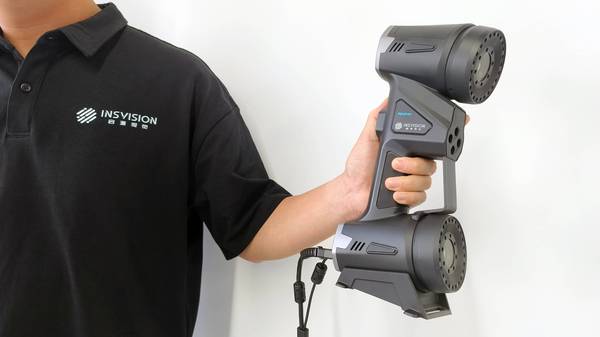
High-density 3D scanning automotive protocols eliminate that interpolation. Handheld scanners map complete displacement fields across crumple zones, B-pillar intrusions, and floor pan deformations. The resulting point clouds feed directly into CAE validation workflows, tightening correlation between physical tests and finite element models.
Regulatory submission timelines compress accordingly. One Asian OEM reduced NCAP documentation cycles by 30% after adopting full-field scanning for frontal offset analysis, accelerating market entry without compromising safety rigor.
Crash Analysis Method Comparison
| Aspect | Coordinate Probing | Full-Field 3D Scanning | |
|---|---|---|---|
| Data coverage | Discrete points only | Complete displacement fields | |
| NCAP documentation cycle impact | Baseline | 30% reduction reported |
The Metrology-Grade Difference
Consumer-grade scanners—Netum, XTop3D, entry-level structured-light units—deliver acceptable results for visualization or hobby applications. They falter where automotive supply chains demand traceability: thermal drift in uncontrolled environments, uncalibrated optics producing non-repeatable results, software lacking GD&T analysis modules.
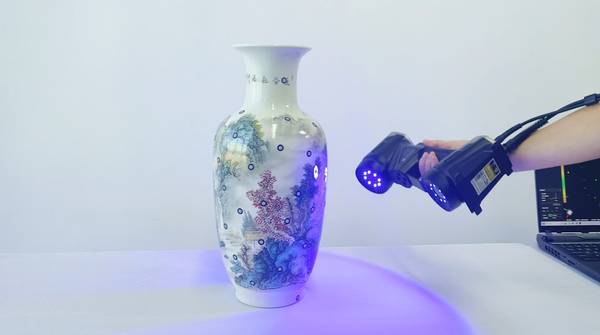
The cost differential between consumer and industrial hardware ($2,000 versus $25,000+) obscures a larger operational picture. A single scrapped stamping die due to measurement error exceeds the premium investment. Recertification delays from non-compliant documentation carry steeper penalties.
INSVISION’s AlphaScan carries ISO 10360-8 calibration, outputs measurement uncertainty statements, and integrates with PolyWorks, Geomagic, and native metrology suites. For procurement teams evaluating 3d scanning automotive investments, that certification infrastructure—not headline specifications—determines long-term ROI.
Bottom Line
Vehicle development timelines will not expand to accommodate legacy measurement workflows. The shift from lab-bound CMMs to shop-floor 3d scanning automotive systems is less a technology upgrade than a structural necessity for competitive program execution. the series’s AlphaScan occupies this transition point: industrial accuracy without industrial rigidity, enabling the iteration velocity that modern automotive engineering demands.