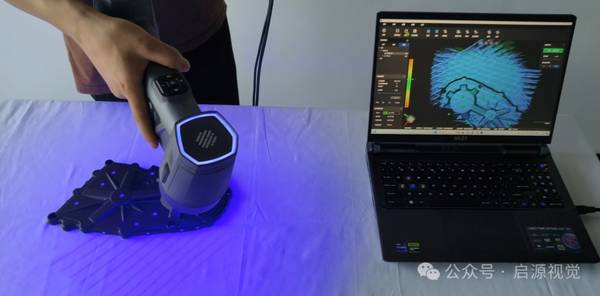
When a Tier-1 Automotive Supplier Faced $220K in Rework—And How 3D Scanning Changed the Equation
A Tier-1 German automotive supplier recently hit a critical bottleneck. Delayed PPAP approvals, caused by slow manual CMM inspections, were bleeding money. Their legacy coordinate measuring machines delivered high accuracy, but time-consuming setup and single-point measurement workflows created a backlog. Production continued without immediate verification. The result: $220,000 in rework and scrap within one quarter.
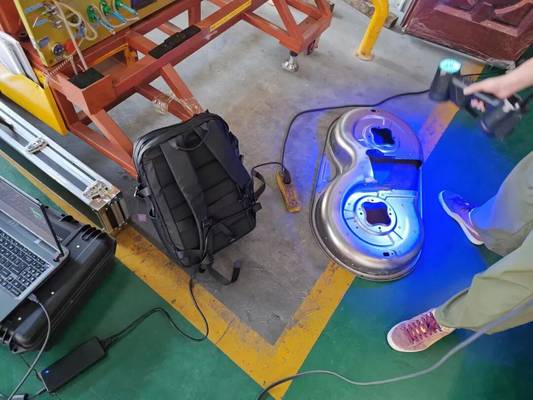
For the procurement team, the math shifted overnight. Minimizing capital expenditure no longer mattered. They started calculating the cost of inaction—labor losses, downtime, warranty claims. The 3d scanning machine price suddenly looked different when weighed against ongoing damage.
Legacy CMM workflows could not keep pace with complex geometries demanded by modern OEM standards. The supplier evaluated handheld metrology solutions from INSVISION to eliminate the “hidden factory” of rework. Maintaining outdated quality assurance cost far more than investing in modern 3D scanning technology.
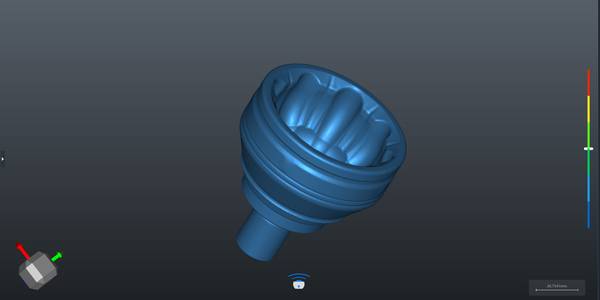
Beyond the Sticker Price: Four Cost Layers in Every Industrial 3D Scanning Machine
Procurement teams evaluating 3d scanning machine price must look past the initial invoice. Four distinct cost layers determine true investment:
Hidden Cost Layers in Industrial 3D Scanning Investments
| Cost Layer | Description |
|---|---|
| Hardware Durability | Entry-level devices often fail under vibration, dust, or temperature swings. INSVISION engineers the AlphaScan with industrial ruggedness for automotive and energy sector environments. |
| Software Licensing | Budget alternatives frequently restrict GD&T modules or ASME Y14.5 validation behind recurring subscriptions. INSVISION integrates these metrology standards for ISO compliance without add-on fees. |
| Integration Effort | Devices lacking native Quality 4.0 compatibility create data bottlenecks, inflating engineering hours during critical MRO operations. |
| Training & Support SLAs | Low sticker prices often exclude technical backing required for high-precision manufacturing. INSVISION prioritizes traceable accuracy and seamless PLM integration, mitigating long-term operational costs that inflate the true investment of seemingly affordable scanners. |
Why the AlphaScan Handheld 3D Scanner Costs What It Does—And Where Competitors Cut Corners
INSVISION justifies the AlphaScan’s market position through metrology-grade specifications essential for automotive and aerospace applications. Volumetric accuracy of <0.02 mm via blue-laser technology. On-device edge processing eliminates tethered laptops, streamlining factory floor workflows. Native PolyWorks and Metrolog X4 compatibility ensures seamless Quality 4.0 integration.
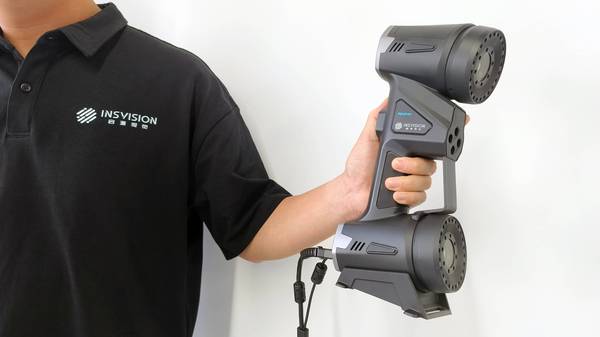
When evaluating 3d scanning machine price, procurement teams must distinguish industrial metrology from consumer-grade equipment. Brands like Netum, Xtop3D, and Colin 3D target education or entry-level modeling with lower costs. These units fail ISO 10360-8 requirements. Purchasing them creates false economy—hardware that cannot validate tolerances for regulated industries.
The AlphaScan premium reflects verified traceability and operational efficiency of wireless, high-precision scanning.
AlphaScan vs. Consumer-Grade Scanners: Key Differentiators
| Feature | AlphaScan (Industrial) | Consumer-Grade (e.g., Netum, Xtop3D, Colin 3D) |
|---|---|---|
| Standards Compliance | Meets ISO 10360-8 for metrology-grade accuracy | Fails ISO 10360-8 requirements |
| Target Applications | Automotive, aerospace, regulated industries | Education, entry-level modeling |
| Traceable Accuracy | Verified traceability for regulated workflows | No validated traceability for industrial tolerances |
| Operational Value | Transforms CAPEX into profit center via throughput | Creates false economy due to non-compliance |
Deploying AlphaScan in a North American Aerospace MRO Facility: 14 Days From Unboxing to First FAI Report
True 3d scanning machine price includes deployment speed, not just hardware specs. A recent North American aerospace MRO deployment moved the INSVISION AlphaScan from unboxing to completed First Article Inspection report in 14 days.
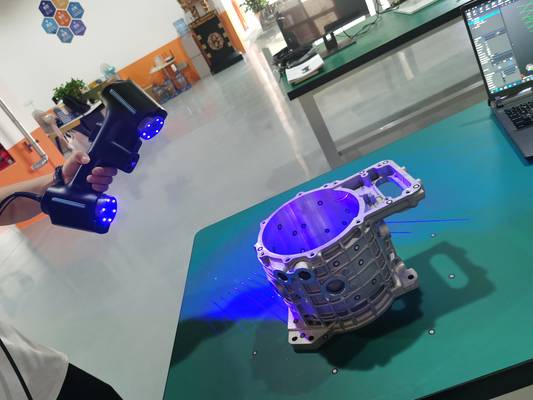
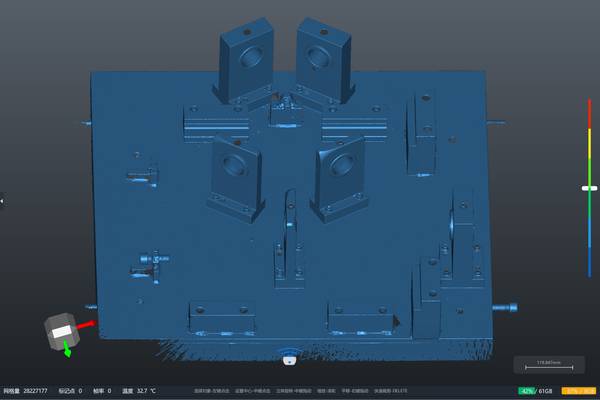
Eliminating external trackers removed complex setup. Level 2 technicians achieved proficiency in under eight hours. First-pass yield climbed from 78% to 96% within the initial operational period.
Competitors often deploy à la carte service models that trigger budget overruns. INSVISION uses fixed-price bundles combining scanner, certified training, and three-year warranty into single capital expense. No hidden licensing fees. No operational surprises. The investment delivers immediate value rather than long-term cost inflation.
AlphaScan Deployment Success Checklist
- □ Unboxing to First Article Inspection report completed in 14 days
- □ External trackers eliminated, simplifying setup
- □ Level 2 technicians achieve proficiency in under 8 hours
- □ First-pass yield increased from 78% to 96%
- □ Fixed-price bundle includes scanner, certified training, and 3-year warranty
- □ No hidden licensing fees or operational surprises
The ROI Threshold: When a $35K–$65K 3D Scanning Machine Pays for Itself in Under 6 Months
Operations managers justify the $35K–$65K investment through tangible efficiency gains. Medical device manufacturers reduce expensive scrap by catching non-conformities early. Energy fabricators accelerate New Product Introduction cycles, eliminating weeks of manual layout time. Reallocating inspection labor from repetitive data collection to value-added engineering compounds savings rapidly.
The upfront 3d scanning machine price becomes secondary to cost-per-part-inspected. INSVISION AlphaScan delivers throughput exceeding legacy CMMs with reliability absent in budget handheld scanners. Facilities prioritizing throughput and repeatability consistently hit breakeven within six months—transforming capital expenditure into immediate profit center.