When Missing Reference Points Grounded an Aerospace Rotor Repair
A Western European MRO facility learned the hard way that freeform scanning demands a rigid framework. During a routine turbine rotor repair, technicians armed with a handheld scanner lost tracking across complex blade geometry. Without stable 3D scanning reference points to anchor the data to the part coordinate system, the mesh drifted several millimeters—an error that escaped detection until final inspection. The facility scrapped expensive material and restarted the blending process entirely.
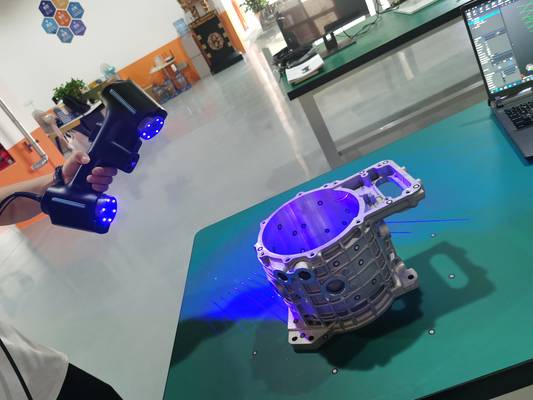
This incident illustrates why aerospace maintenance operations cannot treat reference points as an afterthought. INSVISION integrates photogrammetry to establish verifiable reference points before scanning begins, ensuring data alignment matches nominal CAD from the first capture. The result: maintenance teams avoid the rework and schedule disruptions that stem from flawed metrology foundations.
Why Surface Geometry Alone Fails
Metrology-grade accuracy requires more than what the eye—or the laser—can see. Large aerospace components and automotive sheet metal often present repetitive features or degraded surfaces that confound alignment algorithms. Without distinct optical anchors, sequential datasets accumulate registration errors that compound across multiple setups.
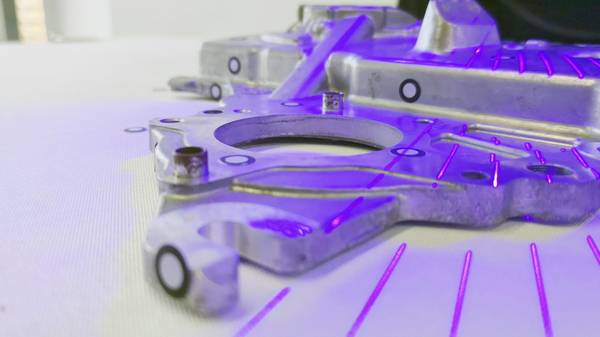
INSVISION addresses this through adhesive 3D scanning reference points that function as high-contrast markers for automated registration. These targets allow laser trackers and handheld scanners to maintain coordinate system consistency, preventing drift during complex inspection routines. For quality managers working to ISO 17025 or ASME B89 standards, this approach ensures traceability through an unambiguous alignment framework. By decoupling registration accuracy from surface texture, INSVISION delivers reliable point cloud data for GD&T verification—even in demanding MRO environments where surface degradation is commonplace.
Common Failure Modes in Reference Point Strategy
| Failure Mode | Impact |
|---|---|
| Sparse marker distribution | Increases alignment error, undermining geometric accuracy for high-tolerance assemblies |
| Poor adhesion or placement on moving fixtures | Causes substrate shift during scanning, rendering deviation analysis impossible |
Field Deployment: The AlphaScan Approach
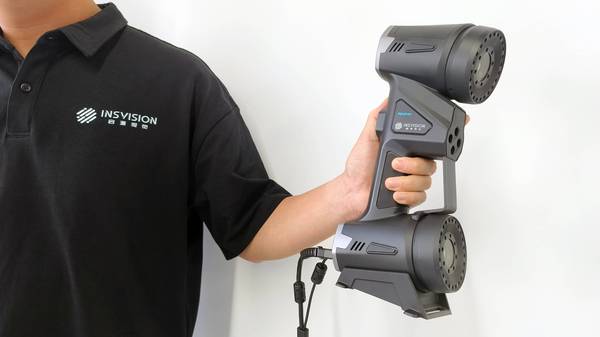
Complex geometries—automotive castings, medical implants, legacy aerospace components—demand strategic marker placement. Operators using the INSVISION AlphaScan handheld scanner apply adhesive markers to flat, non-critical surfaces, distributing them randomly to eliminate tracking ambiguities. This proves essential when digitizing objects with repetitive features or reflective finishes that disrupt standard visual tracking.
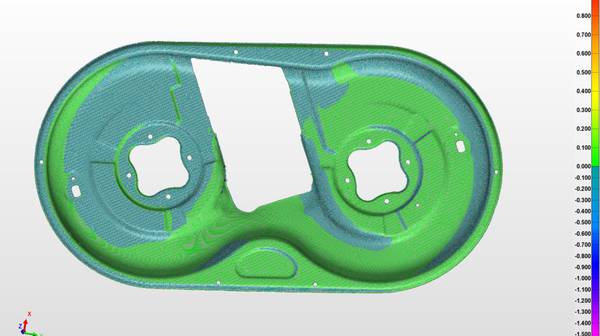
Once deployed, INSVISION software automatically recognizes these 3D scanning reference points to compute alignment, compressing manual registration time. The system maintains tracking lock under adverse shop-floor conditions: fluctuating ambient lighting, mechanical vibration near production lines, thermal drift from adjacent welding operations. By referencing physical markers rather than surface geometry alone, the AlphaScan enables precise metrology directly at the manufacturing cell—eliminating transport to dedicated labs and accelerating inspection workflows.
Best Practices for Reference Point Placement
- □ Fix 3D scanning reference points to stable, rigid surfaces
- □ Document marker placement for reuse across inspection cycles
- □ Avoid placement on moving fixtures or flexible substrates
- □ Distribute markers randomly on flat, non-critical surfaces to eliminate tracking ambiguities
Lessons from European Automotive Tier-1 Suppliers
Field reports from German and Italian automotive suppliers reveal recurring failure modes tied to improper reference point strategy. Sparse marker distribution increases alignment error, undermining the geometric accuracy required for high-tolerance powertrain assemblies. Poor adhesion or placement on moving fixtures introduces another liability: substrate shift during scanning renders deviation analysis impossible.
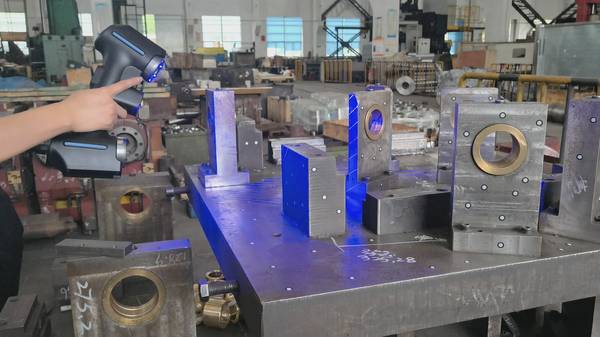
INSVISION engineers emphasize fixing 3D scanning reference points to stable, rigid surfaces and documenting placement for reuse across inspection cycles. This discipline ensures compatibility with existing CMM and photogrammetry workflows, allowing quality teams to replicate results without recalibrating setups. Marker integrity and placement logic eliminate the variability that otherwise disrupts automated inspection processes.
Benefits of Standardized Reference Points Across Product Lifecycle
| Lifecycle Stage | Benefit of Consistent Reference Points |
|---|---|
| First-article inspection | Ensures baseline geometric data aligns with nominal CAD |
| In-service monitoring | Enables comparable scan data for trend analysis and predictive maintenance |
| End-of-life disposition | Supports accurate wear assessment and remanufacturing decisions |
Anchoring Digital Twins in Physical Reality
Predictive maintenance models and digital twin initiatives collapse when fed drifting geometric data. Consistent 3D scanning reference points ensure scan data remains comparable across the product lifecycle—from first-article inspection through in-service monitoring to end-of-life disposition.
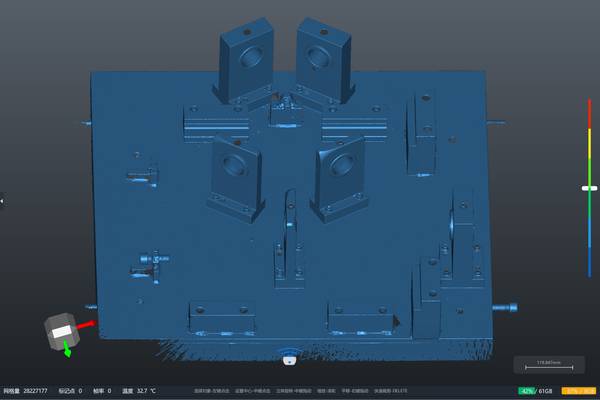
INSVISION leverages this methodology to bridge physical assets and virtual models, enabling closed-loop manufacturing and precise deviation mapping. When aerospace MRO facilities or automotive OEMs integrate reference-based datasets into PLM ecosystems, they achieve the interoperability that Industry 4.0 demands. Standardized reference points transform isolated scans into continuous, actionable intelligence—supporting the metrology software standards that govern Western manufacturing operations.
The investment in proper reference point strategy pays returns beyond immediate inspection accuracy. It establishes the data integrity required for downstream analytics, regulatory compliance, and cross-functional collaboration that define modern industrial operations.