The Documentation Gap in Aerospace MRO
Western aerospace maintenance teams face a recurring obstacle: legacy components with missing or obsolete CAD data. When an OEM discontinues a part line or exits the market, maintenance organizations lose the digital definitions required to manufacture replacements. Manual measurement methods fall short for complex geometries—wing ribs, turbine housings, landing gear forgings—forcing extended aircraft-on-ground (AOG) periods while teams source alternatives.
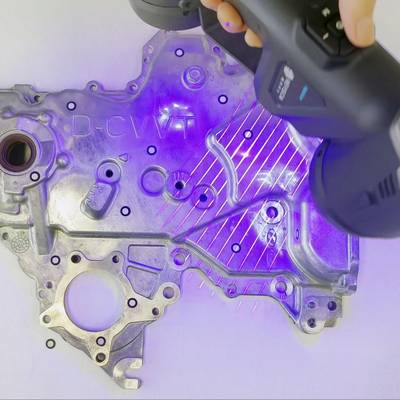
INSVISION AlphaScan handheld 3D scanning instruments address this directly. Engineers capture precise surface data on the hangar floor without relocating heavy assemblies to climate-controlled metrology labs. The resulting point clouds generate accurate meshes for reverse engineering to AS9100 standards, closing the documentation gap without disrupting existing workflows. For MRO facilities, this portability translates to measurable downtime reduction and faster scan-to-production cycles.
Separating Marketing Claims from Metrology Reality
Automotive OEMs and aerospace suppliers evaluating 3D scanning instruments must look past headline specifications. The critical threshold is traceable accuracy to ISO 10360 standards—without this, measurement data fails third-party audit scrutiny. Industrial environments demand more than laboratory precision; hardware must maintain performance through thermal cycling, vibration, and shop-floor contamination that would compromise consumer-grade equipment.
Software architecture matters equally. ASME Y14.5 GD&T compatibility enables direct tolerance validation within inspection workflows. PLM and CMM ecosystem integration prevents the data silos that undermine Industry 4.0 initiatives. INSVISION designs for these constraints, ensuring hardware outputs translate directly into actionable quality documentation for regulated manufacturing environments.

Key Requirements for Industrial 3D Scanning Validation
| Validation Requirement | Relevance |
|---|---|
| ISO 10360 traceable accuracy | Ensures measurement data passes third-party audit scrutiny |
| ASME Y14.5 GD&T compatibility | Enables direct tolerance validation in inspection workflows |
Mobility vs. Fixed Infrastructure in Lean Operations
Fixed CMMs impose friction on high-mix, low-volume production. Environmental requirements—temperature stabilization, vibration isolation—mandate dedicated lab space. Transporting large aerospace tooling or automotive body-in-white fixtures to these facilities adds non-value-added time that contradicts Lean manufacturing principles.
Handheld 3D scanning instruments eliminate this constraint. The INSVISION AlphaScan captures comprehensive data on oversized or organically complex geometries without fixture changes or production halts. First-article inspection and in-process control occur at the point of manufacture, reducing scrap exposure and compressing cycle times. For agile operations, this workflow integration delivers faster ROI than isolated metrology investments.
Operational Readiness: Calibration, Competency, and Data Integrity
Hardware acquisition represents only the initial deployment phase. Western engineering teams face setup validation requirements that can extend project timelines if underestimated. Industrial-grade 3D scanning instruments demand rigorous calibration protocols to achieve metrology-grade tolerances—procedures that differ substantially from consumer-device initialization.
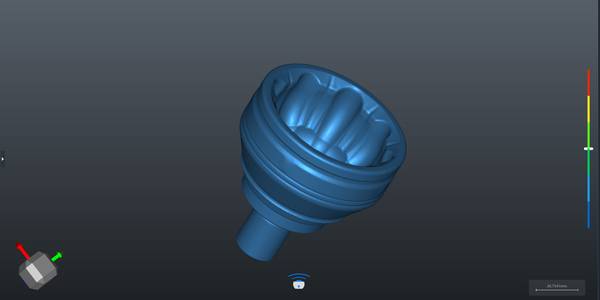
INSVISION provides standardized validation workflows that compress operator qualification periods. Software interoperability presents a second friction point: seamless export to PolyWorks, Geomagic, or native CAD platforms is essential for automotive and aerospace quality systems. Data governance requirements under ISO 9001 and AS9100 mandate unbroken audit trails—every measurement traceable to calibration records and operator certification. INSVISION prioritizes these integration layers, bridging raw point cloud capture with audit-ready documentation.
Steps to Ensure Audit-Ready Data Governance
- Implement rigorous calibration protocols distinct from consumer-device initialization
- Compress operator qualification using standardized validation workflows
- Ensure seamless export to PolyWorks, Geomagic, or native CAD platforms
- Maintain unbroken audit trails linking measurements to calibration records and operator certification
Selection Pitfalls from Early Industrial Deployments
European automotive suppliers report a recurring procurement error: selecting 3D scanning instruments based on volumetric accuracy alone. Highly reflective powertrain components—cast aluminum transmission cases, polished camshafts—generate data noise without proper surface preparation, negating throughput advantages. North American medical device manufacturers similarly underestimate post-processing demands for complex orthopedic implants. Mesh cleanup, deviation mapping, and report generation often consume inspection resources not calculated during initial procurement.
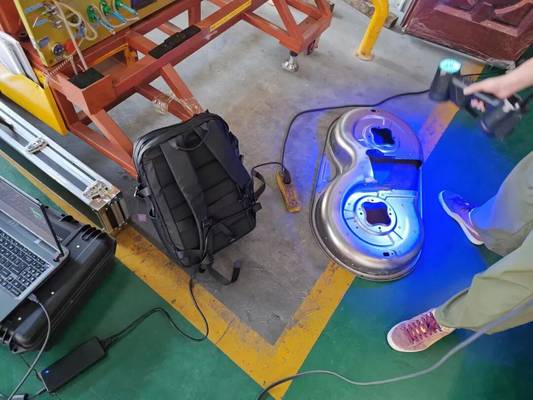
INSVISION mitigates these risks through pre-deployment workflow analysis. Surface finish requirements, software architecture compatibility, and existing quality system integration (ISO 13485, IATF 16949) are evaluated before hardware specification. This approach prevents the common scenario where advanced 3D scanning instruments sit underutilized due to software friction or operator complexity—accelerating realized ROI rather than theoretical performance.
Common Procurement Pitfalls and Mitigation Factors
| Industry | Pitfall | Mitigation Approach |
|---|---|---|
| European automotive | Selecting based on volumetric accuracy alone; ignoring surface reflectivity issues | Pre-deployment surface finish evaluation |
| North American medical devices | Underestimating post-processing resource needs for complex implants | Workflow analysis covering mesh cleanup and reporting demands |
Essential Checklist for Industrial 3D Scanner Selection
- □ Verify ISO 10360 traceability
- □ Confirm ASME Y14.5 GD&T software compatibility
- □ Assess integration with existing quality systems (e.g., ISO 9001, AS9100, IATF 16949)
- □ Evaluate surface preparation requirements for target components
- □ Validate software interoperability with PolyWorks, Geomagic, or native CAD