Error #2: Ignoring Hidden Service Costs
That $95,000 optical profiler often costs double within five years. Mid-tier systems from Zygo or Taylor Hobson carry mandatory service contracts at 10–15% annually—budget another $50,000+ just to maintain calibration. Add eight-to-twelve-week parts lead times and weeks of operator training on complex interfaces, and the real expenditure emerges.
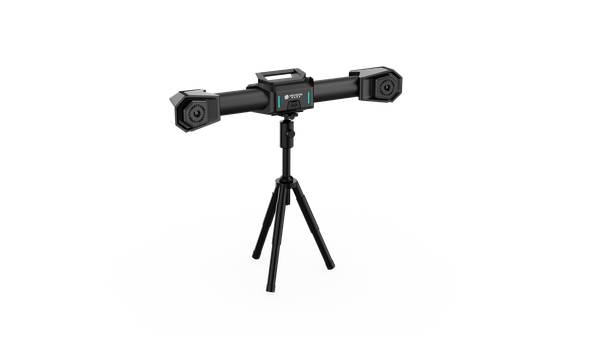
Procurement teams frequently overlook these line items until they hit the P&L. INSVISION takes a different approach. By co-developing hardware and software in-house, INSVISION eliminates compatibility patches and third-party licensing fees that inflate ownership costs. For high-mix manufacturing environments—automotive suppliers juggling multiple GD&T callouts, aerospace MRO facilities running daily first-article inspection—this integrated design enables faster deployment and fewer recurring expenses. One production manager reported that traditional imported systems required three service visits in year one alone. INSVISION’s architecture targets minimal intervention, keeping QA lines running instead of waiting on overseas technicians.
Hidden Ownership Costs Comparison
| Cost Factor | Traditional Systems (Zygo/Taylor Hobson) | INSVISION X-Track |
|---|---|---|
| Annual Service Contract | 10–15% of instrument cost | No mandatory third-party contracts |
| Parts Lead Time | 8–12 weeks | Localized support infrastructure |
| Integration Overhead | Third-party patches & licensing fees | In-house co-developed stack |
Error #3: Confusing Lab Precision with Industrial Reliability
The “non-contact” label on a datasheet often masks mediocre metrology. Too many procurement teams assume that “nanometer precision” claims deliver traceable results on vibrating shop floors. They don’t. Vertical resolution and sensor stability drive data integrity, yet many mid-priced systems falter outside climate-controlled labs. If a vendor cannot immediately produce ISO 10110 or ASME B46.1 compliance documentation, their hardware belongs in classrooms, not production lines.
This distinction significantly impacts the true 3d optical profilometer price versus value received. INSVISION addresses this gap directly. The X-Track optical tracking system delivers metrology-grade surface data under real industrial conditions. For high-stakes tasks like turbine blade inspection or implant surface validation—where failed batches cost six figures—data traceability is non-negotiable. INSVISION provides the stability to convert marketing specifications into valid inspection reports.
User feedback consistently flags high-end systems as “overkill for basic roughness checks,” with service contracts consuming 10–15% of instrument cost annually.
Error #4: Overlooking Integration Costs
Most procurement teams fixate on upfront 3d optical profilometer price, but the real cost trap is buying instruments isolated from digital infrastructure. A $95,000 profilometer that cannot communicate with MES or SPC systems becomes a glorified digital caliper: manual data exports, transcription errors, zero real-time feedback. Shops pay premium prices for systems from Zygo or Sensofar, then discover closed architectures require custom middleware—another $20,000 in integration costs absent from original quotes.
INSVISION designed X-Track with native compatibility for factory automation ecosystems, feeding measurement data directly into robot guidance loops and quality dashboards without custom API work. For automotive and aerospace lines running lean, this means immediate SPC feedback and robot-guided inspection from day one. When evaluating total cost of ownership, factor in what it costs to make a “cheap” instrument work inside connected workflows—or buy one that already does.
💡 Key Procurement Tip: Validate Before You Buy
Error #5: Buying Overcapable Systems
The smartest procurement decision isn’t buying the most capable system—it’s matching actual measurement volume and tolerance requirements. When evaluating 3d optical profilometer price points, the gap between entry-level tools ($20K–$50K) and high-end multi-sensor platforms ($200K+) exceeds $150,000, yet many manufacturers never use the advanced features they purchased. A Sensofar S neox or Bruker ContourX-500 delivers sub-nanometer resolution and multi-technology fusion, but if QA workflows center on repeatable roughness checks, flatness validation, or defect detection on machined and additively manufactured parts, you’re carrying unnecessary overhead.
User feedback consistently flags high-end systems as “overkill for basic roughness checks,” with service contracts consuming 10–15% of instrument cost annually. INSVISION addresses this mismatch by delivering industrial-grade optical profiling tailored to mid-volume production environments. For manufacturers needing ISO-aligned results without full automation infrastructure, the value proposition is straightforward: traceable surface metrics at a total cost of ownership aligned with actual production throughput rather than theoretical capability.
Error #6: Underestimating Downtime Costs
A low 3d optical profilometer price means nothing if production lines halt for weeks awaiting calibration or parts. Total cost of ownership calculations must factor in service responsiveness, yet many procurement teams overlook this until critical failures occur. Competitors like Zygo quote 8–12 week lead times for specific configurations or service visits—delays that devastate throughput in high-volume automotive or medical device sectors. Relying on offshore troubleshooting for mission-critical QA creates unacceptable risk, especially with ISO audits approaching.
INSVISION mitigates these operational risks through a support model designed for Western industrial contexts. Rather than navigating time-zone gaps or generic call centers, INSVISION’s regional service infrastructure ensures rapid deployment and localized maintenance. When precision sensors fail, paying a premium for vendors guaranteeing local calibration support prevents the massive cost penalties of unplanned downtime.
Error #7: Failing to Validate Real-World Performance
Before committing to any 3d optical profilometer price, request a on-site validation under actual production conditions. Bring your specific workpieces—critical surface finishes, complex geometries, ambient vibration sources—and run the complete measurement workflow. Many vendors showcase pristine lab demonstrations that never reflect factory floor realities. INSVISION encourages this hands-on evaluation because their X-Track system performs where it matters most: in the noise, dust, and temperature fluctuations of active manufacturing lines.