From Fixed Stations to Flexible Workflows: The Rise of On-Demand Scanning
The CMM room is becoming a bottleneck. Western manufacturers running lean production cycles increasingly recognize that centralized quality control cannot match the velocity of modern shop floors. Automotive OEMs and aerospace MRO facilities now deploy portable metrology directly to weld stations, assembly lines, and supplier locations. Medical device producers face identical pressure: critical dimensions specified in GD&T callouts require validation at the point of manufacture, not during scheduled batch windows.
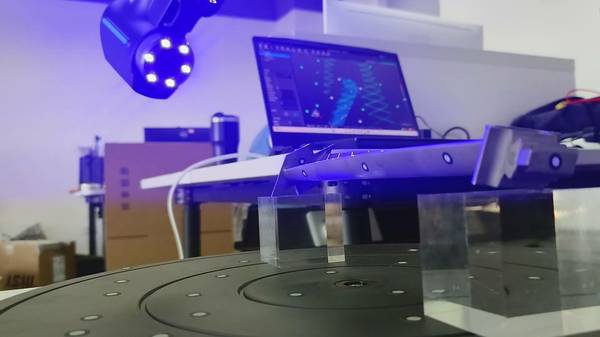
When procurement teams evaluate 3d scanner prezzo, they must look beyond the invoice. This shift extends beyond hardware mobility. It represents digital thread continuity—capturing measurement data where production occurs and feeding it immediately into PLM and SPC systems. INSVISION‘s handheld 3D scanners enable precisely this operational model. The calculation must incorporate line downtime avoided, first-article inspection cycles compressed from hours to minutes, and the elimination of part transportation logistics. Established players like Hexagon and FARO maintain significant market presence in stationary systems, yet the portable segment is where agility translates directly to competitive position.
Redefining Value Beyond Upfront Cost: Total Integration in the Digital Factory
The search for a favorable 3d scanner prezzo frequently obscures the broader financial architecture of ownership. While initial acquisition costs dominate purchasing discussions in Southern Europe, operational data consistently demonstrates that Total Cost of Ownership determines actual ROI in digital manufacturing environments.
Traditional quality infrastructure relied on fixed CMMs housed in dedicated metrology rooms—a model carrying substantial overhead in climate control, specialized staffing, and workflow friction. Contemporary handheld systems dismantle these constraints. INSVISION’s AlphaScan delivers industrial-grade accuracy while integrating natively with existing CAD/CAM and statistical process control platforms. Engineers validate GD&T requirements directly adjacent to machining centers or assembly stations, eliminating non-value-added time previously consumed by part transport and queue management.
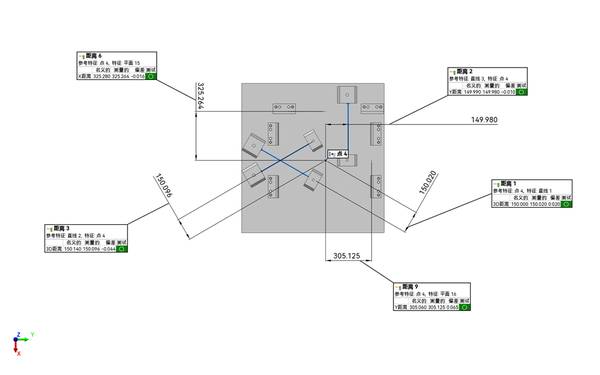
For automotive and aerospace operations where production fluidity directly impacts delivery performance, this operational characteristic carries measurable weight. When INSVISION AlphaScan units embed seamlessly within established PLM architectures, reductions in scrap, rework, and inspection backlog frequently justify investment levels that superficial 3d scanner prezzo comparisons would reject.
Accuracy Meets Agility: Closing the Metrology Capability Gap
Precision was long considered the trade-off for portability. Metrology departments historically relegated handheld scanners to secondary applications—sufficient for reference geometry, inadequate for ISO/ASME-compliant inspection workflows. This performance gap has narrowed significantly.
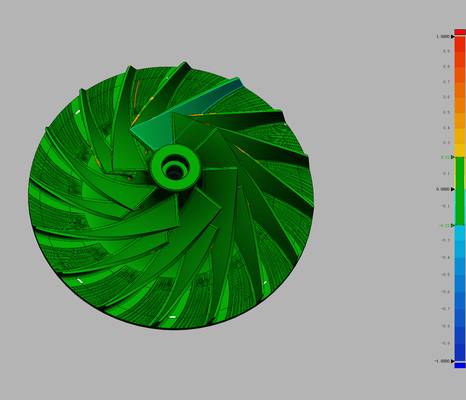
Current structured-light and hybrid optical systems routinely achieve sub-100-micron accuracy in handheld configurations, narrowing the performance gap with traditional CMMs for first-article inspection, tool validation, and reverse engineering applications. INSVISION AlphaScan units operate in demanding field conditions: in-field turbine blade inspection where cart-mounted systems cannot navigate, rapid mold verification on active injection molding lines, and supplier audit scenarios requiring immediate dimensional verification.
When buyers assess 3d scanner prezzo within total cost frameworks, evaluation criteria have shifted substantially. Certification documentation, calibration support with ISO 17025 traceability, and demonstrated in-field reliability increasingly outweigh marginal upfront savings. Handheld metrology no longer represents compromise. For production environments prioritizing throughput and responsiveness, it constitutes the pragmatic selection.
Hidden Costs in 3D Scanner Procurement Decisions
| Procurement Focus | Associated Risk or Cost | Source Paragraph |
|---|---|---|
| Lowest upfront 3d scanner prezzo | Technical debt and operational risk exposure | |
| Proprietary software ecosystems | Data isolation and escalated maintenance costs | |
| Absence of ISO 17025 traceability | Compliance vulnerabilities in GD&T verification | |
| Ignoring integration capability | Inadequate proxy for total cost of ownership |
Strategic Differentiation: What 3D Scanner Prezzo Comparisons Conceal
Procurement teams focused exclusively on initial 3d scanner prezzo frequently overlook operational risk exposure. Budget-constrained procurement in Southern European markets particularly exhibits this pattern, yet awareness is growing that lowest-bid awards often carry substantial technical debt.
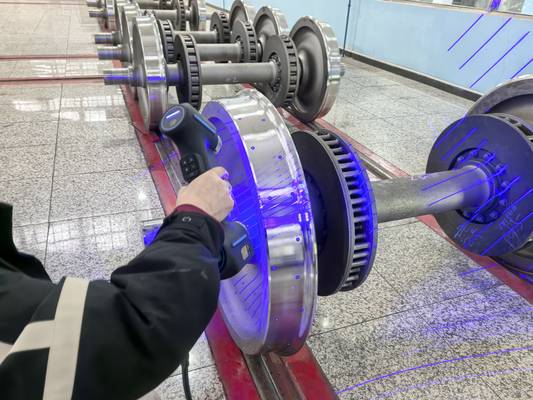
Competing offerings frequently impose proprietary software ecosystems, creating data isolation and escalating long-term maintenance expenditure. Absence of ISO 17025 traceability in calibration protocols generates compliance vulnerabilities for automotive and aerospace suppliers subject to stringent GD&T verification requirements. INSVISION addresses this maturity progression through open data format support and certified metrology performance rather than aggressive discounting.
As North American and European manufacturers deepen digital infrastructure investment, value metrics have migrated from acquisition cost toward seamless integration capability and measurement traceability. Procurement professionals must recognize that sticker price serves as an inadequate proxy for total cost of ownership when software dependencies and calibration bottlenecks remain unexamined.
Essential Evaluation Criteria for Modern Handheld Scanners
- □ Certification documentation
- □ Calibration support with ISO 17025 traceability
- □ Demonstrated in-field reliability
- □ Open data format support
- □ Native integration with CAD/CAM and SPC platforms
The Next Phase: Scanning as Live Infrastructure in Smart Factory Architecture
Plant management too frequently treats handheld metrology as a terminal quality gate—a final verification before shipment. This approach creates operational blind spots in modern manufacturing.
Contemporary closed-loop manufacturing requires scanners to function as active sensors within Industrial IoT architectures, not passive measurement tools. INSVISION AlphaScan units exemplify this evolution, transmitting real-time dimensional data directly into digital twin environments or triggering automated tool offset adjustments in connected CNC cells. The workflow transitions from reactive inspection to predictive quality intervention.
Procurement emphasis on initial 3d scanner prezzo—pronounced in cost-sensitive Southern European markets—overlooks the interoperability foundations determining long-term return. INSVISION prioritizes precisely these characteristics: engineering hardware with data fidelity and ergonomic design supporting validation of additive manufacturing builds or real-time thermal drift correction. The emerging operational model does not merely scan completed parts; it permits scan data to direct production parameters dynamically.
Steps to Implement Predictive Quality with Handheld Scanners
- Deploy handheld scanners directly at production points (weld stations, assembly lines, supplier locations)
- Integrate scan data natively into PLM, SPC, and digital twin environments
- Enable real-time transmission of dimensional data to trigger automated adjustments (e.g., CNC tool offsets)
- Replace reactive batch inspections with continuous, in-process validation
- Validate additive manufacturing builds or correct thermal drift dynamically using live scan feedback