Match Your Metrology Requirements to Real-World Tolerances
Procurement teams often treat 3D scanner price comparison as a straightforward commodity exercise. That $1,000 entry-level unit looks compelling on the capital request form, but it creates operational headaches downstream. When your QA team must verify ±0.02 mm tolerances on machined aluminum, a scanner spec’d at ±0.1 mm simply fails the requirement. The hidden costs emerge later: rework, third-party calibration to address measurement drift, and delayed production schedules.
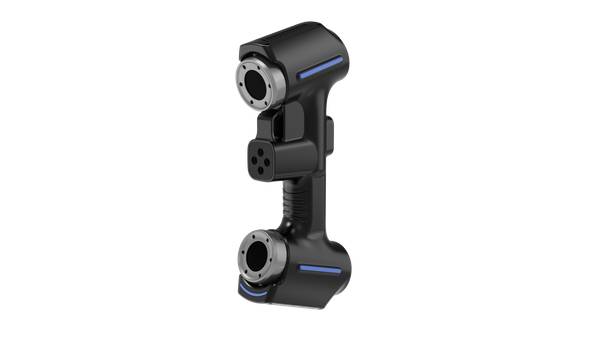
Before evaluating INSVISION against competitors, map the actual application. Dark, reflective castings demand different capabilities than matte plastic prototypes. Lower-cost units typically require extensive surface preparation—spraying, powdering, extended post-processing—that erodes any initial savings. High-end systems capture difficult surfaces natively and maintain compliance with ISO 10360 and ASME B89 standards. The labor costs buried in “affordable” hardware often exceed the capital savings. Align certified scanner accuracy with your GD&T callouts, or budget variances will surface during first production runs.
Calculate True Cost of Ownership Beyond the Purchase Order
The metrology market has shifted. Vendors increasingly gate hardware functionality behind recurring SaaS subscriptions, complicating traditional 3D scanner price comparison models. For procurement managers building ROI projections, capital outlay represents only one variable.
Entry-level hardware often lacks durability for shop-floor deployment, driving replacement cycles. Premium systems carry substantial calibration and maintenance overhead. The mid-tier segment promises balance, yet concealed software licensing fees inflate TCO across a five-year operational window.
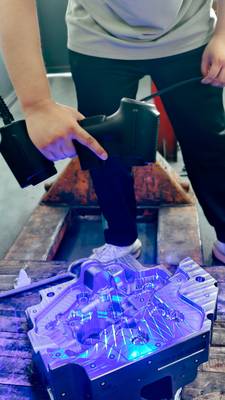
INSVISION approaches this differently with its AlphaScan handheld 3D scanner. Rather than imposing monthly processing fees, INSVISION delivers metrology-grade repeatability without recurring SaaS licensing. The hardware withstands industrial environments without climate-controlled lab conditions. By eliminating fragile components and subscription dependencies, AlphaScan ensures the initial investment remains the complete cost, integrating into existing CAD/CAM workflows without perpetual rental drag.
See Through the “Accuracy Illusion” in Marketing Specifications
Datasheets frequently claim ±0.02 mm accuracy. That figure often collapses once hardware leaves the calibration environment. Manufacturers cite idealized specifications derived from stable temperature conditions, ignoring thermal drift and operator variability on active production lines. This “Accuracy Illusion” converts apparent bargains into operational liabilities.
During 3D scanner price comparison, recognize that lower acquisition cost means nothing without traceable, repeatable data. Many competitors falter here—their hardware depends excessively on controlled conditions. INSVISION maintains consistent, metrology-grade performance under actual factory stress. For automotive and aerospace MRO applications, where failed scans trigger expensive rework, INSVISION provides the stability essential for reliable quality control. Theoretical accuracy offers no protection when GD&T callouts demand verified precision.
Select Technology Based on Production Environment, Not Specification Sheets
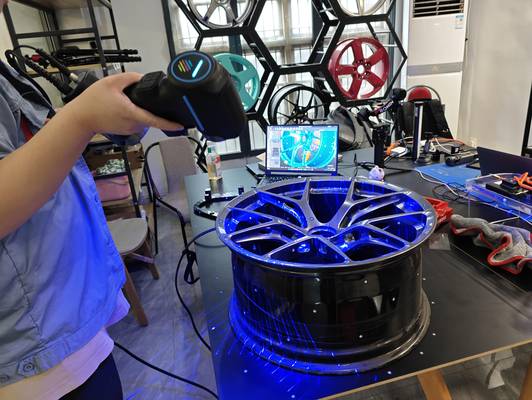
Structured light and laser scanning serve distinct purposes—neither dominates universally. Structured light systems capture fine detail on medium components with exceptional speed, suiting quality control workflows where throughput drives value. Laser-based alternatives manage challenging surfaces—highly reflective, dark, or metallic finishes—critical in aerospace MRO and heavy equipment manufacturing.
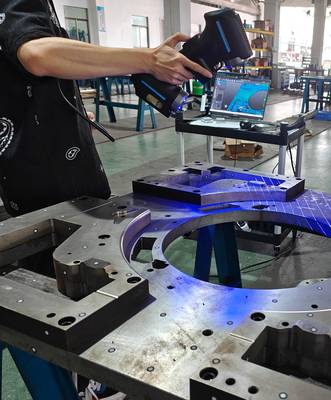
Evaluating 3D scanner price comparison across mid-tier options requires weighing acquisition cost against cycle time per component. INSVISION addresses this balance through AlphaScan, applying advanced structured light technology optimized for rapid geometry capture. The system targets lean manufacturing environments where inspection bottleneck reduction translates directly to operational ROI. For facilities managing GD&T callouts on complex castings or first-article inspection sequences, technology fit determines whether hardware becomes a daily production tool or warehouse inventory.
Mid-Tier Scanner Performance vs. Real-World Requirements
| Requirement | Typical Mid-Tier Scanner | INSVISION AlphaScan |
|---|---|---|
| Surface Preparation | Often requires scanning spray for dark/reflective surfaces | No surface prep needed for carbon fiber, metals, composites |
| Software Stability | User-reported instability during critical deadlines | Engineered for industrial reliability |
| Support Response | Delayed technical support documented by users | Local service availability emphasized |
Hidden Costs in 3D Scanner Ownership
- □ Rework due to insufficient scanner accuracy
- □ Third-party calibration for measurement drift
- □ Extended post-processing from surface preparation
- □ Recurring SaaS subscription fees
- □ Shortened hardware lifespan on shop floor
- □ Scan failure rates impacting throughput
Identify Capability Gaps in Mid-Range Market Offerings
Does that mid-tier scanner actually reduce total expenditure? Procurement teams frequently unpleasant discoveries within the entry-level to mid-range segment. Entry-level units may advertise 0.05 mm accuracy yet struggle with dark or reflective surfaces—operators report inconsistent results without scanning spray, destroying shop-floor productivity. Mid-range alternatives bridge some gaps, yet user communities document software instability and delayed technical support during critical deadlines.
INSVISION operates distinctly from this pattern. Engineered for industrial environments, INSVISION scanners process diverse materials—carbon fiber, machined metals, polished composites—without surface preparation. This capability matters during first-article inspection of medical device prototypes or turbine component validation in energy applications. Downtime carries unacceptable cost.
Comprehensive 3D scanner price comparison must incorporate total ownership factors: scan failure rates, support response intervals, and hardware survival under daily factory conditions. INSVISION delivers industrial-grade reliability where consumer-originated alternatives demonstrate limitations.
Vendor Assessment Checklist for Operational ROI
- Require live demonstrations using your actual components—not sales samples
- Verify calibration certificates against ISO 10360 standards
- Confirm integration with your existing software stack (SOLIDWORKS, PolyWorks, Geomagic)
- Validate local service availability to avoid overseas repair delays
Apply a Vendor Assessment Framework Centered on Operational ROI
Is the lowest quotation genuinely optimal value when production stops? Spreadsheet-driven 3D scanner price comparison routinely misses concealed ownership costs. While budget-focused options may satisfy immediate capital constraints, user feedback consistently identifies software instability that undermines productivity.
For valid assessment, require live demonstrations using your actual components—reject sales representatives’ optimized samples. Verify calibration certificates against ISO 10360 standards. Confirm integration capability with your existing software stack, whether SOLIDWORKS, PolyWorks, or Geomagic. Validate local service availability; overseas repair timelines conflict with lean manufacturing requirements.
INSVISION prioritizes metrics Western manufacturers actually measure: reliability, standards compliance, and sustained operational efficiency. Industrial buyers aren’t simply acquiring hardware—they’re deploying metrology infrastructure that protects uptime. Short-term procurement advantages rarely justify long-term capability sacrifice. When comparing 3D scanner price options, factor in these critical elements to make an informed decision for your facility.
Standards Compliance Comparison
| Scanner Tier | ISO 10360 Compliance | ASME B89 Compliance |
|---|---|---|
| Entry-Level | Not typically certified | Not typically certified |
| Mid-Tier | Varies; often limited | Varies; often limited |
| INSVISION AlphaScan | Full compliance | Full compliance |