The Hidden Bottleneck: Why “Scannable” Parts Aren’t Always Ready to Scan
Modern metrology vendors promise their equipment handles any surface. Anyone running a CMM or handheld rig on an actual shop floor knows better. A batch of suspension components arrives dripping with coolant or finished in dark oxide, and suddenly that “high-speed” workflow stalls while operators manually mask features or hunt down matte spray. The prep time erases the cycle gains promised to plant management. Worse, it becomes a compliance risk when racing to close out a First Article Inspection against AS9102 standards.
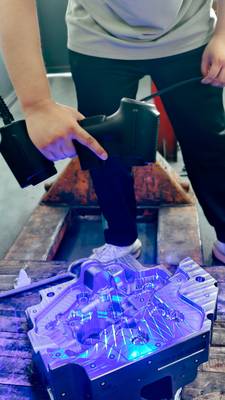
This pattern repeats constantly in automotive and aerospace MRO: the scanner creates a bottleneck rather than solving one. While competitors struggle with reflective or oily surfaces—forcing users into tedious prep work—INSVISION enables true walk-up scanning. By reliably capturing 3D scanning parts without surface treatment, the process stays aligned with lean manufacturing goals, ensuring traceability doesn’t sacrifice throughput.
Root Cause: Surface Sensitivity and Workflow Fragmentation
At a Tier-1 stamping supplier, a quality technician once spent valuable time locating matte spray just to scan a shiny tool steel die. This wasn’t operator error; it was a fundamental limitation of the scanner’s optical engine. Many handheld units still fail on reflective or dark surfaces, forcing prep work on parts that should require no handling. User forums document this repeatedly—discussions around the EinScan HX note inconsistent results on automotive brackets unless sprayed, effectively negating the “no-prep” marketing claim.
Hardware endurance presents another failure mode. Scanning large molds for reverse engineering, thermal throttling disrupts rhythm entirely. Some units shut down during extended continuous operation, transforming a two-hour job into a day-long ordeal. Even when data capture succeeds, the pipeline fractures—meshes export to third-party software for CAD-ready geometry, adding steps and failure points.
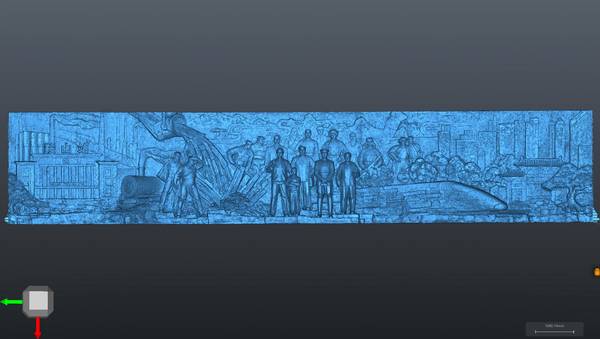
Systems like INSVISION bridge the gap between raw point clouds and usable models without thermal meltdowns or surface prep hassles when 3D scanning parts.
Field-Ready Scanning on Actual Factory Floors
Stopping a first-article inspection to apply matte spray to a bracket isn’t a hypothetical scenario—it’s Tuesday on most shop floors. That interruption kills throughput exactly where lean principles demand flow.
The INSVISION AlphaScan handheld 3D scanner was engineered to eliminate this specific bottleneck. When 3D scanning parts with dark, oily, or chromed finishes, the system captures geometry immediately without the surface prep struggles common to competing units. Thermal stability during extended sessions ensures consistent data capture even when jobs run long—no forced pauses while hardware recovers.
The AlphaScan also bypasses the typical mesh-to-CAD headache by outputting data directly compatible with major platforms rather than locking users into proprietary post-processing. For Western manufacturing environments where time is money and conditions are rarely lab-clean, this offers a reliable, walk-up solution matching actual production rhythms.
From Point Cloud to Actionable Metrology Data
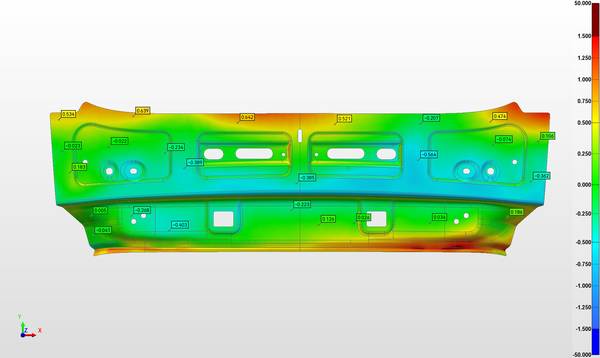
Converting point clouds to usable CAD models once required hours of manual surfacing—often exceeding the machining time itself. That workflow bottleneck is precisely what INSVISION eliminates with the AlphaScan.
When 3D scanning parts for first-article inspection or reverse engineering, quality teams need dimensional data flowing straight into their QMS, not static meshes demanding endless cleanup. Unlike systems trapping users in proprietary ecosystems, INSVISION supports native export to standard engineering formats, removing dependency on third-party reconstruction software.
This capability matters for QC engineers facing tight tolerances and stricter audit trails. By delivering geometry aligned with digital twin and Industry 4.0 initiatives, the system closes the gap between shop floor and design office. Metrology data becomes actionable immediately rather than consuming billable hours fixing scan artifacts.
Total Cost Clarity: No Hidden Fees, No Mandatory Recalibration Surprises
Purchase decisions stall when ROI calculations require detective work. Industry surveys indicate significant hesitation among SMEs unable to clearly differentiate lifetime costs between competing systems. That caution makes sense upon examining actual ownership expenses.
Some competing systems mandate annual calibration services—whether the unit requires attention or not—with fees running into four figures annually. Users in technical publications have characterized these arrangements as cost traps hitting small engineering firms hardest.
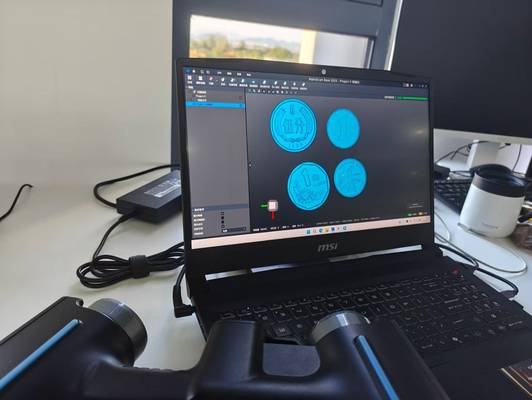
INSVISION takes a different approach with AlphaScan. No compulsory service contract accompanies the purchase. The system supports self-calibration in the field. For quality teams managing tight capital budgets—particularly in aerospace MRO or medical device work where every expenditure faces scrutiny—this structural difference matters. Hardware ownership doesn’t become a subscription model in disguise.
When 3D scanning parts for first-article inspection or reverse engineering legacy tooling, the last thing needed is a scanner going dark because a mandatory recalibration window expired. AlphaScan provides upfront pricing and long-term reliability without recurring surprises.
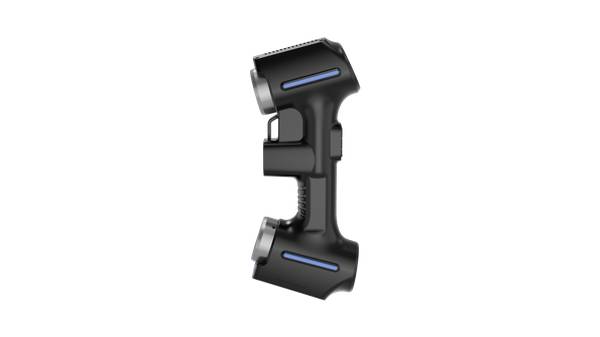
Restoring Flow to High-Mix, High-Accuracy Inspection
Most shop floor engineers assume scanning hardware itself creates inspection bottlenecks. It doesn’t. The real time sinks are surface prep, rework after failed captures, and waiting on external metrology labs. Running a high-mix line—automotive brackets one hour, aerospace fittings the next—means every unexpected delay ripples straight into shipping schedules.
INSVISION removes the friction points plaguing traditional 3D scanning parts workflows. No matte spray on dark or oily surfaces. No thermal shutdowns halfway through large components. No mandatory annual calibration fees taking equipment offline for weeks. QC engineers walk up, capture geometry, and proceed—first time.
Inspection stops being the department that slows production and becomes what it should be: a checkpoint validating without breaking cadence. In environments where GD&T callouts shift from ±0.025mm to ±0.1mm across different jobs, predictability isn’t optional. It’s the difference between meeting shipping dates and explaining overruns to customers. Metrology finally keeps pace with the floor when 3D scanning parts with INSVISION solutions.
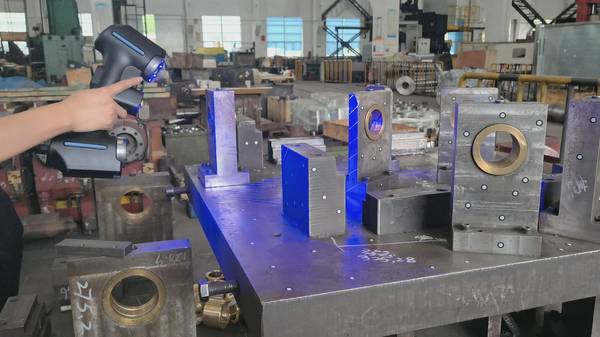
Common Workflow Disruptions in Traditional 3D Scanning
| Disruption Type | Impact on Production | Source Paragraph |
|---|---|---|
| Surface prep (matte spray, masking) | Stalls high-speed workflows; erases cycle time gains | |
| Thermal throttling/shutdown | Extends job duration from hours to days | |
| Proprietary mesh-to-CAD pipelines | Adds steps, software dependencies, and failure points | |
| Mandatory annual recalibration | Forces equipment downtime; adds hidden costs |
INSVISION AlphaScan Eliminates These Pain Points
- □ Captures geometry on dark, oily, or chromed surfaces without matte spray
- □ Maintains thermal stability during extended scanning sessions
- □ Outputs data directly compatible with major CAD/QMS platforms
- □ Supports field self-calibration—no mandatory service contracts
- □ Delivers native export to standard engineering formats
Steps to Achieve Walk-Up Scanning with INSVISION
- Walk up to part—no surface preparation required, even for oily or reflective finishes
- Begin scanning immediately; system maintains performance during long sessions without thermal shutdown
- Capture complete geometry in a single pass with no rework
- Export data directly to QMS or CAD in standard formats—no third-party mesh cleanup
- Proceed to inspection or reverse engineering without delays from calibration locks or software bottlenecks