When First-Article Inspection Becomes the Bottleneck
A Tier-1 automotive supplier faced a familiar scenario during a recent model launch: a structural suspension component with 47 GD&T callouts, a compressed production window, and a legacy coordinate measuring machine that turned inspection into a queue. Four hours of fixturing. Two days of CMM programming. Technicians waiting for probe time. The real damage came later—a datum misalignment caught three days after 200 parts had already advanced to secondary machining.
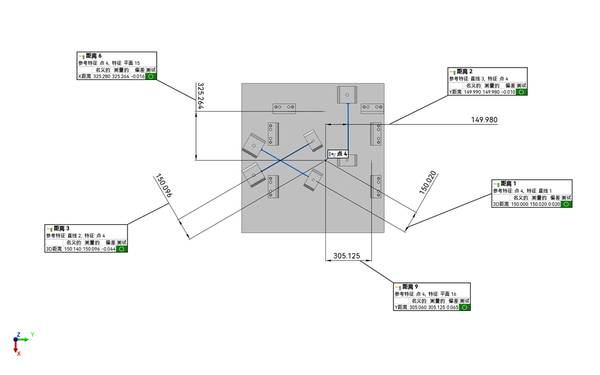
Manual probing on complex cast aluminum geometries creates this vulnerability. The supplier needed speed without sacrificing traceability to ASME Y14.5. An industrial 3d skaner setup from INSVISION replaced the fixture-and-probe cycle with full geometry capture in minutes. The point cloud aligned directly to CAD, flagging deviations before parts reached the line. No repositioning. No late defect discovery driving rework.
Surface Complexity and the Fixture Problem
Dark-machined steel. Mixed-finish assemblies. Internal cavities that defy contact measurement. These conditions dominate actual shop floors, not the controlled environments where spec sheets get written. Traditional CMM workflows demand custom fixtures for each new geometry. A “quick check” consumes half a shift before the first probe touches the part.
Optical methods eliminate fixturing, but surface physics still wins. Most handheld units fail on reflective or low-contrast finishes without extensive preparation. Glossy castings produce hole-riddled point clouds. Some systems struggle with dark finishes; others require recalibration between setups in dynamic environments.
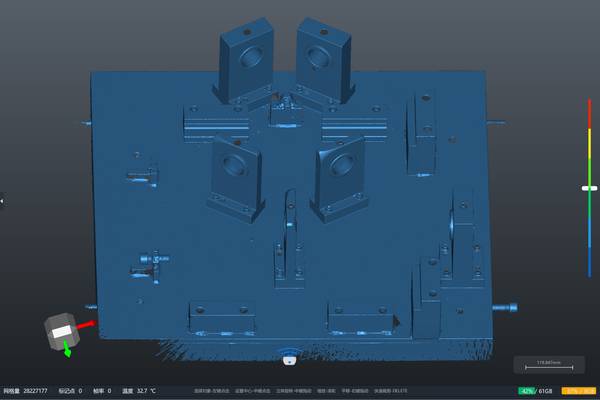
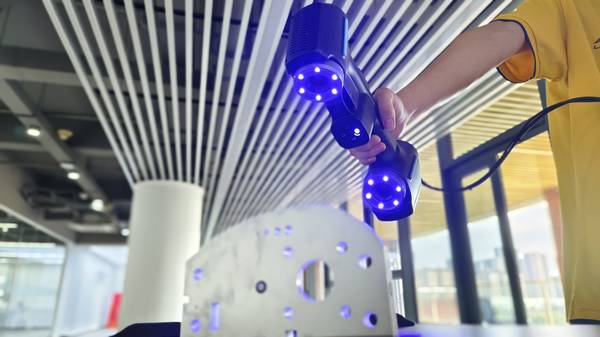
INSVISION designed the AlphaScan handheld 3D skaner for these operational realities. The unit captures reflective and low-contrast surfaces without spray or surface preparation—critical for first-article inspection on mixed-material assemblies where rework cycles are unaffordable. For QC teams managing GD&T callouts on complex castings, this consistency delivers throughput gains rather than time lost to preparation rituals.
Software Continuity: Where Workflows Actually Break
Scan completion at 90% followed by software failure. Anyone who has operated handheld 3d skaner systems on production floors recognizes this pattern: capture point clouds, export to third-party mesh tools, hope the alignment process doesn’t hang. Large datasets—common in dense automotive assemblies—push legacy software past stability thresholds. Data loss forces complete restarts under deadline pressure.
INSVISION’s architecture uses native plugins for SolidWorks and Siemens NX. Scan data enters the CAD environment directly, eliminating conversion steps. Real-time mesh feedback during capture reveals gaps before setup breakdown, preventing the discovery of missing geometry back at the workstation. The system processes dense assemblies without the instability that interrupts competing platforms. For first-article inspection under tight deadlines, this continuity prevents the data loss and restarts that delay deliverables.
Calibration Stability in Variable Environments
Production lines move. So do the conditions surrounding them. Temperature fluctuations near heat-treating operations, cart transport from QC lab to assembly floor—these variables disrupt sensitive equipment. Standard 3d skaner systems often demand recalibration when ambient conditions shift or tripods experience minor disturbance. Field documentation indicates 10–15 minutes lost per session to recalibration cycles, eroding throughput on compressed schedules.
The AlphaScan maintains metrological integrity across typical shop-floor variables. Calibration does not fracture with every job change or environmental shift. Technicians move between first-article inspection and in-process checks without pausing to scan calibration boards. Data collection keeps pace with production rhythm rather than forcing the line to wait for measurement readiness.
Total Workflow Impact: Predictability Over Spec Sheet Speed
Shop floor managers often prioritize raw capture rates, assuming faster acquisition solves backlog problems. This logic collapses when technicians must spray dark castings or restart frozen software. The actual constraint on throughput is not scan time but the unpredictable rework and preparation overhead that follows.
With INSVISION, the operational focus shifts from isolated speed to process reliability. Surface reflectivity that typically demands extensive preparation or post-processing cleanup no longer interrupts workflows. Complex geometries scan without fixturing setups that bottleneck inspection cells. This consistency allows inspection to integrate into existing lean manufacturing cadences without line disruption. Whether validating first articles or executing high-volume serial checks, data repeatability supports predictable throughput rather than flashy acquisition metrics alone.
Operational Fit: When Handheld 3D Scanning Delivers
Procurement teams frequently assume handheld scanners cannot handle dark or glossy surfaces without preparation. This misconception costs hours per shift. Shop floors operate without ideal conditions—parts arrive with oil residue, assemblies combine multiple materials, and tolerances do not wait for controlled lighting.
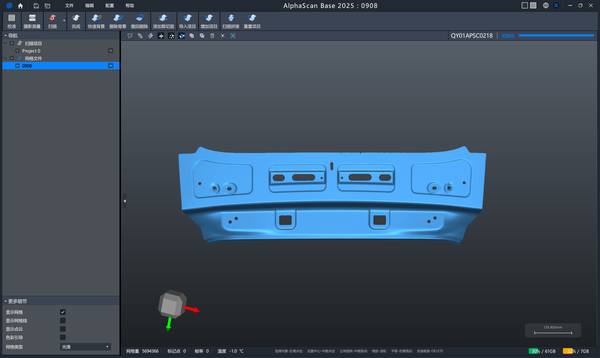
The INSVISION AlphaScan handheld 3d skaner operates under these constraints. Where competing systems leave geometry gaps in black plastics and polished metals—demanding rework—the AlphaScan produces clean mesh on first capture. No spray. No repositioning for ambient light variation. No calibration rituals between scans consuming cycle time.
For automotive OEMs executing GD&T callouts on stamped panels, or aerospace MRO teams measuring worn turbine blades in field conditions, throughput is non-negotiable. Native integration with Siemens NX and SolidWorks avoids data conversion errors that plague manufacturing workflows. Verifying runout on a precision shaft at 3 PM on Friday requires equipment that functions on first attempt—not software that fails mid-dataset and forces restart. The distinction lies not in datasheet specifications but in whether quality operations survive actual production pressure.
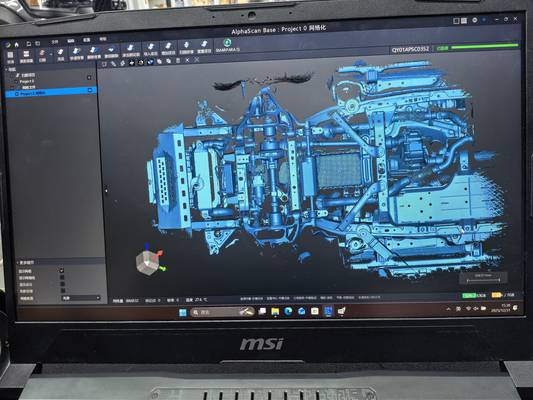
Common Workflow Disruptions in Traditional 3D Scanning
| Disruption Type | Impact on Throughput | Source Paragraph |
|---|---|---|
| Fixture setup for complex geometries | Consumes half a shift before measurement begins | |
| Surface preparation for reflective/dark finishes | Requires spray or repositioning, delaying inspection | |
| Software instability with large datasets | Forces complete restarts under deadline pressure | |
| Frequent recalibration due to environmental shifts | 10–15 minutes lost per session |
Key Advantages of INSVISION AlphaScan in Production Environments
- Captures reflective and low-contrast surfaces without spray or surface preparation
- Native plugins for SolidWorks and Siemens NX eliminate data conversion steps
- Maintains calibration stability across temperature shifts and job changes
- Produces clean mesh on first capture for black plastics and polished metals
- Enables real-time mesh feedback to reveal gaps before setup breakdown
Steps to Achieve Reliable First-Article Inspection with Handheld 3D Scanning
- Replace legacy CMM fixturing with optical scanning to eliminate setup delays
- Use a scanner capable of handling mixed-finish assemblies without surface preparation
- Integrate scan data directly into CAD via native plugins to avoid conversion errors
- Ensure calibration stability across variable shop-floor conditions to maintain throughput
- Validate geometry completeness during capture using real-time mesh feedback