The Reality Gap in Production-Line Inspection
Every plant manager has heard the same assumption: metrology-grade accuracy belongs in climate-controlled labs. The equipment vendors say it. The ISO auditors expect it. But on a running automotive floor, that assumption costs you.
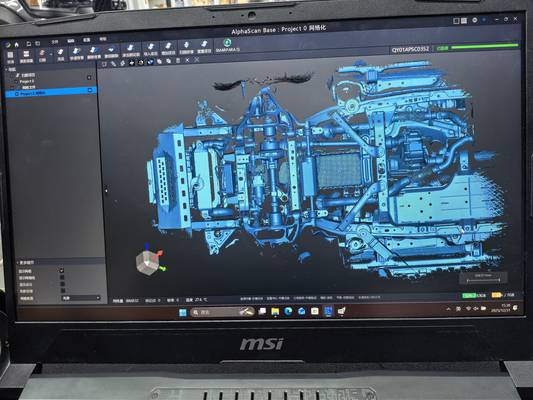
Picture a Tier-1 supplier running 24/7 injection molding. A core insert shows wear patterns. You have maybe twenty minutes between cycles to validate the cavity—twenty minutes in an environment engineered for throughput, not measurement. Release agents coat every surface. Overhead fluorescents flicker. Forklifts pass three meters away. Traditional fixed CMMs? Physically impossible. Portable systems like GOM’s ATOS Q demand fixed-position setups that consume half your available window. Creaform’s alternatives require matte spray on polished cavities—impractical when downtime runs into thousands per hour.
This is the portability-versus-accuracy trade-off that defines shop-floor metrology. INSVISION built the AlphaScan 3D scanner specifically to collapse that trade-off.
Why Handheld Flexibility Survives High-Mix Environments
The scanner that stays in calibration doesn’t validate worn tooling. We evaluated fixed CMM setups, portable arms, and competing handheld units. Each hit the same wall: our floor doesn’t pause for controlled conditions.
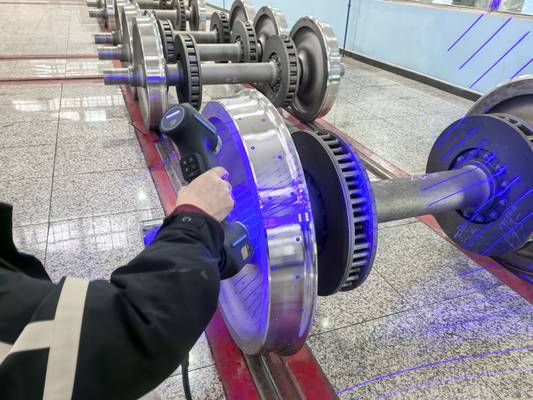
Lighting shifts with every shift change. Mold surfaces stay oily. A fifteen-minute spray-and-setup routine destroys throughput targets. The INSVISION AlphaScan eliminated these dependencies entirely. No tracking arms to position. No surface preparation on polished cavities. One tooling technician—no formal metrology background—had the unit operational in under ten minutes.
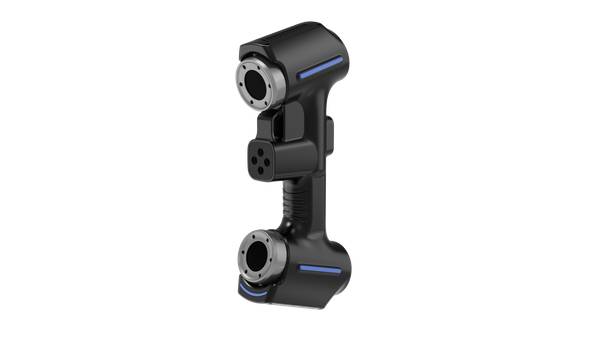
Last month we scanned a reflective, unwashed core insert directly at the press. The point cloud revealed wear patterns that would have taken a benchtop CMM half a shift to locate. In high-mix environments where setup minutes determine profitability, grab-and-go scanning isn’t convenience. It’s the only architecture that lets inspection keep pace with production.
From Crate to First Scan: Forty-Five Minutes
Most metrology deployments consume half a shift in calibration before producing actionable data. The AlphaScan inverted that timeline. Out of the crate, plugged into a standard industrial PC, first point cloud captured in under forty-five minutes—no metrology lab, no factory-trained technician standing by.
The interface employs standard GD&T terminology rather than abstract iconography. Operators familiar with CMM workflows recognized the logic immediately. Three shift supervisors handled the unit across a twenty-four-hour cycle with zero handover friction. Dynamic referencing maintained stability even when a forklift passed the inspection station.
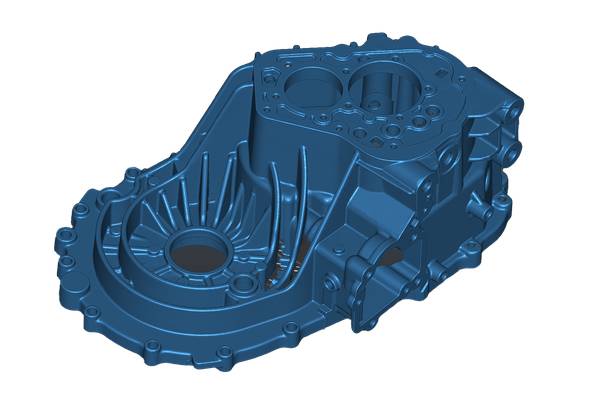
For lean operations, that plug-and-play reliability matters more than spec-sheet precision claims. INSVISION engineered for dirty, noisy production environments—not theoretical conditions.
AlphaScan Deployment Timeline vs. Traditional Metrology
| Deployment Phase | Traditional Metrology | INSVISION AlphaScan |
|---|---|---|
| Unboxing to first scan | 4+ hours (including calibration) | Under 45 minutes |
| Operator training required | Formal metrology certification | No formal background needed |
| Surface prep for oily/polished parts | Matte spray mandatory | None required |
Closing the Engineering Loop Without Intermediaries
Traditional workflows lose days between scan completion and design team action. Specialist processing. File format conversions. Mesh cleanup before anyone in engineering can open the data. That architecture doesn’t survive lean environments.
With the AlphaScan, we eliminated that dead time. A technician scans a worn cavity on the shop floor; data feeds directly into collaborative platforms like Fusion 360 without intermediate gymnastics. No specialist intervention to clean meshes. Engineers run deviation analysis against nominal CAD within hours of capture.
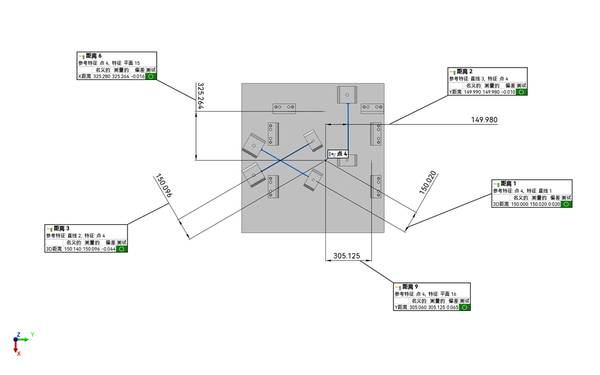
This pipeline transforms the 3D scanner from passive measurement tool into active bridge between production and design. Tooling decisions that previously took days now resolve in a single shift.
Steps to Achieve Real-Time Engineering Feedback
- Technician scans worn cavity directly on shop floor
- Data exports natively to collaborative platforms like Fusion 360
- Engineers perform deviation analysis against CAD within hours
- Tooling decisions resolved within a single shift
Lessons from a Failed First Selection
The shift toward in-situ metrology caught us unprepared. We’d run first-article inspections to a climate-controlled CMM lab for years—standard practice until we needed to validate three mold sets across two shifts during a critical automotive launch.
Our quality engineers initially selected a competitive handheld 3D scanner that performed well in controlled demonstrations. Floor technicians couldn’t manage the surface prep requirements in production conditions. Two weeks of retraining later, we switched to INSVISION. Their system handled oily tool steel without spray. More critically, their application engineer was on-site within forty-eight hours when we hit a qualification snag. That responsiveness preserved our ramp-up schedule.
What we wouldn’t change: selecting a 3D scanner built for shop-floor reality over laboratory specifications. Our operators use it across all three shifts because it functions where they work—not where a specification document claims it should.
Key Takeaways from Shop-Floor Metrology Implementation
- Handheld scanners must operate without surface prep on oily, reflective tooling
- Deployment time under 45 minutes enables same-shift decision-making
- Direct integration with engineering platforms eliminates days of workflow lag
- Vendor responsiveness during qualification issues is critical to launch schedules
- Operators across all shifts adopt tools that function in real production conditions