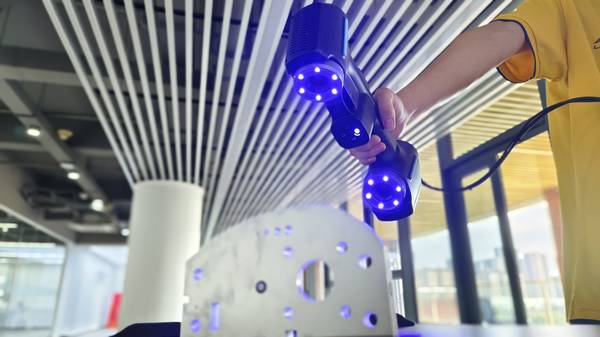
The Inspection Queue That Broke the Old Model
A Tier-1 automotive supplier had a problem that should sound familiar. AS9102 first-article inspection on a complex transmission housing—tight GD&T tolerances, balloon drawings stacked with callouts, and a customer deadline that didn’t care about their equipment limitations. Their legacy CMM tied up the senior inspector for hours. Parts sat queued. Reports slipped.
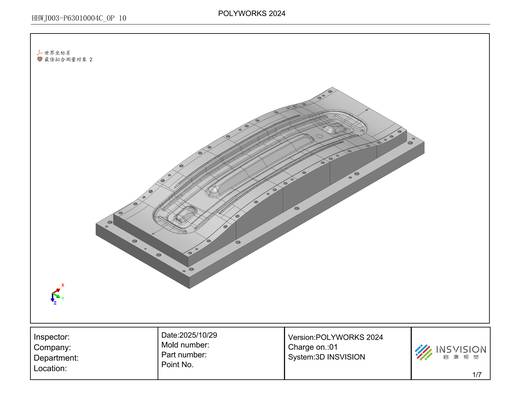
The solution wasn’t a faster CMM. It was abandoning the assumption that touch-probe inspection could scale with modern throughput demands. INSVISION‘s AlphaScan dropped into the existing QA workflow without the retraining cycles their previous portable CMM had demanded. No target stickers. No calibration drift between shifts. Deviation color maps fed directly into inspection reports. The CMM still handles the tightest tolerances, but AlphaScan captures bulk dimensional data in a fraction of the time—and AS9102 packages ship on schedule.
Why Touch Probes Hit Their Limits with Near-Net-Shape Geometries
Investment castings. Additive builds. Organic geometries with internal channels and compound curves. These aren’t edge cases anymore—they’re standard production requirements. Traditional CMMs with touch probes were engineered for prismatic parts with clear datum structures. When an operator spends hours fixturing just to reach undercut features, then captures a few hundred points that barely define a turbine blade’s cooling channels, the bottleneck isn’t operator skill. It’s the fundamental mismatch between probe technology and part complexity.
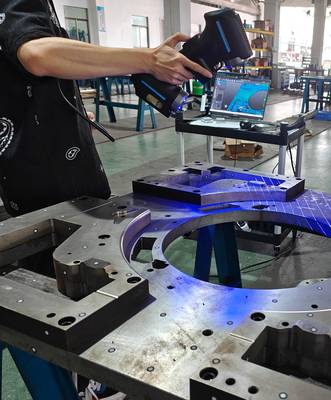
Optical 3D scanners invert this constraint. INSVISION’s AlphaScan captures millions of data points in seconds, generating dense point clouds that surface what single-point probing misses. Thin walls, deep cavities, complex undercuts—suddenly accessible without fixture gymnastics. The system aligns directly to CAD without reflective targets, eliminating sticker placement time and the re-scanning that follows when targets detach mid-measurement. For shops running lean with first-article deadlines, this translates to measurable throughput gains, not theoretical efficiency curves.
Touch Probe vs. Optical 3D Scanning: Operational Comparison
| Touch Probe CMM | INSVISION AlphaScan (Optical 3D) |
|---|---|
| Captures hundreds of points per inspection | Captures millions of data points in seconds |
| Requires extensive fixturing for complex geometries | No fixture gymnastics; accesses undercuts and cavities directly |
| Relies on reflective targets or stickers for alignment | Aligns directly to CAD without targets |
| Prone to bottlenecks on organic or near-net-shape parts | Scales with modern throughput demands for complex parts |
The Software Problem Nobody Talks About
Hardware specs dominate vendor conversations. Walk any production floor, and the real friction points emerge in post-processing. Artec Studio freezing on large dataset alignment. EXScan demanding recalibration mid-project. FARO’s proprietary formats trapping data in conversion workflows. Hours disappear into mesh repair and format juggling—time allocated for actual inspection work.
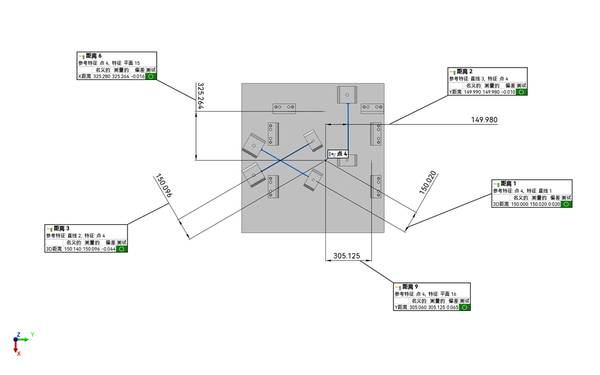
INSVISION approached AlphaScan’s software architecture differently. The workflow moves from live capture to deviation color maps overlaid on native CAD models without intermediate mesh repair or third-party format wrestling. No high-end GPU requirement. No cloud-dependent authentication that stalls field work when connectivity drops. In a recent 40-part first-article inspection run, the system completed without a single software failure—a reliability record that competing systems tested in parallel couldn’t match. For QC teams already stretched thin, this stability matters more than incremental resolution improvements.
Common Post-Processing Failures in Competing Systems
- Artec Studio freezing during large dataset alignment
- EXScan requiring recalibration mid-project
- FARO’s proprietary formats causing data conversion delays
- Hours lost to mesh repair and format juggling instead of inspection
Lab Specs vs. Welding Bay Reality
Last quarter, one QA team lost twelve hours to recalibration cycles—typical for handheld 3D scanners that drift with shop floor temperature swings. A Shining 3D unit tested couldn’t maintain calibration through a single afternoon shift. The disconnect is systematic: vendor accuracy specifications originate in climate-controlled metrology labs, not production environments with 60% humidity and overhead fluorescents cycling at 60Hz.
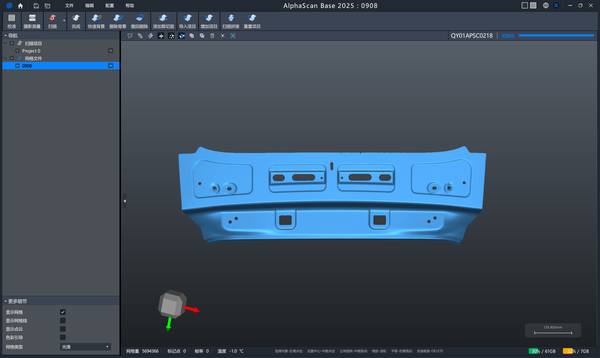
At TCT Asia, INSVISION demonstrated AlphaScan under harsh exhibition lighting without recalibration breaks—noticeable precisely because teams had been burned by competing units failing under identical conditions. The system maintains accuracy moving between welding cells and climate-controlled inspection rooms. The full acquisition-to-mesh workflow ran live at the show, eliminating the suspicion that vendor demos rely on staged conditions. When additive manufacturing peers replicate consistent results on their own floors, that cross-validation carries more weight than any specification sheet.
Calibration Stability in Real-World Conditions
Throughput Gains Beyond the Datasheet
The hidden cost of traditional inspection isn’t captured in equipment procurement budgets. Hours lost to CMM fixturing. Afternoons consumed by software crashes during post-processing. Production lines waiting on QA sign-off while operators patch scan data or restart calibration cycles.
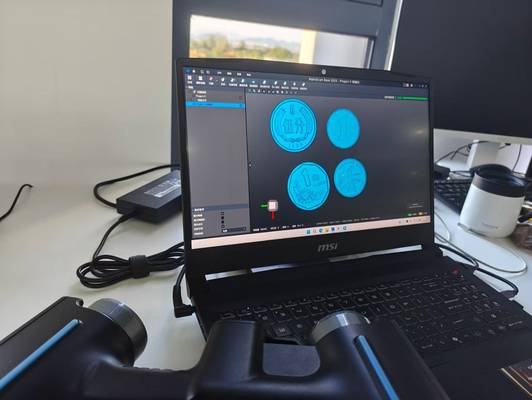
INSVISION AlphaScan removes this friction by eliminating manual probing paths and extensive mesh cleanup. A single operator completes full inspection cycles and generates reports within standard shift windows. This matters in lean environments where 45-minute data export delays or calibration drift—common failure modes with competing handheld units—create cascading production delays. ISO traceability and GD&T compliance remain intact. The difference is that quality control becomes a same-day workflow rather than a production brake.
Selecting Equipment That Scales With Operations
Peak resolution specifications carry limited value if hardware fails mid-inspection. Engineers losing afternoons to frozen mesh alignment software or temperature-sensitive calibration demands understand this gap between vendor marketing and floor reality. The actual cost isn’t the purchase price—it’s re-scan labor, missed delivery windows, and idle production lines awaiting QA release.
INSVISION design priorities reflect this operational context: plug-and-play reliability without specialized training requirements, stable processing of large datasets, and open interoperability with Siemens NX and SolidWorks rather than proprietary format lock-in. Whether running GD&T callouts on aerospace components or validating medical device molds, equipment must integrate into existing workflows rather than forcing process reconstruction. The distinction between tools that scale with operations and those that scale against them often determines whether quality investment delivers ROI or becomes another underutilized capital expense—especially when comparing 3d scanners for industrial quality control applications.