Common Ambient Light Challenges in Production Scanning
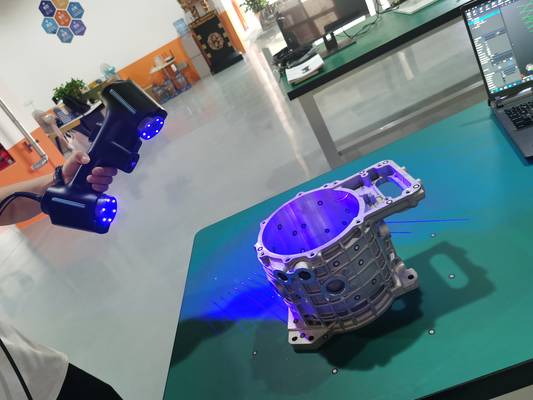
Walk onto any production floor and watch the failure unfold in real time. Overhead fluorescents flicker at 60Hz. Sunlight pours through bay doors during morning setup, then vanishes by afternoon. Dark corners behind CNC enclosures swallow detail in shadow. Engineers have burned hours filling mesh gaps in Geomagic because their scanner couldn’t track across these shifts.
Reported Limitations of Competing Handheld Scanners
| Scanner Model | Documented Issue | Impact |
|---|---|---|
| Artec Eva | Loses lock under variable ambient conditions | Tracking failure during environmental shifts |
| EinScan HX | Calibration drift after sustained operation | Alignment errors exceed 0.1mm, compromising metrology-grade use |
The Artec Eva loses lock under variable ambient conditions—CGTrader forums document these struggles extensively. The EinScan HX exhibits calibration drift after sustained operation, pushing alignment errors past 0.1mm. That gap separates visualization from metrology-grade work.
AlphaScan 3D: Engineered for Real-World Shop Floor Conditions
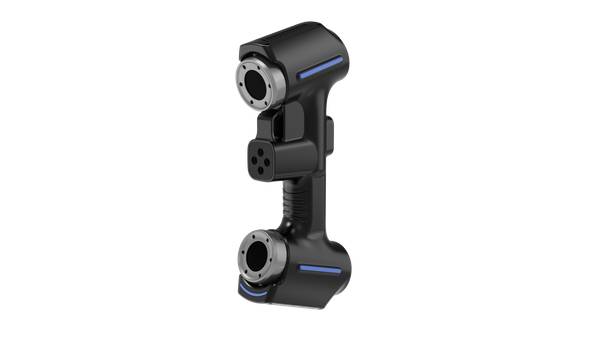
INSVISION engineered the AlphaScan 3D scanning machine for this exact environment. Adaptive illumination adjusts frame-to-frame. Visual tracking algorithms maintain spatial lock without manual intervention. One scan, one result. No rework, no spray, no schedule slip.
Myths vs. Reality in On-Floor Metrology
A Tier-1 automotive stamping line, 2:00 AM. A colleague validates a fixture with a handheld unit that drifts out of spec after twenty minutes. The assumption dies hard: handheld equals approximate. That logic collapses when you’re chasing ±0.05mm on a first-article inspection for aerospace MRO, miles from any climate-controlled metrology lab.
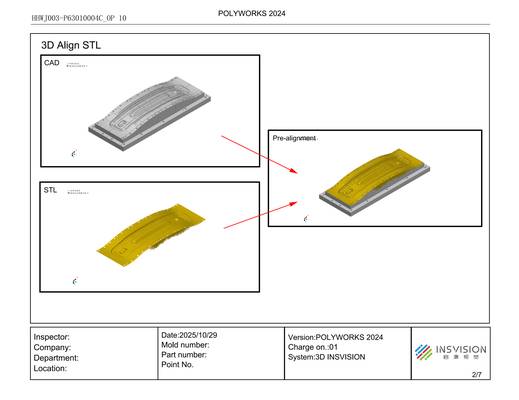
Legacy thinking traps buyers into false trade-offs. Modern production demands traceable accuracy at the point of need—not in a chamber down the hall. INSVISION designed the AlphaScan 3D scanning machine to collapse that distance. It delivers repeatable, high-fidelity geometry suitable for ISO/ASME-compliant workflows directly on the shop floor. No fixed installation. No environmental isolation. Metrology-grade data where the work actually happens.
Traditional 3D Scanning Workflow Bottlenecks
- □ Acquisition software requires manual operation
- □ Mesh cleanup in Geomagic consumes engineering hours
- □ Format translation introduces errors before CAD comparison
- □ QC teams lose time resolving mismatches between scan data and SolidWorks/NX
The traditional workflow still haunts quality departments: acquisition software, mesh cleanup in Geomagic, format translation, then finally your CAD platform for comparison. Each handoff injects errors and burns time per part. QC teams lose afternoons to format mismatches between scan data and SolidWorks or NX.
Integrated Workflow Advantages
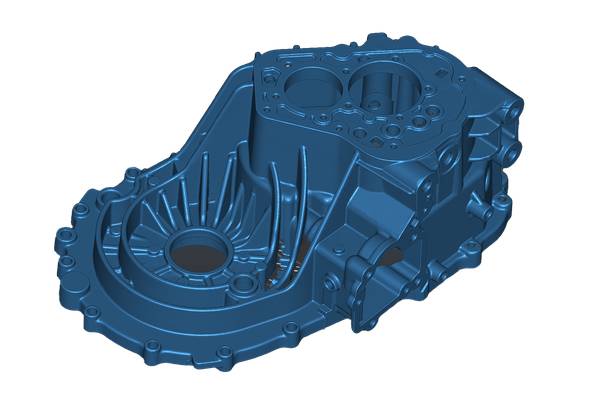
The assumption persists that any serious 3D scanning machine requires this fragmentation. It doesn’t. INSVISION integrates acquisition, mesh processing, and deviation analysis into one pipeline. Scan the physical part. The system generates a color-coded deviation map against nominal CAD automatically—no export, no import, no middleware consuming your annual budget.
For high-mix, low-volume shops running daily first-article inspections, this isn’t convenience. It’s throughput. When GD&T callouts demand dozens of features checked per part, eliminating software shuffle means your 3D scanning machine keeps pace with production instead of choking the quality station.
Thermal Stability Comparison: AlphaScan vs. EinScan HX
| Feature | AlphaScan 3D | EinScan HX |
|---|---|---|
| Thermal Management | Thermal-resilient optical design with internal referencing | No active thermal compensation documented |
| Volumetric Accuracy Over Time | Holds from first to hundredth scan without recalibration | Drifts past 0.1mm alignment error after several hours |
Multi-hour scanning tasks—turbine blade inspection, large weldment verification—suffer under the recalibration treadmill. Stop every hour to requalify. Kill momentum. Lose the afternoon.
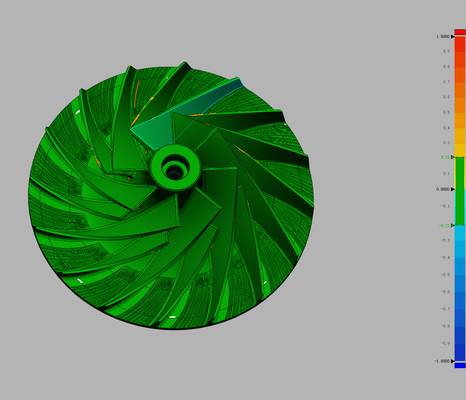
Some units validate this fear. The Shining 3D EinScan HX drifts past 0.1mm alignment error after several hours of continuous operation. INSVISION took a different path with the AlphaScan 3D scanning machine. Thermal-resilient optical design and internal referencing actively counteract heat expansion and environmental shifts native to industrial settings. Volumetric accuracy holds from first scan to hundredth without workflow interruption.
On a hot shop floor, that stability breaks the cycle: scan, stop, recalibrate, repeat. The 3D scanning machine stays in the measurement, not in the setup menu.
Surface Preparation Requirements Across Systems
Carbon fiber brackets. Polished aluminum housings. Most QC managers reach for matte spray as reflex. Twenty minutes taping, coating, cleaning—per part. Systems like the Creaform HandySCAN BLACK often still demand this ritual to suppress specular reflections. The result: sticky residue, wasted labor, and parts pulled from production flow.
INSVISION eliminated this non-value-added handling. The AlphaScan 3D scanning machine deploys multi-spectral texture fusion and dynamic exposure control to capture clean geometry on dark anodized fixtures or mirror-finish turbine blades straight from the line. No masking. No post-scan cleaning. Parts remain production-ready. Data arrives accurate. The spray can stays on the shelf.
Key Takeaways: What Defines a Modern 3D Scanning Machine
- Operates reliably under variable ambient lighting and temperature
- Delivers metrology-grade accuracy without environmental isolation
- Integrates acquisition, processing, and analysis in one seamless pipeline
- Captures challenging surfaces without spray or masking
- Maintains volumetric accuracy over extended operation without recalibration
These five myths persist because they describe real limitations of earlier-generation hardware. They do not describe what a properly engineered 3D scanning machine can deliver in 2026. INSVISION built the AlphaScan to operate where manufacturing actually happens—not where specifications assume ideal conditions. When selecting a 3D scanning machine for your facility, demand performance that matches real-world shop floor conditions, not laboratory ideals.