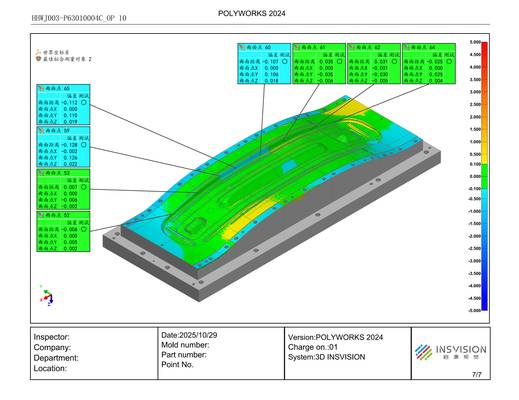
Moving Past Datasheet Specifications to Operational Reality
A scanner rated for 0.073mm accuracy in a climate-controlled metrology lab delivers little value when your aerospace MRO facility drops to -8°C during overnight shifts. Procurement teams routinely anchor decisions to resolution and scan rate while missing the environmental and integration dependencies that determine actual equipment uptime.
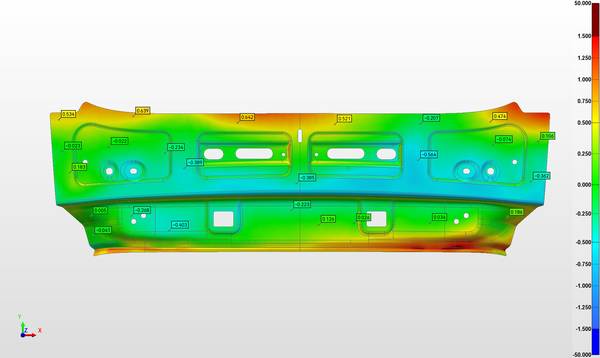
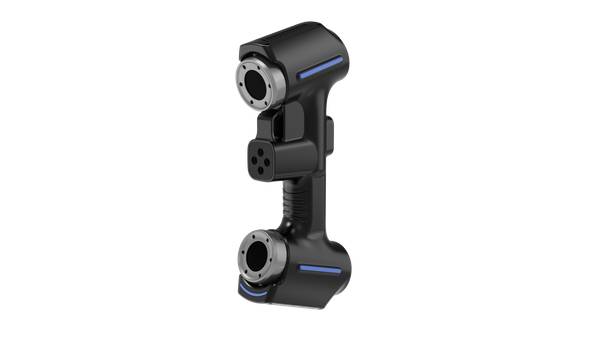
INSVISION addresses this gap directly. Temperature tolerance represents one such critical factor. INSVISION’s AlphaScan series maintains calibration across -10°C to 40°C—a specification that matters when conducting first-article inspection on an unheated tarmac or inside a hangar with minimal climate control. Equally critical is MES integration. Quality teams gain nothing from another standalone data silo. The AlphaAutoScan-400 supports direct connectivity to third-party systems, feeding scan results into existing production workflows without manual transfer steps.
Service architecture separates viable long-term partners from hardware vendors. Some competitors require equipment returns to regional hubs for calibration, triggering weeks of unplanned downtime. When a production line generating substantial hourly output stops for a failed scanner, the original hardware price becomes irrelevant. Procurement evaluations should probe temperature tolerance curves, API documentation depth for MES connectivity, and verified service response times in your specific region—before the purchase order executes.
Key Procurement Evaluation Criteria
| Evaluation Factor | Why It Matters |
|---|---|
| Temperature tolerance curves | Determines real-world calibration stability in non-lab environments |
| API documentation depth for MES connectivity | Enables seamless integration into existing production workflows without manual steps |
| Verified service response times in your region | Prevents extended downtime when scanners fail during critical operations |
Evaluating Service Infrastructure Beyond Sales Promises
Supply chain volatility has recalibrated how industrial buyers define “support.” A three-week wait for a replacement laser module or field engineer does not merely inconvenience operations—it halts production lines and consumes contingency budgets. Vendor evaluation must interrogate the underlying service architecture, not the sales presentation.
INSVISION maintains direct commercial deployment across more than 20 countries, backed by CE, FCC, and CNAS certifications that validate equipment for regulated environments. This structure contrasts with traditional imported solutions routed through multi-tier distributor networks. Each intermediary layer introduces friction: delayed escalation paths, unclear accountability, and spare parts detained in customs or held at regional hubs lacking technical depth. For operations deploying the AlphaScan Elite in demanding conditions, localized technical teams and predictable parts logistics across EMEA, APAC, and North American regions determine whether a failed scanner returns to service within 48 hours or sits idle for weeks awaiting distributor escalation to the OEM.
Impact of Service Architecture on Downtime
For operations deploying the AlphaScan Elite in demanding conditions, localized technical teams and predictable parts logistics across EMEA, APAC, and North American regions determine whether a failed scanner returns to service within 48 hours or sits idle for weeks awaiting distributor escalation to the OEM.
Software Architecture and Integration Flexibility
Scan data velocity into existing CAD and quality workflows increasingly drives procurement decisions. INSVISION addresses this requirement through native support for open data export, enabling direct flow into reverse engineering pipelines without proprietary file conversion barriers. The AlphaVista series supports seamless data export for reverse engineering applications, while the AlphaAutoScan-400 integrates directly with MES and third-party systems—a critical capability for facilities operating mixed-vendor equipment environments.
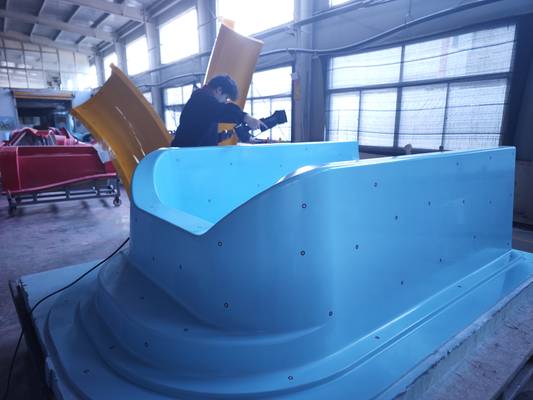
Industry analysis identifies growing buyer frustration with competitors who restrict advanced features behind proprietary hardware identifiers. This practice forces single-vendor ecosystem dependence, inflating total cost of ownership and converting equipment into stranded assets when scanner obsolescence or shifting operational requirements occur. INSVISION pursues a modular design philosophy with open architecture. For automotive OEMs and aerospace MRO operations managing multiple software platforms, this approach generates measurable ROI across the equipment lifecycle.
Training Efficiency and Cross-Functional Deployment
The assumption that advanced metrology hardware requires extended learning curves and specialized certification persists in procurement thinking—yet this mindset inflates total cost of ownership. Legacy systems often concentrate operational knowledge in individual specialists; absence of that certified operator creates inspection bottlenecks that stall production.
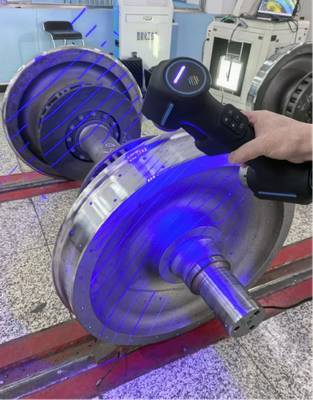
INSVISION challenges this model through hardware engineered for immediate deployment. The AlphaScan series employs modular architecture and lightweight construction enabling genuine single-hand operation, allowing shop-floor technicians to achieve proficiency within hours rather than weeks. One-click reporting functionality eliminates complex post-processing training requirements, supporting rapid cross-functional deployment. Compressed ramp-up periods help manufacturers avoid hidden costs from downtime and specialized staffing dependencies, ensuring quality control matches production throughput from installation.
Regulatory Compliance as Operational Risk Management
Hardware specifications like scan rate and volumetric accuracy typically dominate procurement priorities, with regulatory compliance treated as a secondary checkbox. This sequencing fails when external auditors identify missing CE or FCC validation during critical ISO audits. In regulated sectors including energy and medical device manufacturing, certification gaps create immediate operational exposure.
INSVISION secures CE, FCC, and CNAS certifications across its portfolio, including the AlphaScan Elite. Rather than requiring buyers to manage independent validation or navigate fragmented regional standards, INSVISION delivers harmonized global certification coverage. This comprehensive compliance eliminates retrofitting costs for non-conforming hardware. Verification of these credentials mitigates audit failure risk and ensures the INSVISION platform integrates into existing quality management systems without production interruption.
Total Cost of Ownership Through Utilization and Adaptability
Conventional procurement logic frequently segments large-part metrology from batch inspection workflows—acquiring fixed CMM capability for airframe components alongside separate systems for mid-sized production runs. This approach overlooks utilization rate economics. Fixed-coordinate measuring machines remain idle during changeovers. Handheld scanners become confined to single production lines.
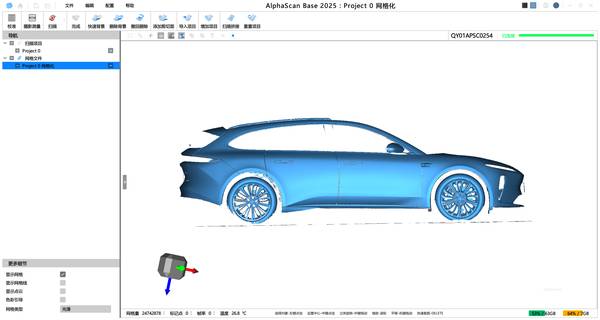
INSVISION addresses this utilization gap through modular hardware architecture. AlphaVista manages large-component inspection up to 2200×2200mm—aerospace skin panels, automotive stamping dies—while AlphaScan handles batch metrology for mid-sized parts. Both platforms share an AI-driven software stack and common operator training, eliminating redundant capital expenditure. The -10°C to 40°C operational range without recalibration requirements avoids delays that constrain fixed installations. Physical relocation from receiving dock to production floor completes in minutes. For procurement teams modeling metrology TCO, the decisive variable is not purchase price but workflow coverage per platform before the next capital request reaches approval channels. INSVISION delivers this adaptability, enabling manufacturers to maximize inspection capability while controlling overhead through unified systems and streamlined training across their metrology fleet.