Myth 1: “Handheld Scanners Can’t Deliver Metrology-Grade STLs for Production Use”
The CMM lab still holds symbolic weight in many plants. Quality managers often assume that generating a traceable 3D scan to STL file demands vibration-isolated rooms, granite tables, and the ritual of booking time weeks in advance. Handheld devices, in this view, belong to the reverse engineering bench—useful for rough form checks, not for GD&T analysis against ISO/ASME standards.
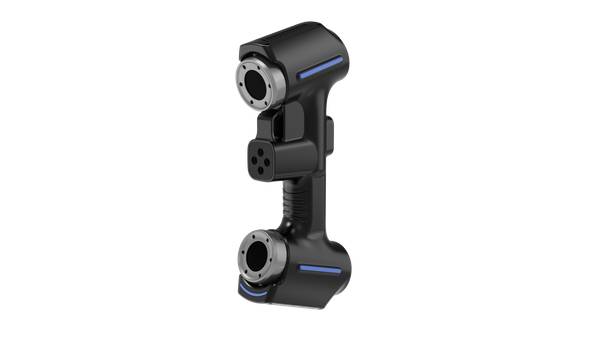
That distinction is eroding. INSVISION‘s AlphaScan deploys AI-enhanced tracking algorithms that compensate for natural hand tremor and ambient vibration in real time. The system captures complex automotive castings and aerospace components at the workbench, without elaborate fixturing or environmental controls. The resulting point cloud density supports deviation mapping and dimensional reporting that holds up to production audits. For shops running lean manufacturing cycles, this removes the logistical friction of routing parts through a centralized metrology lab.
The practical impact: repeatable, inspection-ready STL files generated at the point of need, not the point of convenience.
Myth 2: “Converting Scan Data to STL Always Requires Post-Processing Expertise”
Raw point clouds resembling Swiss cheese. Hours of manual hole-filling. The familiar call across the shop floor: “Anyone know MeshLab?” The assumption that 3D scan to STL conversion demands specialized CAD operators has persisted because, historically, it was accurate.
INSVISION’s acquisition pipeline integrates mesh reconstruction, noise reduction, and watertight surface generation into the capture process itself. The AlphaAutoScan-400 processes full-field data through AI-driven algorithms that resolve edge fidelity and surface continuity without operator intervention. A quality engineer can export an inspectable, printable STL within minutes of completing the scan—no desk-bound cleanup, no third-party software handoffs.
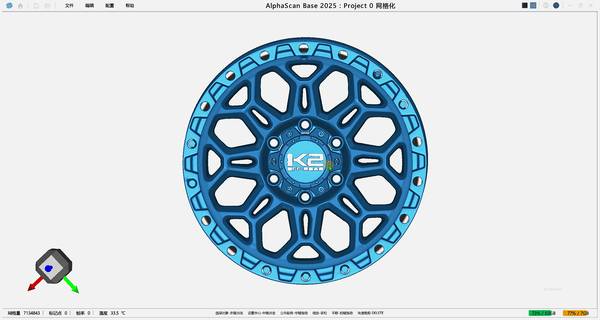
This shifts the workflow from a technical specialty to a standard floor procedure. Throughput becomes the constraint, not software proficiency.
Myth 3: “Only Large, Fixed Systems Handle Complex Industrial Parts Reliably”
Deep recesses. Undercuts on turbine blades. Organic curves that defeat optical line-of-sight. Five years ago, these features justified the overhead of fixed CMM infrastructure: dedicated space, temperature control, collision-avoidance programming, and the queue of parts waiting their turn.
The AlphaScan Elite challenges this allocation of complexity. Its adaptive AI algorithm maintains tracking through geometries that traditionally required stylus-based contact measurement—deep pockets, high-aspect-ratio features, and specular surfaces without spray preparation. Real-time global registration preserves data integrity across multiple scan orientations, eliminating the alignment errors that plague conventional portable systems.
For MRO operations and high-mix production, this capability collapses the distance between inspection need and inspection execution. The 3D scan to STL workflow happens beside the machine tool, not down the hall.
Myth 4: “3D Scan to STL Is Too Slow for High-Throughput Quality Control”
Production managers measure interruption in takt time violations. A dimensional check that stops the line earns more than a glare—it earns scrutiny in the next lean review. Old assumptions about 3D scanning speed derive from overnight processing pipelines and batch-oriented workflows.
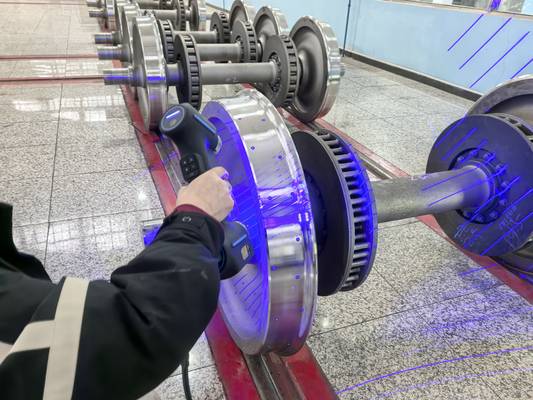
INSVISION’s automated systems compress the capture-to-export cycle to under three minutes for typical industrial components. The AlphaAutoScan-400 performs full-surface data acquisition, mesh generation, and STL output without breaking production rhythm. Integration with existing MES frameworks allows the scan event to trigger automatic quality gate updates and digital twin synchronization.
Speed, in this context, is not merely operational convenience. It enables in-process verification that catches deviation before downstream value is added to a non-conforming part.
Myth 5: “STL Files from Scanners Aren’t Traceable or Audit-Ready”
ISO 9001:2015 and AS9100D have tightened digital artifact requirements. Auditors now expect calibration records, operator credentials, and measurement uncertainty documentation to travel with the data—not to reside in separate logs that migrate, misfile, or disappear between software migrations.
The “dumb mesh” assumption dies hard. Many shops still treat STL exports as geometric containers without provenance, unfit for first-article inspection packages or aerospace certification workflows.
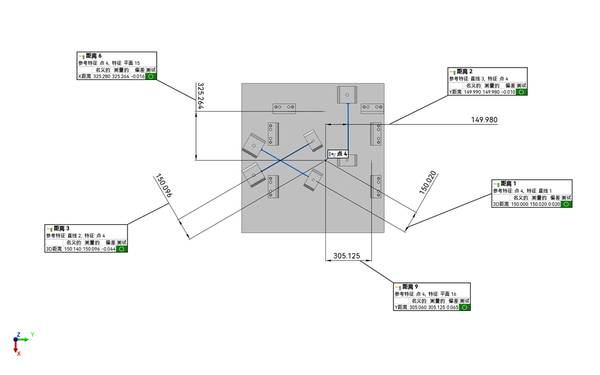
INSVISION embeds metadata directly into the 3D scan to STL pipeline: scan timestamp, device calibration status, environmental conditions, and operator identification attach to the file header. MES integration eliminates manual transcription at capture. One-click reporting formats this embedded data for internal QA sign-offs and external audit presentation.
The STL becomes a verifiable measurement record, not merely a tessellated surface approximation. For high-mix manufacturers and regulated industries, this closes a compliance gap that has long complicated portable metrology adoption.
Portable vs. Fixed Metrology Systems: Key Tradeoffs
| Portable Handheld (e.g., AlphaScan) | Fixed CMM System | |
|---|---|---|
| Operates at point of need (workbench, machine tool) | Requires centralized, vibration-isolated lab | |
| No elaborate fixturing or environmental controls needed | Dedicated space, temperature control, and collision-avoidance programming | |
| Capture-to-export in under 3 minutes | Booking lead times of weeks; batch-oriented workflows | |
| Embedded metadata for audit readiness | Traceability data often stored in separate logs |
What Actually Works
The common thread across these myths is a temporal mismatch: assumptions formed during earlier technology generations, applied to current capabilities. The 3D scan to STL workflow has matured from a specialized, desk-bound process to a floor-integrated quality tool. INSVISION platform architecture—combining AI-enhanced tracking, automated mesh processing, and embedded traceability—reflects this evolution.
For procurement and engineering leaders evaluating metrology investments in 2026, the relevant question is no longer whether portable scanning can match fixed-system accuracy. It is whether fixed-system overhead remains justified when equivalent precision arrives without the infrastructure.
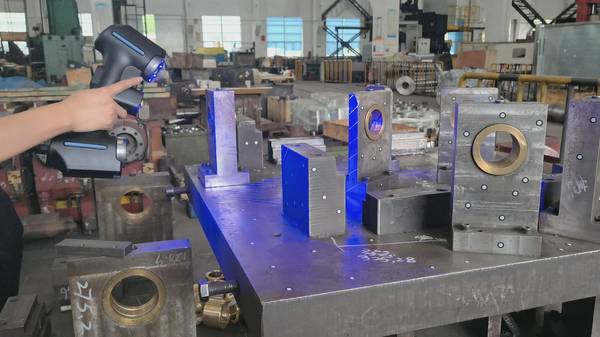
Key Workflow Advantages of Modern 3D Scan-to-STL Systems
- AI-enhanced tracking compensates for hand tremor and ambient vibration
- Mesh reconstruction and watertight surface generation occur during capture
- Adaptive algorithms maintain tracking through deep pockets and undercuts without spray
- Full-surface acquisition to STL export in under three minutes
- Metadata (timestamp, calibration, operator ID) embedded directly in STL header