From Climate-Controlled Labs to the Production Line
The measurement workflow at a typical automotive plant a decade ago followed a rigid choreography: parts traveled to a dedicated CMM room, queued for temperature stabilization, and yielded a limited set of discrete measurements. That model is eroding. Quality engineers now carry portable 3D skener hardware directly to the point of production, capturing complete surface geometry in the time it once took to schedule lab access.
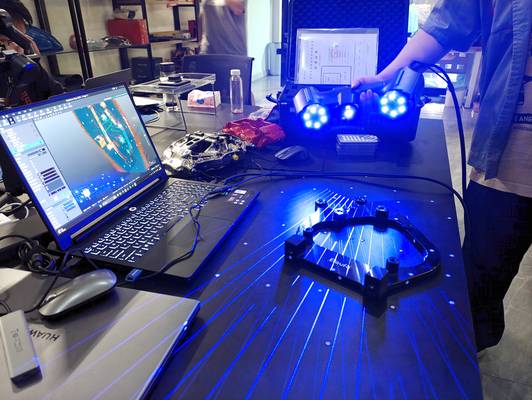
This shift reflects deeper pressures on Western manufacturing. Industry 4.0 architectures and lean production systems demand measurement tools that match the mobility of modern workflows. Aerospace MRO teams scan turbine blades while they remain installed. Energy operators assess pipeline corrosion in active facilities where pressure and temperature extremes make traditional metrology impossible. INSVISION has built its portable systems around these constraints—tight clearances, thermal variation, and vibration that would disable fixed CMM infrastructure. The operational result: quality teams bypass centralized bottlenecks without sacrificing measurement integrity.
AI-Accelerated Capture in Uncontrolled Environments
The practical barrier for portable metrology has always been the speed-precision tradeoff. Lab-grade accuracy historically required lab-grade conditions. INSVISION addresses this through embedded AI+3D reconstruction algorithms that process up to 7.1 million measurements per second while maintaining volumetric accuracy of 0.1mm±0.015mm/m across variable shop-floor conditions.
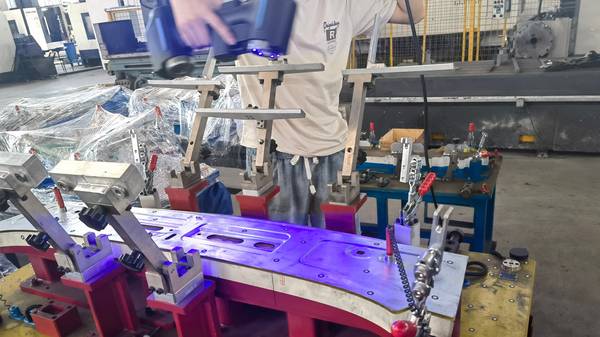
Dynamic laser projection enables real-time tracking compensation, allowing operators to capture complex freeform surfaces without the deceleration typical of earlier portable systems. The immediate output matters for quality managers: PTB-certified inspection software generates traceable deviation reports aligned with ISO/ASME GD&T standards at the measurement site. First-article validation, batch inspection, in-process verification—engineers receive compliant data where the work happens, not hours later in a back office.
Closing the Digital Thread
Legacy inspection workflows created persistent data fractures. The digital twin remained theoretical when physical measurements required manual transcription and delayed reporting. A handheld 3D skener functioning as an integrated node rather than an isolated device changes this dynamic.
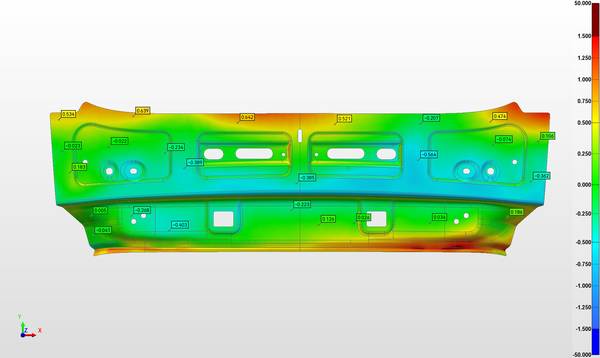
INSVISION’s AlphaScan exemplifies the architecture. The system feeds clean point cloud data directly into unified software platforms, supporting CAD-driven task creation that aligns physical scans against nominal models in real time. Multi-source alignment and automated deviation analysis produce color-coded tolerance maps without intermediate processing steps. By validating GD&T callouts and generating reports automatically, the technology tightens the loop between shop-floor measurement and digital validation. The manual transcription errors common in legacy CMM reporting disappear; the digital thread holds from design through final inspection.
Performance Under Industrial Constraints
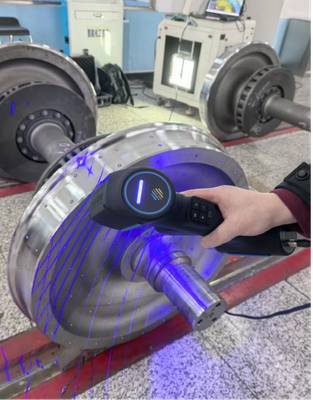
Specification sheets provide starting points. Real ROI emerges in operational environments where workspace geometry and ambient conditions defy laboratory assumptions. A professional 3D skener must perform whether assessing wear on an active turbine or verifying fixture integrity on a running assembly line.
INSVISION systems operate without the spatial restrictions that constrain traditional equipment. In aerospace MRO, reverse-engineering as-built geometry often requires handling complex surfaces without asset relocation. Scan rates reaching 7,100,000 measurements per second and accuracy to 0.073mm allow engineers to generate deviation maps and conduct GD&T analysis in confined or harsh environments. The flexibility reduces equipment downtime and prevents quality control from becoming a production bottleneck.
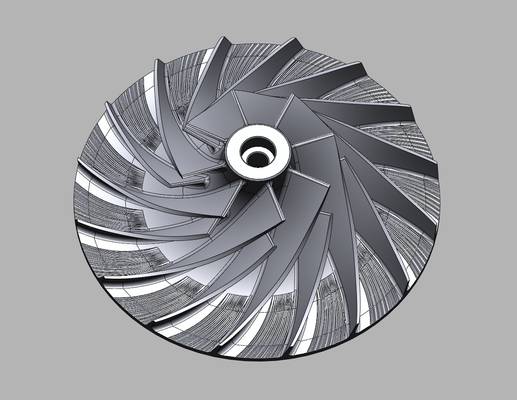
| Performance Metric | Value | Context | |
|---|---|---|---|
| Scan Rate | 7,100,000 measurements/sec | Aerospace MRO in confined spaces | |
| Accuracy | 0.073 mm | Harsh industrial environments | |
| Volumetric Accuracy | 0.1mm ± 0.015mm/m | Variable shop-floor conditions |
The Networked Measurement Node
The persistent drag in aerospace MRO is rarely the repair cycle itself—it is the verification lag that follows. The emerging generation of portable 3D skener technology treats the hardware as a networked intelligence node rather than a standalone instrument.
INSVISION is embedding AI+3D algorithms to ensure massive point cloud datasets interface directly with MES and PLM architectures instead of remaining in isolated silos. CE, FCC, and CNAS certifications, combined with deployment across more than 20 countries, provide the regulatory and operational foundation for scaling these integrations through global supply chains. The convergence transforms dimensional verification from a post-process checkpoint into a continuous quality signal. For plant managers evaluating capital equipment, the 3D skener is becoming the critical interface between physical production and digital process control.
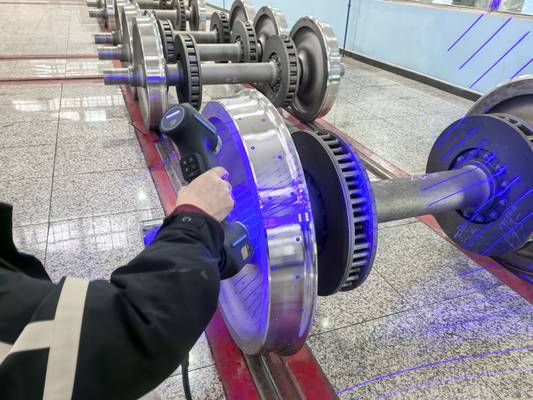
- Handheld 3D skener captures point cloud data at the production site
- Data flows directly into unified software platforms without manual transcription
- CAD-driven task creation aligns scans against nominal models in real time
- Automated deviation analysis generates color-coded tolerance maps
- GD&T callouts are validated and compliant reports generated automatically
- Portable 3D skeners eliminate centralized CMM bottlenecks while preserving measurement integrity
- Embedded AI+3D algorithms enable lab-grade accuracy in uncontrolled shop-floor environments
- Real-time data integration closes the digital thread from design through final inspection