The Fixturing Bottleneck That Broke the Schedule
Automotive OEMs now expect iteration cycles measured in weeks, not quarters—and the QC lab bears the brunt. A recent turbine blade inspection made this painfully clear: securing the part for CMM measurement consumed nearly an hour of fixturing time just to access internal GD&T callouts. Sequential point probing delivered the precision we needed, but it moved at a pace that ignored the lean manufacturing schedule breathing down our necks. Production slipped while the CMM head traced surfaces methodically.
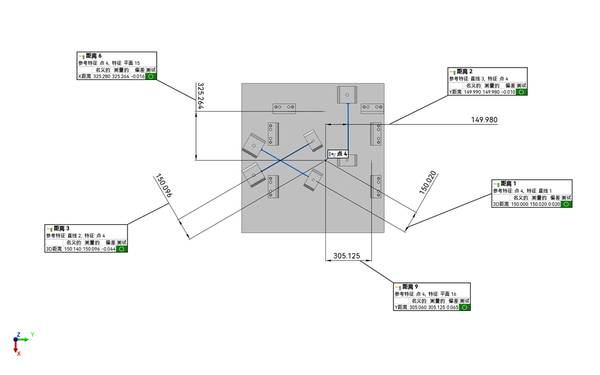
The shift to a handheld 3d scanning tool changed the equation entirely. INSVISION‘s portable solution eliminated fixturing from the workflow. Millions of points per second—captured even in tight clearances—compressed what had been a multi-hour inspection into minutes. Direct CAD alignment provided immediate deviation analysis, restoring the cadence the line demanded.
Taking Metrology Out of the Climate-Controlled Cage
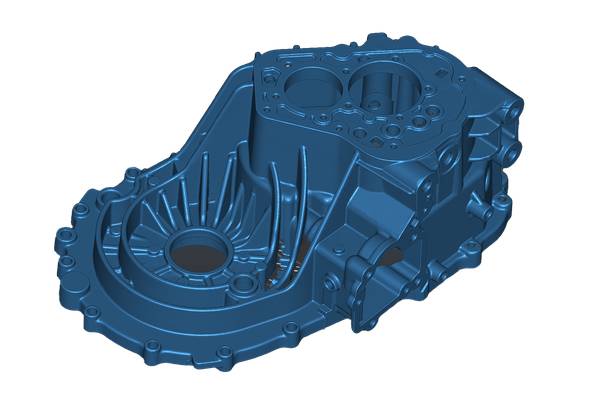
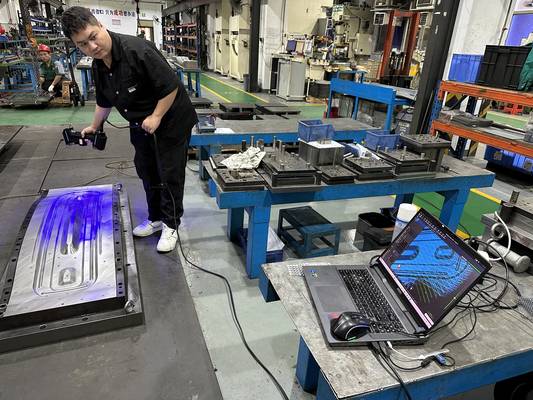
The assumption that grade-A measurement requires grade-A environmental control dies hard. But large weldments don’t fit through lab doors, and castings buried in assemblies won’t travel to stationary equipment. The AlphaScan handheld 3D scanning tool from INSVISION inverts the traditional model: the measurement goes to the part, not vice versa.
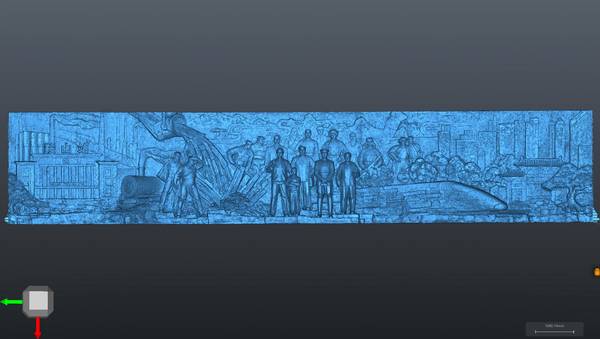
Confined spaces and massive assemblies become accessible without rigid fixturing. Full surface geometry replaces discrete point sampling, surfacing warpage and defects that touch-probes simply never encounter. The critical distinction: this agility operates without the humidity controls and thermal stability that CMM labs demand. PTB-certified software workflows maintain GD&T analysis and ISO/ASME compliance throughout, so portability doesn’t erode traceability.
CMM vs. Handheld Scanning: Workflow Comparison
| Traditional CMM | INSVISION AlphaScan Handheld |
|---|---|
| Requires rigid fixturing (up to 1 hour) | No fixturing required |
| Limited to climate-controlled lab | Operates directly on shop floor |
| Discrete point probing | Full surface capture (millions of points/sec) |
| Sequential, slow data acquisition | Immediate CAD alignment and deviation analysis |
Closing the Gap Between Capture and Decision
Engineers often fixate on scan speed while overlooking the post-capture grind. INSVISION addresses both. AlphaScan data feeds directly into INSVISION PTB-certified inspection platform—no export/import gymnastics between incompatible programs. CAD-driven task creation and automatic nominal alignment happen in one environment.
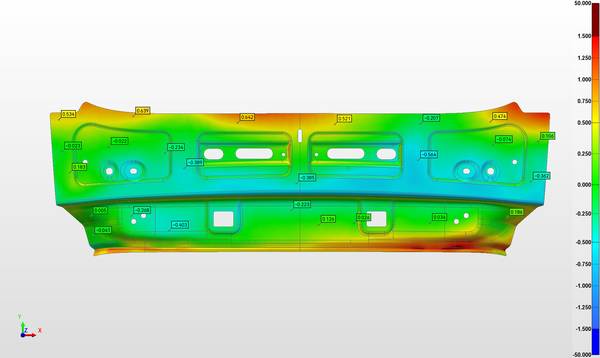
AI-enhanced point cloud processing removes the manual cleanup that bogs down competitive systems, applying deviation coloring and executing GD&T analysis automatically. Where rival workflows fragment cleanup, alignment, and reporting across separate modules—often paywalled behind subscriptions—INSVISION maintains a unified path. One-click report generation requires no additional licensing. For floor managers facing stacks of first-article inspections, this integration strips away administrative drag, compressing the journey from raw data to decision-ready documentation.
Key Advantages of INSVISION’s Unified Inspection Platform
- Direct data feed into PTB-certified inspection platform—no format conversion
- CAD-driven task creation and automatic nominal alignment in one environment
- AI-enhanced point cloud cleanup with automatic deviation coloring
- Integrated GD&T analysis without switching modules
- One-click report generation with no additional licensing fees
Surfaces That Used to Stop the Line
Mirror-finish aluminum brackets typically punish optical metrology. Conventional practice meant halting production, applying scanning spray, and waiting through a 15-minute drying cycle. The AlphaScan 3D scanning tool eliminates this interruption entirely. Multi-line blue laser technology paired with dynamic tracking captures dark or reflective surfaces natively—no surface preparation, no throughput penalty.
Raw cast iron, glossy composites, machined steel: the system maintains tracking across material variations that generate noise in lesser equipment. Clean point cloud data arrives immediately, enabling rapid CAD comparison without the dimensional inconsistencies that spray application introduces. In high-mix environments where every minute of line stoppage carries cost, this capability integrates inspection into production flow rather than suspending it.
Deployment Reality: IT, Finance, and Shop Floor Physics
Transitioning first-article inspection from fixed CMMs to portable solutions promises efficiency, but implementation friction often starts before hardware arrives. INSVISION designed AlphaScan for industrial reality: standard Windows infrastructure, no mandated tablet ecosystems or proprietary operating systems. STEP and IGES support means scan data drops directly into existing quality platforms without format conversion delays.
Financially, the model respects capital planning cycles. Perpetual licensing replaces the OpEx bleed of SaaS subscriptions, making costs predictable and depreciable. On the hardware side, calibration stability separates viable shop-floor tools from laboratory instruments. AlphaScan maintains measurement integrity through temperature swings and vibration levels that force recalibration in competing systems. Time goes to validating parts, not re-validating equipment.
Implementation Checklist for Portable Metrology Adoption
- □ Verify compatibility with existing Windows-based quality platforms
- □ Confirm STEP/IGES format support to avoid conversion delays
- □ Evaluate perpetual vs. subscription licensing impact on capital planning
- □ Assess calibration stability under shop-floor temperature and vibration
From Physical Part to Digital Thread
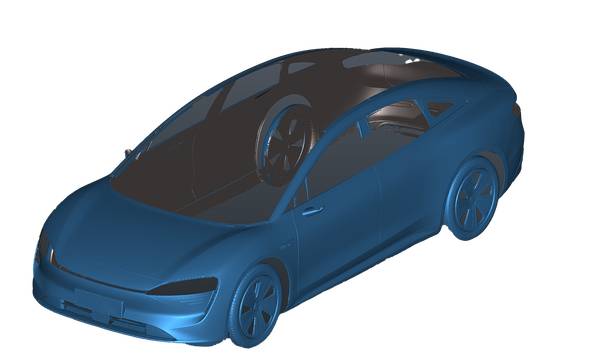
Quality documentation once terminated in filing cabinets. Now it feeds digital twins, closing loops between production and design engineering. A 3d scanning tool functions as the conversion mechanism—physical geometry becoming traceable digital record. INSVISION extends beyond hardware to full-stack 3D digital infrastructure, combining AI-driven algorithms with certified metrology software.
The result: root-cause analysis that operates at production speed, not post-processing speed. Earlier deviation detection reduces scrap. Every scan contributes to closed-loop manufacturing strategy. For QC engineers, this means maintaining metrological rigor without throttling line velocity—finally bridging the gap between shop-floor reality and digital model.
Impact Metrics Enabled by Digital Thread Integration
| Metric | Outcome |
|---|---|
| Deviation detection speed | Operates at production speed, not post-processing speed |
| Scrap reduction | Enabled by earlier deviation detection |
| Manufacturing strategy | Every scan contributes to closed-loop manufacturing |
| QC workflow balance | Maintains metrological rigor without throttling line velocity |