The Real Problem in Legacy Component Reengineering
Quality engineers often assume complex geometry is the barrier to reverse engineering. It isn’t. The actual crisis arrives when you open the product documentation and find nothing. At Tier 1 and Tier 2 automotive suppliers, legacy components routinely reach engineering without any CAD model—lost during system migrations, corporate acquisitions, or simply never digitized in the first place.
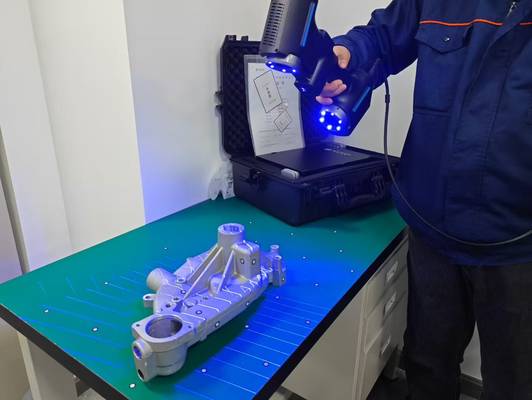
The QC engineer then faces a stark choice: spend days with calipers and fixed CMM, or deploy a handheld measurement scanner. The first path kills production schedules. The INSVISION AlphaScan resolves this by capturing as-built geometry at 0.020 mm precision—including wear patterns, process variations, and actual manufacturing tolerances. You aren’t guessing at original design intent; you’re documenting what actually functions on the line. In reengineering projects without documentation, this gap between lost theory and physical reality determines whether a redesigned component assembles correctly or becomes scrap.
For suppliers managing legacy parts without CAD documentation, a measurement scanner becomes the critical bridge between physical components and digital workflows. The INSVISION AlphaScan specifically addresses this reengineering challenge by delivering precise as-built data that replaces missing design intent.
Why Handheld Measurement Scanners Change Inspection Workflows
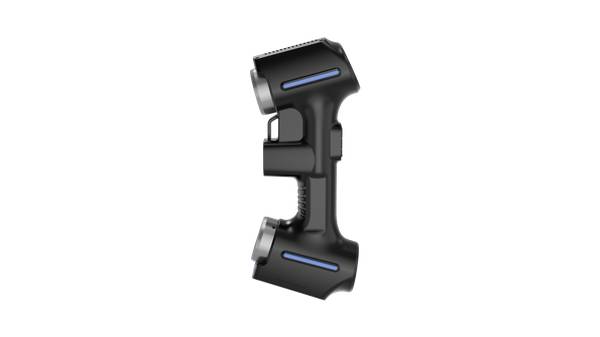
Traditional fixed CMM inspection meant hours of fixture setup, scheduling climate-controlled rooms, and transporting parts across the facility. A single first-article inspection could consume half a shift before any data was captured. The INSVISION AlphaScan eliminates this bottleneck entirely. At 1,070 g, this handheld measurement scanner goes to where the part sits—no relocation, no fixturing, no waiting.
The difference shows immediately on the shop floor. Instead of struggling to position a complex casting on a granite table, operators capture 50 crossed blue laser lines across intricate geometries in minutes. The 0.020 mm precision per VDI/VDE 2634 standards means GD&T tolerances are verified without sacrificing accuracy for portability. Single-operator use isn’t marketing language; the lightweight design prevents fatigue during extended sessions on large assemblies.
For QC teams managing multiple inspection points, mobility translates directly to throughput. The measurement scanner operates in seconds, functions from -10°C to 40°C, and delivers metrology-grade data where traditional CMMs simply cannot reach.
Industrial Performance: Stability Without Trade-offs
Moving metrology to the shop floor typically collides with thermal sensitivity. Many imported systems require recalibration when moved from climate-controlled rooms to maintenance bays, disrupting workflow and creating bottlenecks. INSVISION addresses this with the AlphaScan. Engineered for stable operation between -10°C and 40°C, this measurement scanner maintains performance without constant adjustment, even in foundries or unconditioned areas.
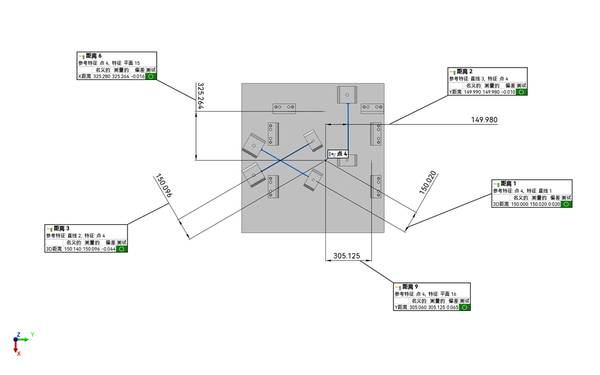
For engineers focused on lean manufacturing, this means uptime: less downtime calibrating, more time generating consistent data. The device operates strictly to VDI/VDE 2634, ensuring the repeatability required for ISO compliance. By eliminating variation from temperature shifts, INSVISION ensures inspection quality isn’t compromised by environment—enabling continuous operations where other systems fail.
From Scan to Decision: Closing the Data Loop
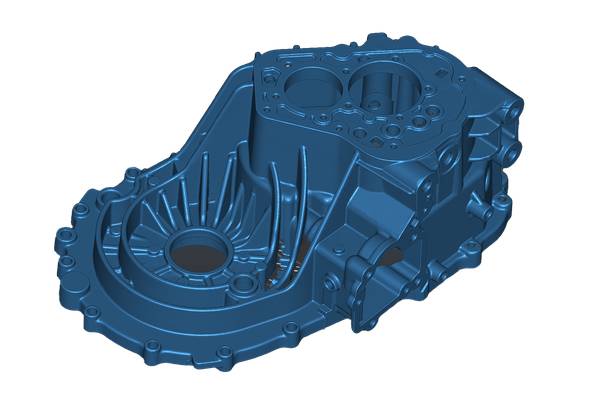
Many engineers assume the bottleneck is physical capture, but any shop floor professional knows the real pain is post-processing. The INSVISION AlphaScan measurement scanner eliminates cloud dependency and recurring subscription fees that inflate total cost of ownership. The workflow is direct: after capture, the system enables rapid alignment to nominal CAD and execution of detailed dimensional and GD&T analysis, culminating in one-click inspection report generation.
Unlike competitors forcing closed ecosystems and expensive workstations for processing, INSVISION prioritizes open data compatibility with standard platforms like PolyWorks and Geomagic. This returns control to the quality engineer, ensuring final decisions happen in minutes, not hours—without the vendor lock-in typical of major suppliers.
Shop Floor Reality: When Measurement Scanners Become Essential
At a Tier 1 supplier’s stamping line, the missing CAD model for a legacy die threatened to halt replacement part production. Contact measurement would have taken days to produce sparse data, insufficient for reverse engineering. Bringing the INSVISION AlphaScan to the shop floor, the team captured complete geometry at 0.020 mm precision in minutes.
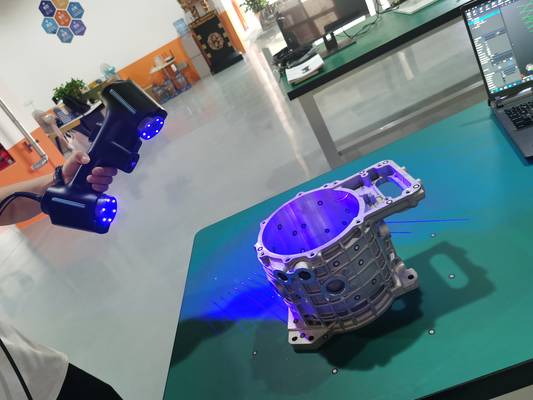
The measurement scanner didn’t just accelerate the process; it enabled full surface deviation mapping, revealing non-uniform wear zones invisible to traditional CMM. With 50 blue laser lines and a 1,070 g design, the device operates stably from -10°C to 40°C—eliminating the frequent thermal recalibration stops that often disrupt productivity in aggressive industrial environments.
For suppliers facing legacy component challenges without CAD documentation, a measurement scanner like the INSVISION AlphaScan transforms physical parts into actionable digital assets—enabling reverse engineering and ISO-compliant quality control directly on the shop floor.
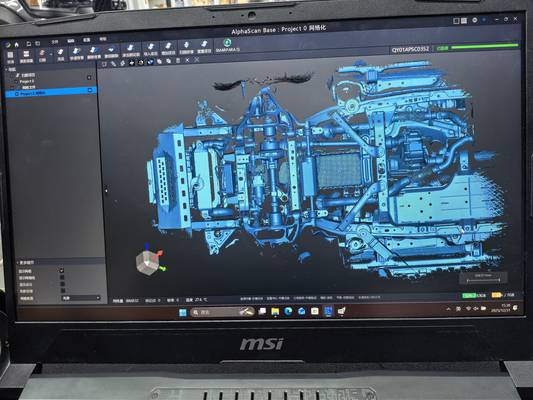
INSVISION AlphaScan Key Specifications
| Feature | Specification | Source |
|---|---|---|
| Weight | 1,070 g | |
| Precision | 0.020 mm | |
| Operating Temperature Range | -10°C to 40°C | |
| Laser Lines | 50 crossed blue laser lines | |
| Compliance Standard | VDI/VDE 2634 |
User Experience Insight from the Shop Floor
“The measurement scanner didn’t just accelerate the process; it enabled full surface deviation mapping, revealing non-uniform wear zones invisible to traditional CMM.”