Myth 1: Handheld scanners can’t deliver metrology-grade accuracy
The assumption that portability forces a trade-off with precision is losing ground on shop floors worldwide. Quality managers once accepted a bifurcated workflow: scan anywhere for speed, then verify on a fixed CMM for traceability. That division is eroding.
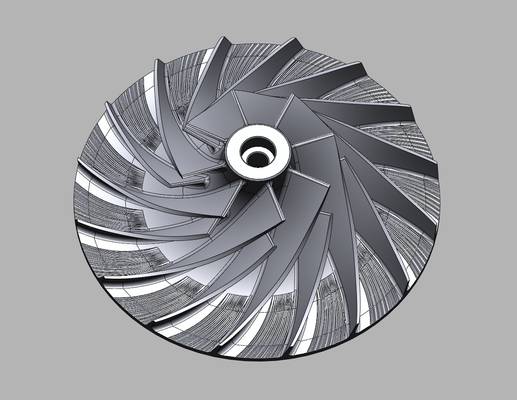
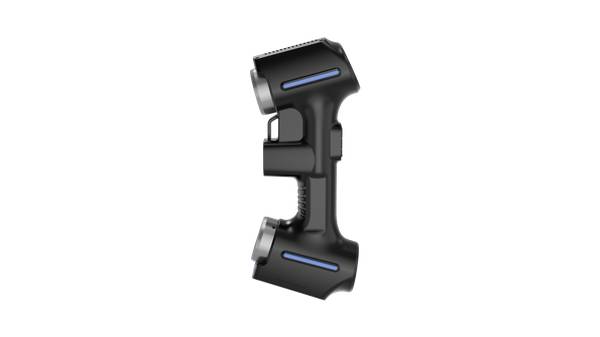
INSVISION AlphaScan delivers volume accuracy of 0.1mm±0.015mm/m with PTB-certified software. This means complex geometries—castings with deep pockets, worn tooling, legacy parts with no existing CAD—can be captured without retreating to a climate-controlled lab. The system’s AI-powered 3D algorithms address edge cases that historically caused data dropout: dark surfaces, sharp angles, reflective patches. On a shop floor where oil mist and temperature swings are constants, this reliability changes what teams can sign off on. A handheld 3d scanner for reverse engineering must produce data that holds up to scrutiny. AlphaScan does.
Myth 2: Reverse engineering requires controlled environments
The metrology lab model—optical tables, dark rooms, temperature enclosures—no longer aligns with modern production schedules. Lead times are too compressed to transport parts to clean rooms for every reverse engineering task.
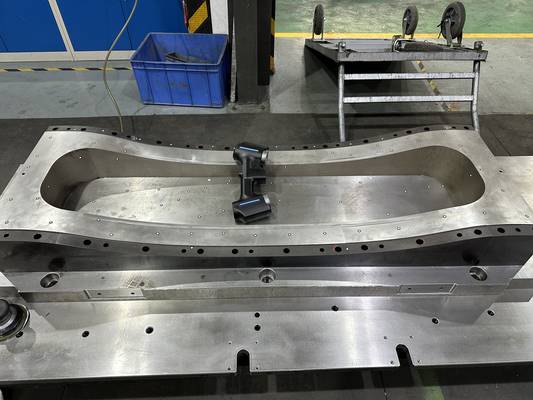
A handheld 3d scanner for reverse engineering must function where the parts actually sit. INSVISION AlphaScan operates on active shop floors because its dynamic 3D laser projection compensates in real time for vibration, ambient light shifts, and operator movement. This shows up in practice: scanning between equipment in tight bays, working around large assemblies that cannot be moved, capturing data within meters of running production lines.
The throughput difference is measurable. Instead of booking metrology lab time and transporting heavy tooling, QC teams capture point clouds at the workstation. PTB-certified software aligns data immediately, feeding directly into CAD. What previously consumed half a day in logistics now fits within a standard shift.
Traditional vs. Modern Reverse Engineering Workflow
| Traditional Workflow | INSVISION AlphaScan Workflow |
|---|---|
| Transport parts to climate-controlled metrology lab | Scan directly on active shop floor |
| Half-day logistics for setup and verification | Data captured and aligned within a standard shift |
| Separate CMM verification step required | PTB-certified software enables immediate CAD integration |
Myth 3: Complex geometries demand multiple devices or sacrificed detail
Teams have long juggled contact probes for deep pockets and structured light scanners for broad surfaces to reverse engineer a single casting. This remains common with worn turbine blades or intricate automotive castings where surface finish varies dramatically. The belief that different geometries require different devices is outdated.
INSVISION AlphaScan combines dual-layer LED illumination with multi-line blue laser technology in one unit. This configuration handles deep cavities and uneven wear patterns without interruption. No head swaps. No mid-job recalibration. The full digital twin is captured in a single handheld pass. For reverse engineering tasks demanding high fidelity without workflow stoppages, this consolidation matters.
Myth 4: Scan-to-CAD integration is slow and manual
Hours spent cleaning point clouds before modeling begins have historically killed project timelines. INSVISION addresses this with CAD-driven task creation that mirrors actual engineering workflows. Import a reference model—2D or 3D—and the software aligns scan data automatically. No program-hopping to produce a usable file.
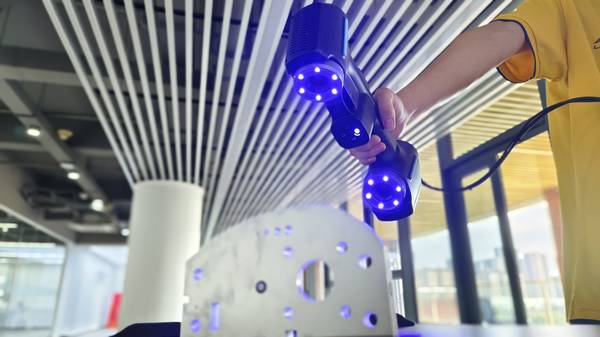
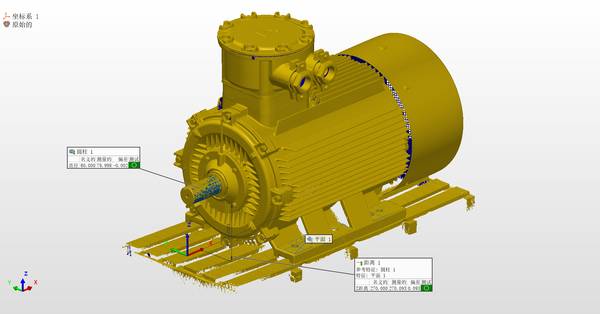
The integrated environment spans initial point cloud capture through deviation analysis to editable CAD output. Built-in GD&T tools check tolerances against ASME standards during the workflow, not as a separate export-import cycle. The system generates color-coded deviation maps on-site and outputs to mainstream 3D formats. A handheld 3d scanner for reverse engineering should not require dedicated CAD specialists to render data usable. INSVISION delivers scan-to-model in one pipeline. On the floor, this compresses turnaround from days to hours.
Key Features Enabling Rapid Scan-to-CAD
- CAD-driven task creation mirroring engineering workflows
- Automatic alignment of scan data to imported 2D/3D reference models
- Built-in GD&T tools compliant with ASME standards
- On-site color-coded deviation maps and direct export to mainstream 3D formats
Myth 5: Handheld scanners can’t meet regulated industry requirements
Aerospace MRO operations have been migrating from manual measurements and clay modeling toward digital workflows, and regulatory frameworks are adapting. The assumption that handheld scanners fail audit requirements no longer holds.
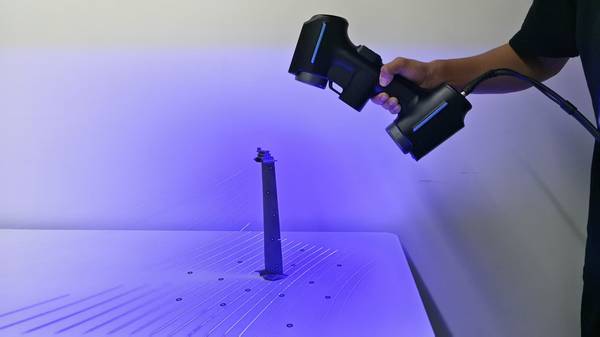
INSVISION software carries PTB certification and includes built-in GD&T tools aligned with ISO and ASME standards—precisely what auditors examine during first-article inspection or process validation. When reverse engineering a legacy turbine bracket or replicating worn tooling, traceability is non-negotiable. AlphaScan produces automated inspection reports with color-coded deviation maps and documented measurement chains. This is audit-ready documentation, not raw point cloud data. The system manages coordinate alignment against reference standards and outputs to mainstream CAD formats, preserving the digital thread from scan through model to production.
For facilities operating under AS9100 or API Q1, the relevant question is not whether a handheld 3d scanner for reverse engineering can satisfy compliance. It is whether existing workflows can afford to forfeit the throughput gains.