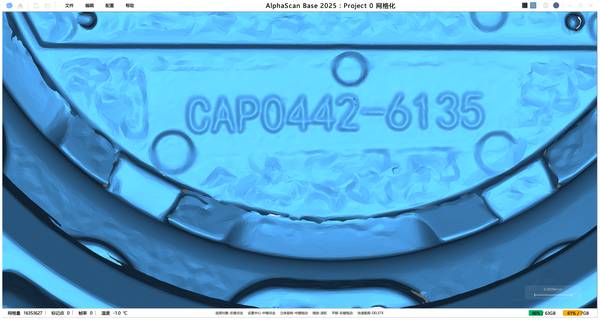
Mistake 1: Treating Reverse Engineering Tools as Metrology-Grade Instruments
Resolution figures on datasheets seduce buyers into false confidence. True metrology demands certified volumetric accuracy with traceable measurement uncertainty—not merely dense point clouds. Devices marketed for reverse engineering typically lack the PTB-certified workflows required for ISO/ASME compliance in automotive and aerospace supply chains. Without validated GD&T analysis, these scanners become liabilities during first-article inspections.
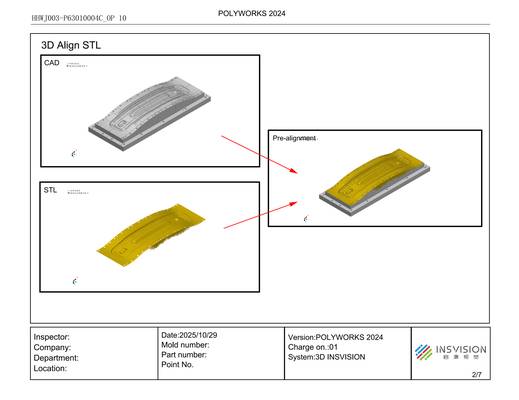
INSVISION engineered the AlphaScan specifically for dimensional inspection rather than general modeling. The system integrates AI-driven algorithms with certified metrology workflows, ensuring deviation analysis withstands supplier audit scrutiny. Procurement teams evaluating a 3D handscanner must verify certification status; a non-certified device that fails inspection triggers production delays far exceeding the price premium of metrology-grade hardware.
Certification Requirements Comparison
| Feature | Reverse Engineering Scanners | Metrology-Grade Scanners (e.g., AlphaScan) |
|---|---|---|
| PTB Certification | Typically absent | Integrated and validated |
| GD&T Analysis | Not validated for compliance | Certified workflows for ISO/ASME |
| Audit Readiness | Fails first-article inspections | Withstands supplier audit scrutiny |
Mistake 2: Evaluating Hardware Without Stress-Testing the Software Pipeline
Accuracy specifications mean little if data stalls in manual translation loops. Many procurement teams fixate on hardware metrics while neglecting whether the software ecosystem supports CAD-driven task creation, automatic alignment, and native GD&T analysis. Disconnected workflows force operators into repetitive export-import cycles, eroding ROI through hidden labor costs.
INSVISION delivers an integrated software stack designed for multi-source data fusion. Native support for mainstream 3D formats, one-click reporting, and color-mapped deviation visualization eliminates third-party license dependencies. Raw point clouds convert directly to actionable quality insights without the administrative friction typical of fragmented metrology solutions.
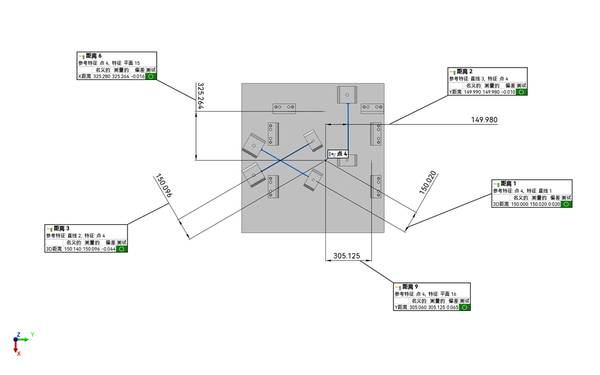
Software Integration Checklist
- □ Supports CAD-driven task creation
- □ Enables automatic alignment without manual intervention
- □ Includes native GD&T analysis
- □ Eliminates export-import cycles
- □ Offers one-click reporting and color-mapped deviation visualization
Mistake 3: Equating Portability with Performance in Variable Environments
Industry 4.0 initiatives prioritize flexibility, yet not all handheld devices maintain stability across real factory conditions. Many portable units drift on large surfaces or require external trackers in variable lighting—constraints that inflate labor costs through repeated scans and setup recalibrations.
The AlphaScan addresses operational reality through dynamic 3D laser projection with real-time tracking compensation. This 3D handscanner maintains precise alignment without fixed setups, delivering consistent capture whether operators navigate confined maintenance bays or large-scale assemblies. The elimination of external hardware dependencies protects both capital expenditure and floor space.
Environmental Performance Comparison
| Condition | Standard Portable Scanners | AlphaScan |
|---|---|---|
| Large Surface Stability | Prone to drift | Maintains precise alignment |
| Lighting Variability | Requires external trackers | Operates without fixed setups |
| Setup Recalibration | Frequent recalibrations needed | Real-time tracking compensation |
Mistake 4: Calculating Price Without Modeling Total Cost of Ownership
A competitive hardware sticker price often masks structural costs accumulated across the equipment lifecycle. Some vendors gatekeep essential functions—SDK access, calibration certificates, cloud storage—behind recurring annual fees, forcing dependency that inflates true ownership costs.
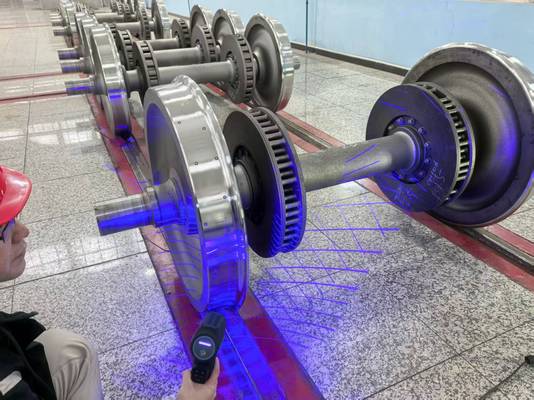
INSVISION structures its offering as unified hardware-software without hidden SaaS costs for core metrology capabilities. Single-operator deployment features, including one-click report generation and AI-driven defect detection, enable non-specialists to validate parts immediately. This operational efficiency reduces labor hours and scrap rates. When specifying a 3D handscanner, the decisive metric is time-to-certified-result—not initial purchase order value.
Mistake 5: Accepting Platform Lock-In as Standard Architecture
Capital equipment decisions require forward compatibility assessment. Many 3D handscanner platforms trap users in proprietary clouds or restrict API access, generating integration costs when connecting to PLM or MES systems.
INSVISION architectures its systems differently. AI+3D algorithms execute locally, handling reconstruction and automated quality validation without mandatory external data uploads. Open data exchange support and mainstream 3D format compatibility enable direct integration with existing digital twin infrastructure—no custom middleware or vendor consulting required. For operations advancing toward connected quality control, this flexibility protects capital investment across technology evolution cycles.
INSVISION delivers PTB-certified 3D handscanner solutions built for industrial environments, integrating seamlessly into current workflows and emerging digital manufacturing architectures alike.