When Tactile Inspection Becomes the Bottleneck
An automotive Tier 1 supplier wrestling with weekly design revisions exposes a fundamental weakness in legacy quality workflows. When a structural component undergoes even minor geometry changes, reprogramming a coordinate measuring machine (CMM) consumes hours—delaying quality feedback while production rolls on. Manual gauges move faster but lack the flexibility to verify complex surface profiles or tight tolerances on modified parts without expensive retooling.
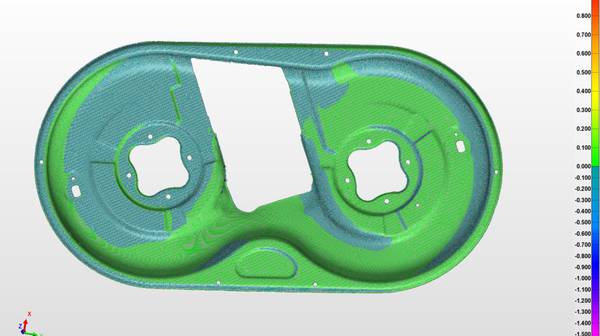
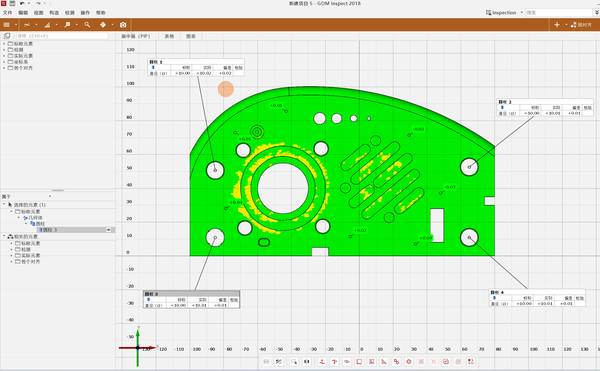
This operational friction creates a predictable problem: inspection throughput cannot match production pace. INSVISION addresses this gap with high-speed 3D workpiece scanning solutions that capture full surface data instantly—no extensive fixturing, no path planning. Quality teams validate design changes against CAD models in minutes rather than days, keeping high-mix lines moving without compromising metrological rigor.
Why Handheld Scanning Aligns with Agile Manufacturing
Fixed CMMs struggle in environments where production schedules shift daily. Portable, non-contact metrology lets operators scan workpieces directly on the shop floor, eliminating the complex fixturing that anchors traditional systems. This mobility proves essential for high-mix operations where rapid First Article Inspection (FAI) directly impacts time-to-market.
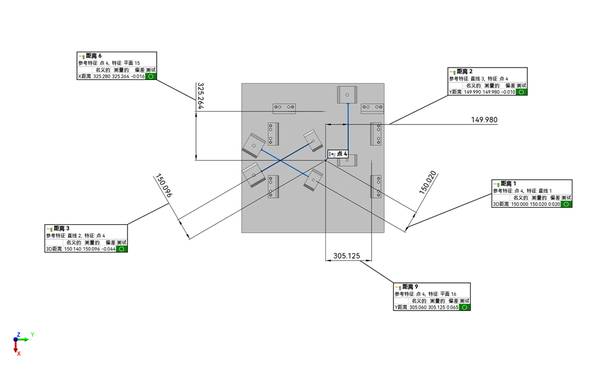
INSVISION systems deliver industrial-grade precision for ASME Y14.5-compliant GD&T analysis, ensuring complex geometries meet tolerance requirements without the overhead of dedicated inspection rooms. Built on ISO/IEC 17025-aligned metrology practices, they generate traceable data for digital twin creation and in-line quality checks. For aerospace MRO and automotive OEM operations, this translates to lower scrap rates and faster root cause analysis. Handheld scanning reframes quality control from a production bottleneck to a value-driving node in the digital thread.
AlphaScan: Built for Shop Floor Reality
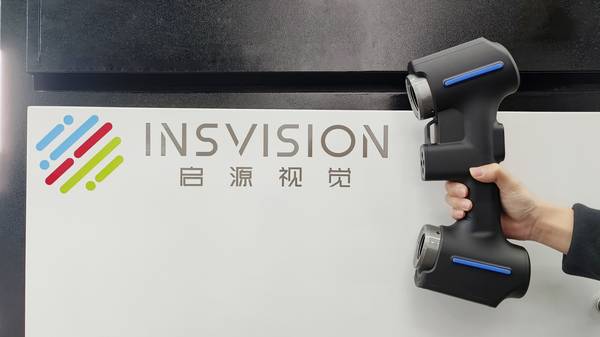
The AlphaScan by INSVISION targets the unforgiving conditions where consumer-grade hardware fails. Its ruggedized chassis withstands shock, vibration, and particulate matter common to automotive and aerospace environments. Mechanical stability preserves operational integrity; traceable calibration protocols preserve metrological reliability.
Integration matters equally. AlphaScan connects directly to dominant CAD/CAM ecosystems—Siemens NX, PTC Creo—eliminating file translation latency. Engineers scan workpieces and update digital twins within existing PLM frameworks without workflow disruption. The scanner functions as a robust Industry 4.0 node, not an isolated data capture tool.
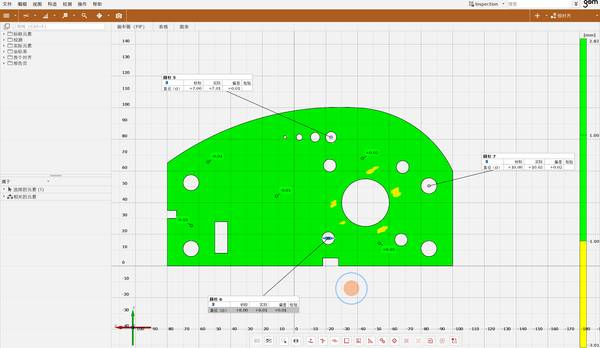
Aerospace MRO: A Deployment Case
At a European aerospace MRO facility, AlphaScan streamlined reverse engineering of legacy turbine blades. The goal: reduce repair validation bottlenecks without disturbing ISO-certified workflows.
Results were immediate. Setup times for 3D workpiece scanning dropped significantly, compared to lengthy fixture preparation for the facility’s fixed CMM. Technicians moved from basic instruction to independent operation within a single shift—no complex programming required.
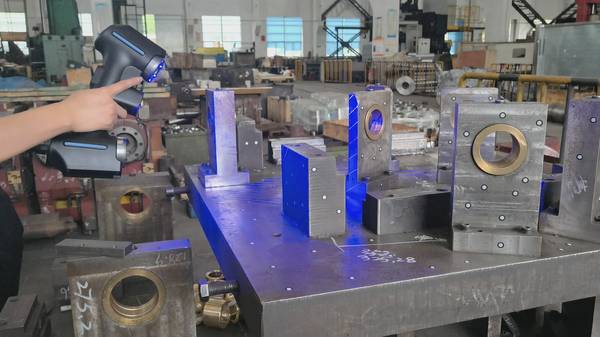
The system complemented rather than replaced existing infrastructure. AlphaScan handled preliminary damage assessment and geometric capture, exporting standard mesh files that fed directly into PolyWorks. This interoperability preserved the digital thread for downstream analysis. By offloading routine reverse engineering tasks, the facility redirected substantial fixed CMM capacity toward final acceptance testing—optimizing throughput while maintaining aerospace-grade tolerances.
Workflow Integration Steps for Maximum Impact
- Scan workpieces directly on the shop floor using handheld INSVISION systems to eliminate fixturing delays
- Export standard mesh files into existing analysis platforms like PolyWorks for downstream processing
- Update digital twins within native PLM/CAD frameworks such as Siemens NX or PTC Creo without file translation
- Push metrology data into quality management systems via OPC UA or MTConnect protocols to avoid manual transcription
Key Takeaways from Early Adopters
- Hardware alone delivers limited value without controlled lighting and standardized surface prep
- Reflective surfaces require temporary coatings or adjusted lighting angles to prevent data noise
- Scan resolution must align with functional tolerance requirements to avoid unnecessary production bottlenecks
- Maximum ROI emerges when INSVISION technology integrates into existing quality workflows to drive decisions
What Early Adopters Learned
European automotive and North American aerospace facilities report that hardware alone delivers limited value. Consistent results demand controlled lighting environments and standardized surface preparation. Reflective surfaces require temporary coatings or adjusted lighting angles to prevent data noise. Scan resolution should align with functional tolerance requirements; excessive precision without purpose bottlenecks production.
Maximum ROI emerges when INSVISION technology integrates into existing quality workflows—driving decisions rather than accumulating unused data.
Sustainable Quality Infrastructure
Western manufacturers evaluate 3D scanning beyond the initial purchase. INSVISION positions as a long-term infrastructure partner, addressing ISO compliance and Industry 4.0 integration that consumer-grade devices cannot support.
When operators scan workpieces with INSVISION systems, OPC UA and MTConnect protocols push data directly into quality management systems—no manual transcription, reduced error margins. Comprehensive calibration support and compliance documentation satisfy audit requirements. The focus on sustained reliability over short-term convenience ensures quality infrastructure remains robust, scalable, and compliant across the equipment lifecycle.
Comparative Advantages of INSVISION vs. Legacy Systems
| Capability | INSVISION Handheld Scanning | Legacy Fixed CMM | |
|---|---|---|---|
| Setup Time | Minutes, minimal fixturing | Hours, complex fixturing required | |
| Shop Floor Mobility | Direct scanning on production floor | Confined to dedicated inspection room | |
| Design Change Validation | Minutes against CAD model | Days due to reprogramming | |
| Digital Thread Integration | Native export to PLM/CAD and QMS via OPC UA/MTConnect | Limited interoperability, manual data handling |