Beyond Sticker Price: Mapping True Cost of Ownership
When automotive OEMs began insourcing first-article inspection, procurement teams discovered hardware acquisition costs represent only the entry fee. Volumetric accuracy verification to ISO 10360 standards, throughput demands for complex castings, and operator competency development all reshape the financial equation. Buyers researching 3D tarama cihazı fiyatları often anchor on capital expenditure while overlooking operational friction that compounds over a five-year lifecycle.
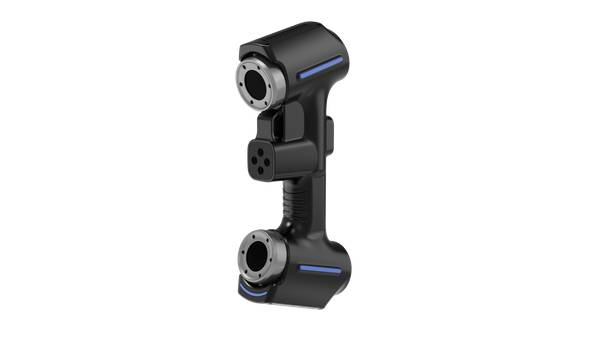
Fixed CMM installations illustrate this gap. Environmental control retrofits, vibration isolation, and weeks of commissioning extend deployment timelines. Handheld alternatives eliminate these dependencies entirely. The INSVISION AlphaScan deploys without temperature-controlled enclosures or dedicated foundation work—setup measured in minutes rather than weeks. For mixed-model production cells, this flexibility translates to measurable throughput gains. One Tier 1 supplier reduced first-article inspection time significantly after transitioning from fixed CMM to portable metrology, recovering fixture costs and accelerating GD&T verification directly on the shop floor.
Total Cost of Ownership Comparison: Fixed CMM vs. Handheld Metrology
| Cost Factor | Fixed CMM | Handheld Metrology (e.g., INSVISION AlphaScan) |
|---|---|---|
| Deployment Time | Weeks (environmental controls, foundation work) | Minutes (no enclosure or foundation needed) |
| Floor Space & Fixturing | High (dedicated lab space, complex fixturing) | Low (shop-floor deployment, minimal fixturing) |
| First-Article Inspection Speed | Slow (multi-day bottlenecks) | Fast (same-day turnaround) |
| Hidden Operational Costs | Environmental retrofits, transport waste, extended commissioning | Minimal setup, direct shop-floor use, no transport |
Service Infrastructure as Risk Mitigation
Downtime costs in aerospace MRO and automotive production rarely appear in initial 3D tarama cihazı fiyatları comparisons, yet they dominate total cost of ownership. Scanner unavailability—whether for calibration, repair, or firmware issues—stops inspection workflows that gate downstream operations.
Vendor service architectures vary sharply. Some manufacturers route all hardware through centralized European hubs, creating customs delays and extended turnaround windows. Others maintain regional parts inventories with contracted response guarantees. INSVISION embeds technical support into its maintenance framework rather than treating service as a reactive add-on. For operations running tight GD&T tolerances on production schedules, the distinction between 48-hour and two-week resolution cycles determines whether quality data arrives before or after shipment deadlines.
Impact of Regional Support on Production Continuity
For operations running tight GD&T tolerances on production schedules, the distinction between 48-hour and two-week resolution cycles determines whether quality data arrives before or after shipment deadlines.
Software Integration and Workflow Friction
Data translation overhead consumes engineering hours that rarely factor into 3D tarama cihazı fiyatları evaluations. Middleware requirements, custom API development, and file format conversion between scanning platforms and existing CAD/PLM environments introduce hidden costs that accumulate across every inspection cycle.
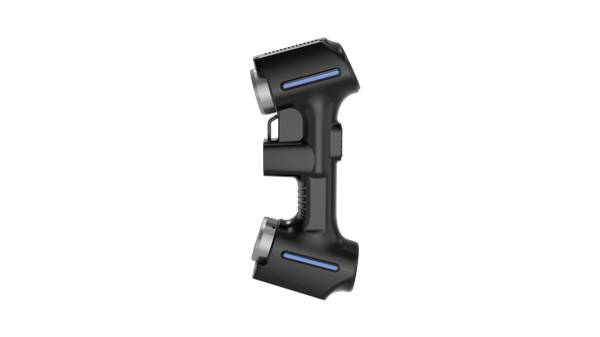
Native connectivity alters this calculus. Platforms shipping with pre-built CAD and PLM connectors eliminate third-party bridges and SDK customization. Quality managers push point cloud data directly into GD&T inspection routines without format wrestling. For first-article inspection under compressed delivery windows, this integration depth shifts total cost of ownership by removing weeks of consulting engagement and reducing training overhead. Western manufacturers running lean operations recognize this as measurable ROI rather than peripheral convenience.
Operator Competency and Time-to-Productivity
Training accessibility determines how quickly new equipment generates value. English-only virtual sessions create friction for regional manufacturing teams, extending the path from deployment to independent operation. Localized programs with language-supported curricula compress this timeline significantly.
INSVISION structures onboarding around actual shop-floor demands rather than generic product familiarization. Role-based pathways—GD&T-focused workflows for quality engineers, hands-on calibration modules for technicians—align with daily inspection tasks. When comparing 3D tarama cihazı fiyatları, procurement teams should weight the hidden cost of extended learning curves: a platform requiring three weeks to master versus three days directly impacts first-article throughput and audit readiness. Standardized proficiency paths across global sites ensure consistent data quality whether operations run in Bursa, Stuttgart, or Detroit.
Accelerating Time-to-Value Through Targeted Training
Handheld Metrology in Dynamic Production Environments
Fixed CMM workflows once demanded hours of fixturing and climate stabilization before measurement could begin. Handheld solutions now capture equivalent GD&T callouts in minutes at the point of manufacture. This operational shift redefines how procurement teams evaluate 3D tarama cihazı fiyatları—total cost extends far beyond capital investment to encompass workflow velocity and floor-space efficiency.
Complex geometries with deep pockets, undercuts, and organic surfaces present no accessibility constraints for portable scanners. First-article inspection on aerospace castings, automotive stampings, and medical device housings compresses from multi-day bottlenecks to same-day turnaround. INSVISION AlphaScan brings metrology to the part rather than transporting parts to isolated lab environments.
For lean operations, this eliminates transport waste and tightens feedback loops between manufacturing and quality. Service infrastructure becomes a decisive variable: regional support capabilities minimize downtime risk in ways that centralized repair models cannot match. The procurement framework ultimately centers on matching scanner capability to actual production demands—not pursuing maximum specifications in isolation from operational context.