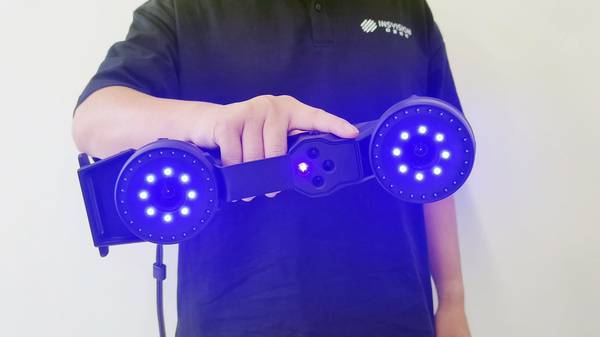
Reverse Engineering Legacy Components Without Blueprints
Automotive manufacturers and Tier suppliers face a familiar dead end: maintaining legacy vehicles when original blueprints no longer exist. Without design data, remanufacturing devolves into trial-and-error—expensive, slow, and prone to error. A professional 3D scanner for car parts breaks this bottleneck.
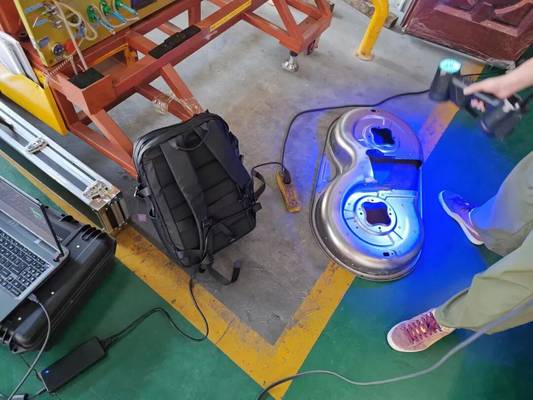
INSVISION‘s AlphaScan captures complex geometries directly from physical components, converting them into editable CAD models with metrology-grade precision. Engineers bypass manual measurement entirely, whether updating worn tooling or recreating discontinued parts. The digitization process typically reduces reverse engineering cycles by 60-70% while eliminating scrap from dimensional guesswork. Production lines stay running, and the ROI materializes through measurable lead time compression.
Benefits of AlphaScan in Reverse Engineering
| Benefit | Impact |
|---|---|
| Reduction in reverse engineering cycles | 60–70% faster turnaround |
| Elimination of dimensional guesswork | Zero scrap from measurement errors |
Accelerating First-Article Inspection on the Shop Floor
High-mix, low-volume automotive production punishes any delay. Traditional CMM-based first-article inspection creates exactly that—bottlenecks that push back customer approvals and compress already-tight margins.
Deploying a 3D scanner for car parts directly at the point of manufacture changes the equation. Full-surface deviation data that once took hours now arrives in minutes. INSVISION’s systems validate complex geometries—intake manifolds, structural brackets, casting surfaces—without the fixturing and probing overhead of tactile measurement. Engineers spot deviations immediately, correct tooling proactively, and slash scrap rates. Quality control shifts from obstacle to accelerator, securing faster approvals in custom production environments where agility determines profitability.
Quality Control Workflow with 3D Scanning
- Capture full-surface deviation data in minutes instead of hours
- Validate complex geometries without fixturing or probing
- Identify deviations immediately and adjust tooling proactively
- Reduce scrap rates and accelerate customer approvals
Catch Fit-and-Finish Issues Before Tooling Lock-In
Mismatched body panels and inconsistent trim gaps rarely surface until hard tooling is finalized. At that point, physical mold adjustments run tens of thousands of dollars and threaten launch timelines.
Integrating precision scanning into pre-production breaks this pattern. INSVISION’s AlphaScan captures prototype assembly dimensions early, enabling direct point cloud-to-CAD comparison. Deviations become visible before cutting dies, not after. Engineers simulate adjustments digitally rather than reworking physical molds. The result: production parts that meet fit-and-finish standards from the first shot, with rework costs and launch delays engineered out of the process.
Pre-Production Scanning Advantages
- □ Early capture of prototype assembly dimensions
- □ Direct point cloud-to-CAD comparison for deviation detection
- □ Digital simulation of adjustments avoids physical mold rework
- □ Production parts meet fit-and-finish standards from first shot
Portable Metrology for Aftermarket and Restoration
Specialty restoration shops and custom aftermarket producers operate under a constraint OEMs rarely face—no original CAD data, and no time to ship components to external labs for measurement.
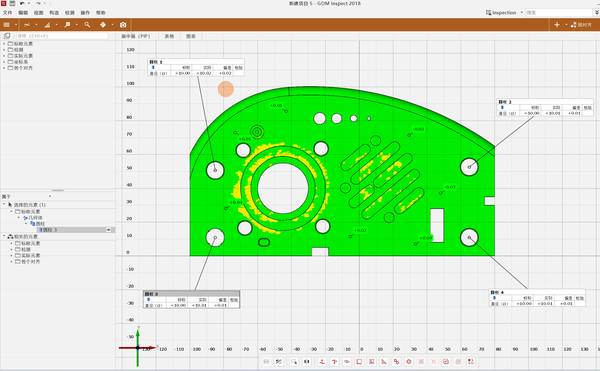
A handheld 3D scanner for car parts removes both barriers. INSVISION’s portable systems let small teams capture OEM-spec geometry on the shop floor, without disassembly or logistics delays. Technicians digitize complex surfaces and damaged components instantly, building reliable digital twins for reverse engineering. Replacement parts emerge that match modern safety and fit standards, produced on timelines traditional tooling cannot touch. Throughput increases. Material waste drops. The business case writes itself.
Comparison: Portable Scanning vs. Traditional Methods
| Factor | Portable 3D Scanning | Traditional Lab Measurement |
|---|---|---|
| On-site capability | Yes – shop floor digitization | No – requires shipping |
| Time to digital twin | Instant | Days to weeks |
Metrology-Grade Accuracy: The Specification That Matters
Not all scanning hardware belongs in production environments. Consumer-grade devices—crowdfunded units built for hobbyist projects—lack the thermal stability, traceable calibration, and certified accuracy that automotive supply chains demand.
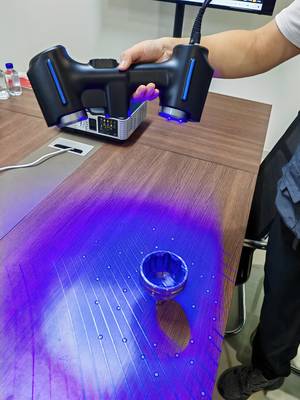
When evaluating a 3D scanner for car parts, the distinction is critical. the series’s AlphaScan delivers the metrology-grade performance required for GD&T compliance and PPAP submissions. Data holds up to audit scrutiny. Software integration feeds directly into digital quality management systems. Manufacturers avoid the hidden costs of rejected batches, re-scanning cycles, and production line stoppages from non-compliant documentation.
Industrial-grade hardware costs more upfront. The alternative—untraceable measurements and downstream failure—costs far more.