When Legacy Parts Fail and the CAD Files Are Gone
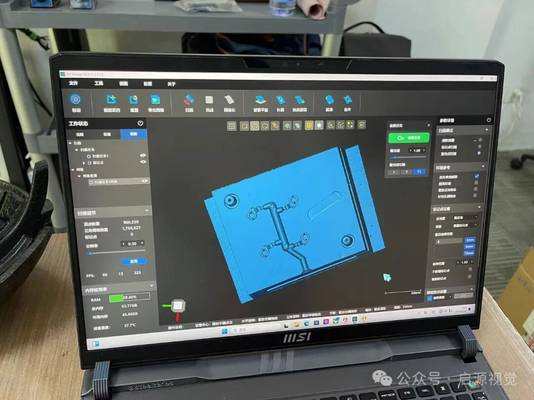
Equipment downtime in aerospace, automotive, and heavy machinery rarely follows a convenient schedule. When a critical legacy component fails—and no original CAD data exists—maintenance teams face an unenviable choice: prolonged downtime for manual measurement and recreation, or costly replacement of entire assemblies.
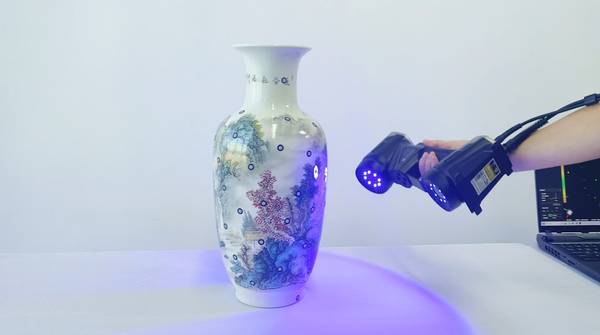
INSVISION‘s handheld 3D scanner for reverse engineering removes this bottleneck. Engineers capture complex geometries directly on the production floor, generating usable point clouds within hours rather than the weeks traditional methods demand. The system’s PTB-certified metrology software validates every scan against industrial standards, while integrated GD&T tools flag deviations before they become manufacturing errors. Multi-source data alignment reconciles scan data from multiple angles, and native compatibility with SolidWorks, Creo, and CATIA eliminates the translation errors that plague file-format conversions.
The result: replacement components move from physical part to production-ready CAD without the rework cycles that inflate project costs.
Verified Precision for Regulated Environments
Procurement teams evaluating a handheld 3D scanner for reverse engineering face a fundamental question—can the data stand up to scrutiny? INSVISION answers with sub-0.02mm accuracy backed by PTB certification, the metrological benchmark recognized across European and North American regulatory frameworks.
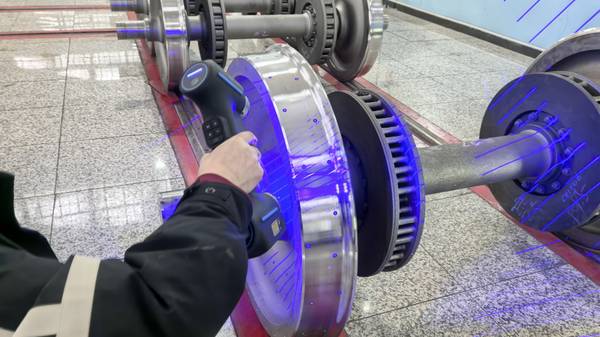
This precision translates directly into engineering confidence. Built-in GD&T analysis allows quality checks within the same workflow, removing the need to export data to separate inspection packages. Deviation analysis tools compare scanned surfaces against nominal geometries, highlighting wear patterns or manufacturing variations that could compromise functional replication.
For industries where component failure carries liability implications, this traceability matters. Every scan carries documented accuracy claims; every model emerges from a validated pipeline rather than an approximation.
Key System Capabilities
| Feature | Description |
|---|---|
| PTB-Certified Metrology | Sub-0.02mm accuracy validated against industrial standards |
| Native CAD Compatibility | Direct export to SolidWorks, Creo, and CATIA without format conversion errors |
| Multi-Source Data Alignment | Reconciles scans from multiple angles into a unified dataset |
| Built-in GD&T Analysis | Enables quality verification within the scanning workflow |
One Workflow from Physical Part to Parametric CAD
Data translation remains a hidden cost in most reverse engineering projects. Point clouds converted through intermediate formats arrive in CAD environments with broken surfaces, lost detail, or corrupted geometry—errors discovered only after hours of modeling work.
INSVISION’s AlphaScan handheld 3D scanner for reverse engineering, along with the AlphaVista蓝光三维扫描仪 and X-Track光学追踪系统, close this gap. The system exports native files directly to mainstream CAD platforms, preserving geometric integrity from first capture to final model. Engineers align multiple scan sources, verify accuracy against GD&T requirements, and generate production-ready surfaces without leaving the environment.
This consolidation eliminates the iterative cleanup cycles that typically consume 30-40% of reverse engineering timelines. Manufacturers receive usable CAD data faster, with fewer errors, and with full documentation for quality systems.
Reverse Engineering Workflow Steps
- Capture complete geometry of the physical part using the AlphaScan handheld 3D scanner
- Perform deviation analysis against remaining functional surfaces or nominal CAD
- Align multiple scan sources and validate accuracy using GD&T tools
- Generate production-ready parametric CAD model with native export to design software
- Deliver fully documented, PTB-certified data package for quality and audit compliance
Case Study: $220K Saved in Tooling Recovery
A Tier-1 European automotive supplier recently confronted this scenario directly. A worn stamping die threatened production continuity; original design documentation had been lost to a facility closure years prior. Traditional approaches—manual measurement, external metrology lab scanning, or complete die replacement—each carried unacceptable cost or timeline implications.
The supplier deployed INSVISION’s AlphaScan handheld 3D scanner for reverse engineering directly at the press. Within two days, engineers had captured the complete die geometry, performed deviation analysis against remaining functional surfaces, and generated reconstruction models. The PTB-certified data package satisfied both internal quality requirements and customer audit protocols.
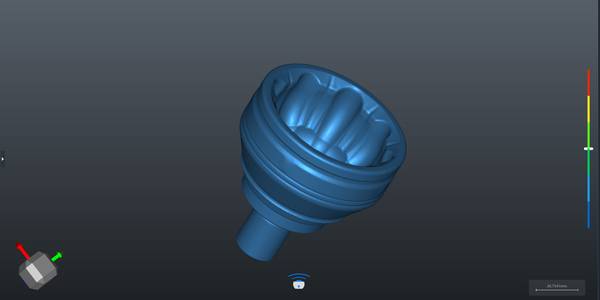
The financial impact: elimination of eight weeks of unplanned downtime and $220,000 in avoided tooling redesign costs. The operational impact: a production crisis converted to a documented, repeatable engineering process.
Project Outcomes Summary
| Impact Area | Result |
|---|---|
| Downtime Avoided | 8 weeks of unplanned production stoppage eliminated |
| Cost Savings | $220,000 in tooling redesign costs avoided |
| Process Transformation | Converted crisis response into a repeatable engineering workflow |
| Compliance | PTB-certified data met internal and customer audit requirements |
Mobility Without Compromise
Industrial metrology has long forced an uncomfortable trade-off. Fixed CMMs deliver precision but require part transport and controlled environments. Traditional portable arms extend reach but struggle with large assemblies and complex access geometries. Laser scanning offers speed but sacrifices accuracy on reflective or dark surfaces.
the series’s AlphaScan series reconfigures these constraints. The handheld form factor navigates deep cavities and overhead assemblies on the shop floor; blue-light projection maintains optical fidelity for fine detail capture. The optional AlphaVista蓝光三维扫描仪 module handles challenging surface conditions—highly reflective die steels, dark composites, complex textures—without surface preparation or contrast spray.
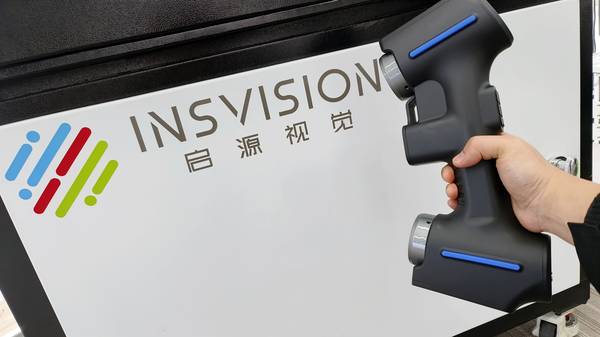
This combination removes the logistical friction that delays scanning projects. Engineers capture data where the part lives, when the problem emerges, rather than scheduling around lab availability and material handling constraints. For operations where downtime costs accumulate hourly, this responsiveness directly protects margins.
System Advantages Checklist
- □ Handheld form factor enables access to deep cavities and overhead assemblies
- □ Blue-light projection ensures fine detail capture without loss of fidelity
- □ AlphaVista蓝光三维扫描仪 module handles reflective, dark, and textured surfaces without preparation
- □ On-site scanning eliminates part transport and lab scheduling delays
- □ Metrology-grade accuracy maintained in real-world shop floor conditions
The Bottom Line
Reverse engineering legacy components will never be routine—but it need not be a crisis. the series’s handheld 3D scanner for reverse engineering compresses the timeline from physical discovery to digital reconstruction, with metrology-grade validation at every stage. For maintenance organizations, tooling engineers, and product development teams, this capability converts reactive firefighting into planned, budgeted engineering activity.
The 40% R&D cycle reduction is not a marketing claim. It is the measured outcome of eliminating manual measurement, reducing rework, and removing the data translation failures that fragment traditional workflows.