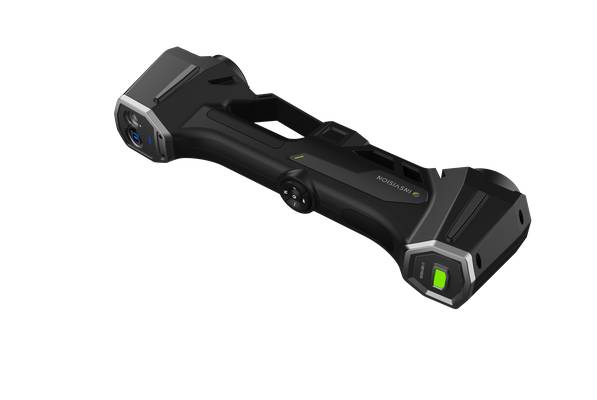
Why “CAD-Ready” 3D Scanning Outperforms Raw Accuracy
For manufacturing engineers, a high-accuracy 3D scanner for CAD workflows delivers value only when output integrates seamlessly into existing systems. Traditional scanners generate noisy point clouds demanding hours of manual cleanup before CAD alignment—creating bottlenecks that erode ROI.
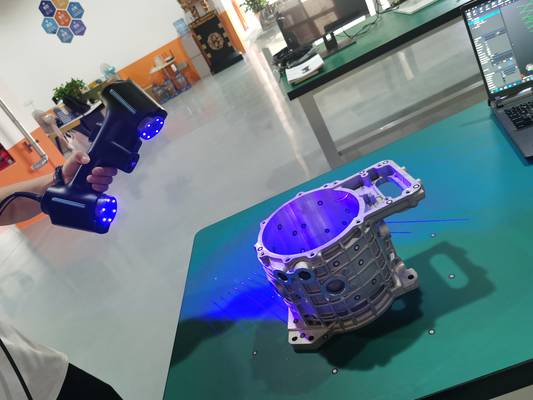
INSVISION eliminates this friction through a direct CAD-driven workflow combining AlphaVista Blue Light 3D Scanner hardware with SMARPARA Q software:
- Native CAD alignment: Automatic, datum-based, and RPS alignment methods eliminate manual registration
- Inspection-ready output: One-click color deviation maps and GD&T tolerance analysis with PTB-certified accuracy
- Streamlined reverse engineering: Complete workflow from data processing through surface fitting to CAD conversion
Workflow Comparison: Traditional vs. INSVISION
| Metric | Traditional Workflow | INSVISION Workflow |
|---|---|---|
| Data Preparation | Manual point cloud cleanup | Direct CAD import |
| Alignment Process | Multi-step manual registration | Automated alignment |
| Report Generation | Separate software required | One-click visual reports |
AlphaVista’s 0.02mm accuracy feeds directly into SMARPARA Q’s intelligent alignment, letting industrial users skip cleanup entirely—delivering actionable inspection data faster and reducing time-to-decision on the shop floor.
Solving Production Pain Points: From Manual Layout Errors to Rework Loops
Manual layout processes remain a persistent source of costly errors in high-stakes manufacturing. Physical templates and hand-marking introduce variability that cascades through production, triggering rework loops that erode margins and delay deliveries.
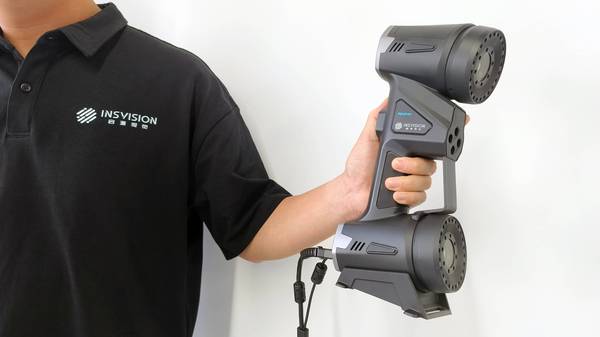
INSVISION addresses these challenges with the Alpha-Projector, a dynamic 3D laser projection system that transforms assembly workflows. By projecting green laser contours (520nm wavelength) directly onto workpieces with 0.25mm positioning accuracy, the system replaces error-prone manual scribing with digital guidance.
Alpha-Projector Application Benefits
| Application | Manual Process Risk | Alpha-Projector Solution |
|---|---|---|
| Composite Layup | Ply drift, orientation errors | CAD-driven ply boundary projection |
| Welding Fixture Setup | Stud misalignment, rework | Real-time positioning guidance |
| Drilling Operations | Hole location deviation | Precise drill point identification |
| Paint Masking | Overspray, boundary errors | Projected area definition |
The system’s dynamic tracking capability automatically corrects projection position when workpieces shift, ensuring continuous alignment. Compatible with FiberSIM and CATIA CPD formats, the the series integrates into existing aerospace and automotive workflows, eliminating translation errors between design intent and shop-floor execution.
Handheld vs. Automated: Matching Scanner Type to Throughput and Tolerance Requirements
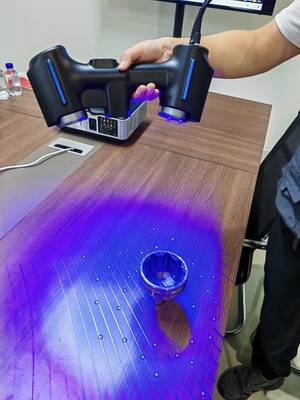
Selecting the optimal 3D scanner for CAD integration depends on production volume, part complexity, and operational constraints. the series offers distinct approaches for varying demands:
| Model | Best For | Workflow Style | Typical Application |
|---|---|---|---|
| AlphaScan Handheld 3D Scanner | Large, complex geometries; field deployment | Manual, flexible | Shop-floor inspection of large castings, in-situ turbine blade measurement |
| AlphaVista Blue Light 3D Scanner | High-precision inspection; automated cells | Semi-automated, programmable | Precision mold validation, aerospace component QC |
| X-Track Optical Tracking System | Large-volume tracking; multi-sensor fusion | Dynamic, scalable | Full-scale vehicle assembly, wind turbine blade inspection |
Key ROI Drivers:
ROI Checklist for INSVISION Scanners
- □ Reduced labor costs: Automated alignment eliminates manual setup for repetitive inspection tasks
- □ Faster cycle times: Ethernet RJ-45 and USB 3.0 interfaces enable real-time data transfer for quality traceability
- □ Proven durability: IP54 rating and 0–50°C operating range ensure reliable performance in unconditioned shop environments
Matching scanner architecture to throughput requirements maximizes efficiency while maintaining data integrity across heavy machinery, automotive, and energy sector applications.
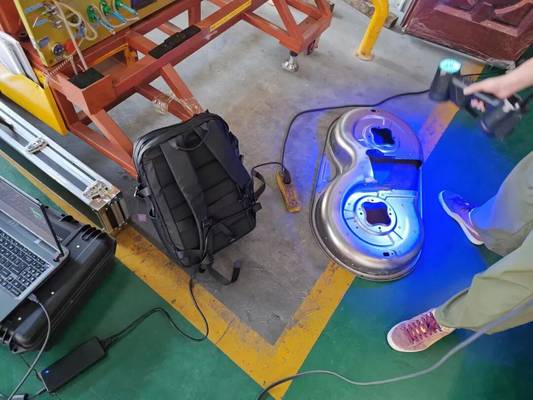
From Capture to Actionable CAD Intelligence
A 3D scanner for CAD workflows generates value through the intelligence it produces, not data volume alone. SMARPARA Q software bridges raw point clouds and engineering-grade deliverables without requiring multiple platforms.
PTB certification ensures measurement accuracy and stability across:
- GD&T tolerance analysis with color-coded deviation maps for immediate visual comprehension
- Complete reverse engineering workflow from data processing through surface fitting to production-ready CAD
- One-click inspection reports for streamlined documentation and stakeholder communication
Engineering Output Applications
| Application | Engineering Output |
|---|---|
| Mold wear analysis | Quantified deviation data for predictive maintenance scheduling |
| Battery housing validation | GD&T-compliant reports for dimensional compliance documentation |
| Legacy part recreation | Reverse-engineered CAD surfaces ready for CNC programming |
Steps to Achieve CAD-Ready Intelligence
- Capture high-accuracy point cloud data using the series hardware
- Process and align data automatically via SMARPARA Q with native CAD integration
- Generate inspection reports or reverse-engineered CAD models with one-click outputs
- Deploy actionable intelligence directly into production or engineering workflows
Unifying capture, analysis, and reporting within one ecosystem accelerates decision-making and maintains full data traceability from shop floor to engineering office.
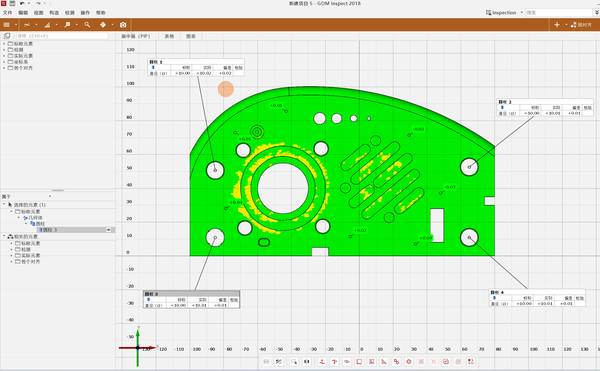
Future-Proofing Your Digital Factory
Western manufacturers investing in a 3D scanner for CAD integration require long-term viability alongside immediate capability. the series systems endure harsh production environments while scaling with digital transformation roadmaps.
| Specification | the series Rating | Production Benefit |
|---|---|---|
| Operating Temperature | 0°C – 50°C | Reliable performance across unconditioned shop floors |
| Protection Rating | IP54 | Dust and water splash resistance for heavy industry |
| Connectivity | Ethernet RJ-45 / USB 3.0 | Seamless MES and quality system integration |
| Software Compatibility | CATIA CPD, FiberSIM, API access | No costly platform migrations or data translation |
API-based system expansion allows manufacturers to embed scanning capabilities into automated workflows. Direct compatibility with CATIA CPD and FiberSIM ensures today’s investment supports composites layup, welding guidance, and assembly verification across automotive, energy, and heavy machinery sectors.
Proven deployment in aerospace, rail, and precision casting environments positions the series systems to align with Industry 4.0 roadmaps and traceability mandates without infrastructure overhauls.