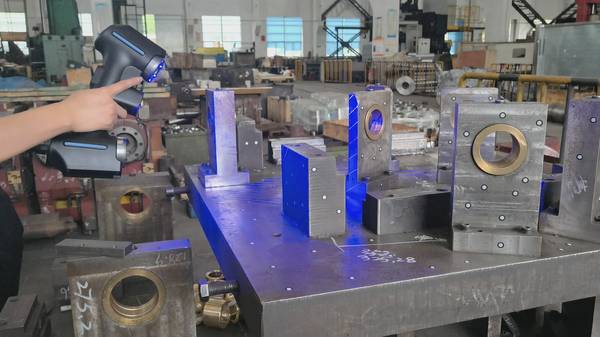
Why 3D Scanning Accuracy Matters in High-Stakes Industrial Environments
In aerospace MRO and medical device manufacturing, measurement uncertainty converts directly to financial exposure. A deviation of mere microns can scrap a high-value turbine blade or trigger a costly recall. Meeting ISO 10360 and ASME Y14.5 standards demands more than high resolution—true 3d scanning accuracy requires proven repeatability and traceability under actual shop-floor conditions. When First Article Inspection reports rely on compromised data, production delays cascade through the supply chain.
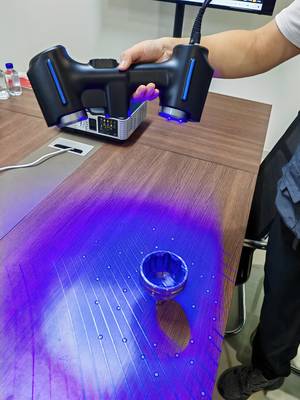
INSVISION addresses this by delivering metrology-grade data that withstands environmental variables like temperature fluctuations and vibration. For procurement and quality managers, investing in robust scanning technology prevents the exponential costs of rework, ensuring digital twins and inspection workflows remain valid across the product lifecycle.
The Technical Architecture Behind INSVISION’s 3D Scanning Accuracy
Achieving metrology-grade 3d scanning accuracy outside controlled labs demands synchronized hardware and software design. INSVISION engineered the AlphaScan handheld scanner around advanced structured-light technology for high-density point cloud capture. Unlike consumer-grade alternatives, AlphaScan employs robust sensor fusion and thermal stability mechanisms, maintaining hardware integrity through extended operation in variable shop-floor temperatures.
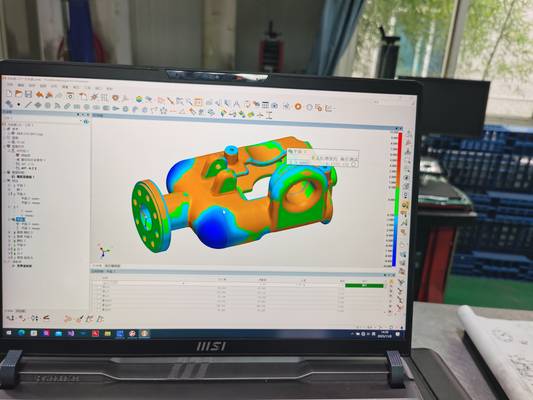
The system’s software algorithms actively compensate for ambient light interference and surface reflectivity, allowing operators to scan machined metal parts or carbon fiber composites without time-consuming surface preparation. This real-time photometric optimization eliminates bottlenecks common in traditional quality control workflows. Built-in calibration protocols enable the device to maintain ISO-compliant standards without frequent external adjustments. By embedding these stabilization features directly into the scanning workflow, INSVISION delivers repeatable, high-precision data essential for automotive OEMs and aerospace MRO applications—reducing reliance on specialized environments and accelerating inspection cycles.
AlphaScan Versus Consumer-Grade and Stationary Alternatives
Devices positioned for consumer and education markets lack the traceable calibration required for ISO 9001 quality management systems, making them unsuitable for verifying tight tolerances in automotive or aerospace manufacturing. Established terrestrial laser scanning solutions provide high-fidelity data but often sacrifice the agility required for dynamic shop-floor tasks.
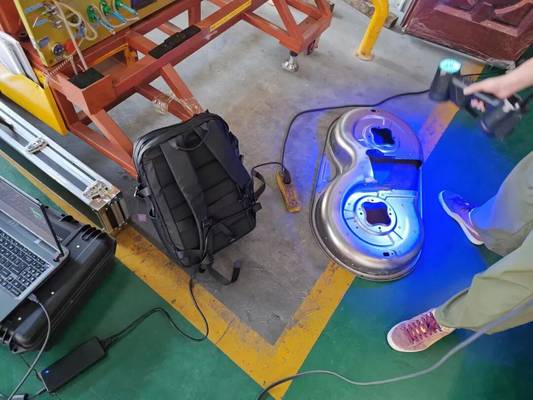
INSVISION bridges this gap with AlphaScan, delivering metrology-grade 3d scanning accuracy in a portable form factor. Where consumer alternatives compromise data integrity, INSVISION ensures reliable, traceable measurements directly at the machine tool or inspection station. Quality managers maintain rigorous standards without the logistical constraints of stationary heavy-industry equipment, streamlining workflows for medical device validation and energy sector MRO.
Key Advantages of AlphaScan Over Alternative Scanning Solutions
| Feature | AlphaScan (INSVISION) | Consumer-Grade Scanners | Stationary Laser Scanners | |
|---|---|---|---|---|
| Traceable Calibration | Yes – ISO-compliant | No – not suitable for ISO 9001 | Yes – but limited portability | |
| Portability | Handheld, shop-floor ready | Portable but low accuracy | Bulky, fixed installation | |
| Environmental Resilience | Thermal stability & vibration resistance | Unstable under shop-floor conditions | Requires controlled environment |
Critical Requirements for Industrial 3D Scanning Accuracy
- □ Proven repeatability and traceability under actual shop-floor conditions
- □ Compliance with ISO 10360 and ASME Y14.5 standards
- □ Resistance to temperature fluctuations and vibration
- □ Real-time compensation for ambient light and surface reflectivity
- □ Built-in calibration protocols to maintain ISO compliance
Validated Performance in Active Manufacturing Environments
Laboratory specifications rarely predict behavior on active factory floors where vibration and thermal drift are constant. Reliable 3d scanning accuracy in these conditions requires hardware engineered for industrial stability.
When inspecting complex automotive castings, AlphaScan demonstrates resilience against ambient shop-floor noise and mechanical vibration, ensuring surface data remains valid for downstream analysis. In energy sector maintenance—where turbine blade inspection demands precise geometry capture—the system maintains consistent results despite thermal shifts common in operational plants. This stability minimizes operator variance, enabling different technicians to capture repeatable data without extensive re-calibration.
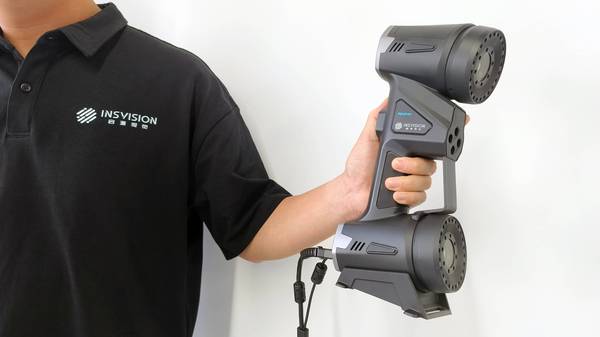
By delivering scan data that enables direct CAD comparison within tight tolerances, AlphaScan supports critical quality control workflows. This reliability eliminates climate-controlled enclosures for many inspection tasks, compressing the timeline from data acquisition to actionable manufacturing intelligence for quality managers working to ISO standards.
Steps to Implement AlphaScan in Industrial Quality Workflows
- Deploy AlphaScan directly at the machine tool or inspection station without requiring climate-controlled enclosures
- Perform scans of complex geometries (e.g., automotive castings, turbine blades) with minimal surface preparation
- Use built-in calibration protocols to maintain ISO-compliant data without frequent external adjustments
- Compare captured point clouds directly to CAD models for First Article Inspection or tooling validation
- Generate paperless quality records to support lean manufacturing and reduce administrative waste
AlphaScan in Western Industrial Workflows
For Western manufacturers pursuing Industry 4.0 integration, high 3d scanning accuracy anchors reliable digital twins. In First Article Inspection and tooling validation, AlphaScan provides the metrology-grade data required to verify complex geometries against CAD models, ensuring compliance with strict ASME standards.
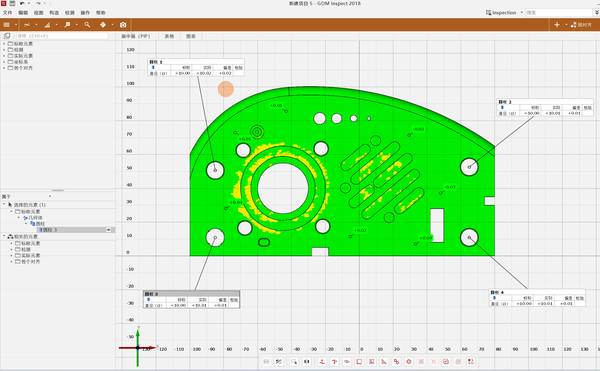
This precision proves equally critical in aerospace MRO, where technicians use INSVISION to reverse engineer legacy parts lacking original documentation. Digitizing these assets creates closed-loop feedback systems that eliminate manual measurement errors and compress production cycles. AlphaScan also facilitates paperless quality records—a cornerstone of lean manufacturing strategies targeting administrative waste reduction.
Whether validating high-tolerance injection molds or documenting fleet maintenance, INSVISION enables engineers to trust their data, directly reducing scrap rates and accelerating time-to-market through verified, high-precision capture. The AlphaScan system consistently delivers the 3d scanning accuracy that Western industrial buyers require for demanding quality control applications.