From CMM Queue to Shop Floor: Why Handheld Structured-Light Scanning Is Replacing Traditional Metrology
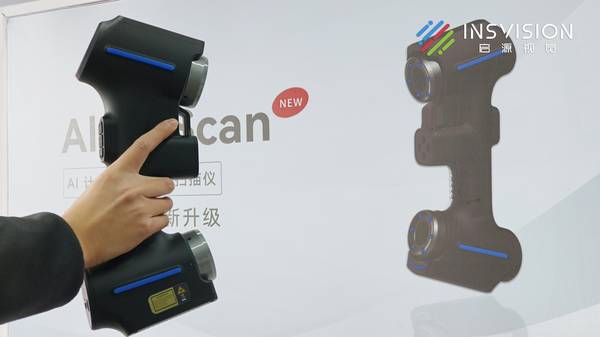
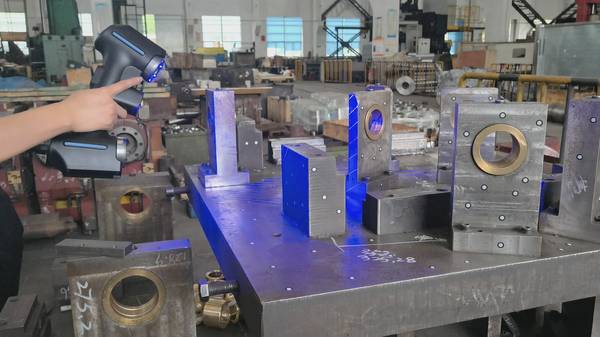
Legacy coordinate measuring machines demand controlled environments, custom fixturing, and certified programmers—resources that strain lean manufacturing operations. The INSVISION AlphaScan removes these dependencies entirely. Using blue LED structured-light projection, this 3D scanner captures complex geometries directly on the production floor without turntables, photogrammetry targets, or surface preparation.
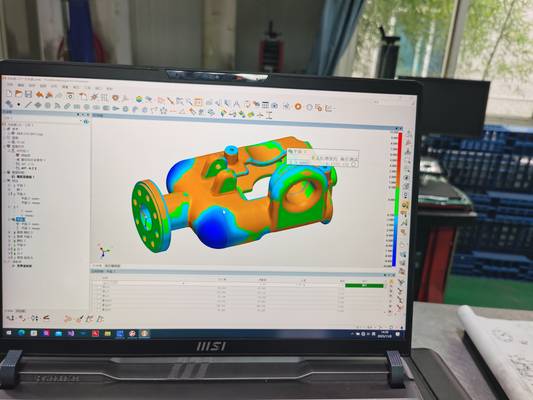
Real-time dynamic tracking maintains registration as operators move around large components—turbine casings, injection molds, or EV battery trays—eliminating the alignment drift that plagues conventional handheld units. Data acquisition happens immediately, feeding directly into ISO 9001 documentation workflows without the setup delays that make CMMs a scheduling headache.
Calibration Stability as a Competitive Advantage
Quality managers facing ISO 17025 audits know that scanner accuracy on day one means little if drift goes undetected. INSVISION engineered AlphaScan specifically to address this operational blind spot. Where competing systems accumulate error over extended use or suffer under factory lighting conditions, AlphaScan maintains documented uncertainty below 0.020 mm across its operational envelope.
On-board validation protocols let operators verify system readiness in seconds—no external artifacts, no lab visits. This capability transforms audit preparation from a disruptive event into routine background activity, a distinction that matters when automotive OEMs or aerospace MROs demand traceable measurement histories.
Throughput Reality: 11 Minutes Versus 3.8 Hours
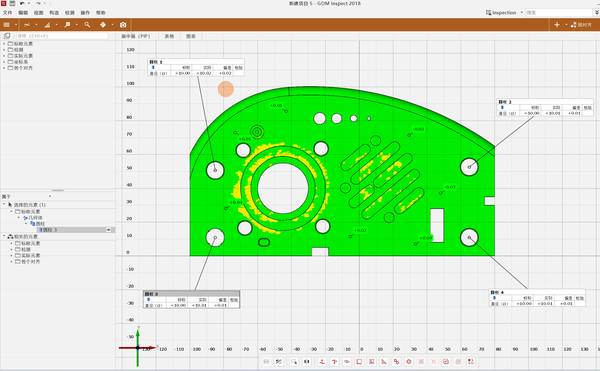
A Tier-1 automotive supplier recently benchmarked AlphaScan against their bridge CMM for EV battery housing inspection. The 3D scanning workflow completed in 11 minutes; the CMM routine required 3.8 hours. Both datasets met ASME Y14.5 GD&T requirements for the application.
The operational difference extends beyond cycle time. CMM programming demands specialized expertise; AlphaScan requires minimal operator training to produce consistent point clouds. That skill reallocation—moving metrology-trained staff from machine operation to data interpretation and process improvement—represents hidden ROI that procurement evaluations often miss.
VXmodel-compatible exports eliminate translation friction, pushing scan data directly into Siemens NX, Geomagic Control X, or PolyWorks without intermediate formatting steps. For high-mix production environments, this integration preserves momentum between inspection and corrective action.
Performance Comparison: AlphaScan vs. Bridge CMM
| Metric | AlphaScan | Bridge CMM |
|---|---|---|
| Inspection Time (EV Battery Housing) | 11 minutes | 3.8 hours |
| Operator Skill Requirement | Minimal training | Certified programmers |
| Environment | Production floor | Controlled lab |
Sector-Specific Deployment Patterns
Aerospace MRO teams use AlphaScan for airfoil geometry capture during blade overhaul—surfaces too complex for tactile probing and too valuable for destructive sampling. Medical device manufacturers running ISO 13485 compliance programs apply the same technology to polymer implant first-article inspection, achieving dimensional verification without contact risk.
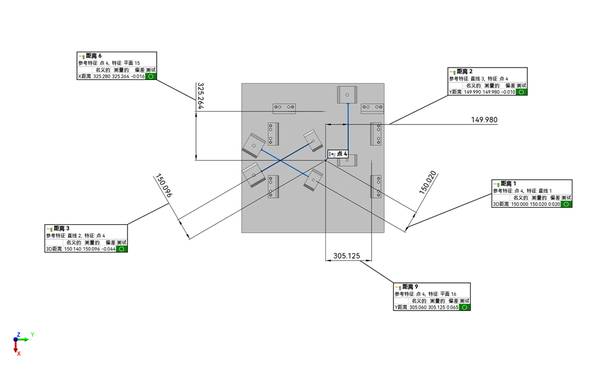
In energy infrastructure, deformation analysis of installed offshore flanges becomes feasible where CMM access is impossible. The IP54-rated enclosure operates across 15–35°C without climate control, a specification that separates industrial-grade 3D scanning from hardware designed for laboratory conditions.
Industry Applications and Environmental Specifications
| Sector | Application | Environmental/Compliance Requirement |
|---|---|---|
| Aerospace MRO | Airfoil geometry capture during blade overhaul | Non-destructive, complex surface scanning |
| Medical Devices | Polymer implant first-article inspection | ISO 13485 compliance, non-contact verification |
| Energy Infrastructure | Deformation analysis of offshore flanges | IP54 rating, 15–35°C operation without climate control |
Avoiding Procurement Traps in 3D Scanner Selection
Specification sheets emphasize resolution figures that obscure real performance variables. Metrology-grade results depend on thermal stability, mechanical rigidity, and calibration traceability—factors invisible in marketing materials.
INSVISION provides NIST-traceable factory calibration certificates with each AlphaScan unit, converting accuracy claims into auditable documentation. Software update policies are disclosed upfront, preventing the hidden-cost erosion that undermines competing systems.
Manufacturers evaluating 3D scanning investments should prioritize certified traceability and environmental robustness over raw point density. The technology succeeds when it accelerates continuous improvement rather than introducing new sources of measurement uncertainty.
Critical Evaluation Checklist for 3D Scanner Procurement
- □ Prioritize certified traceability over raw point density
- □ Verify thermal stability and mechanical rigidity beyond resolution specs
- □ Confirm inclusion of NIST-traceable factory calibration certificates
- □ Assess software update policies for hidden cost risks
- □ Evaluate environmental robustness (e.g., IP rating, operating temperature range) for shop-floor deployment